
Related videos:
More than twelve months have passed since around 40 migrants—mostly Cubans, but also from Honduras and Ecuador—disappeared off the coast of the Mexican state of Chiapas, with no clear answers from the authorities regarding their whereabouts.
Families have turned to all possible means to demand concrete actions, including sending videos directed to the Mexican government, as recently reported by the press of that country.
According to documented reports by the organization Sin Fronteras IAP and the Fray Matías de Córdova Human Rights Center, the missing individuals were in transit through the southern border of Mexico, one of the most active and dangerous migration routes on the continent. Since then, there has been no reliable information regarding their situation.
Relatives report having faced bureaucratic obstacles and restricted access to key information:
"We do not know if they are being held, if they were victims of organized crime, or if they are in some immigration station," they collectively expressed.
The lack of coordination among institutions, the disorganization of detention and transfer records, and the fear of reprisals have hindered searches. In light of this, families have raised a series of specific demands directed at multiple entities:
They claim that, despite some virtual meetings with officials, “they have not received concrete answers that clarify what happened to them.”
The stories behind each missing name are different, but they all share a common thread: the hope for a better life.
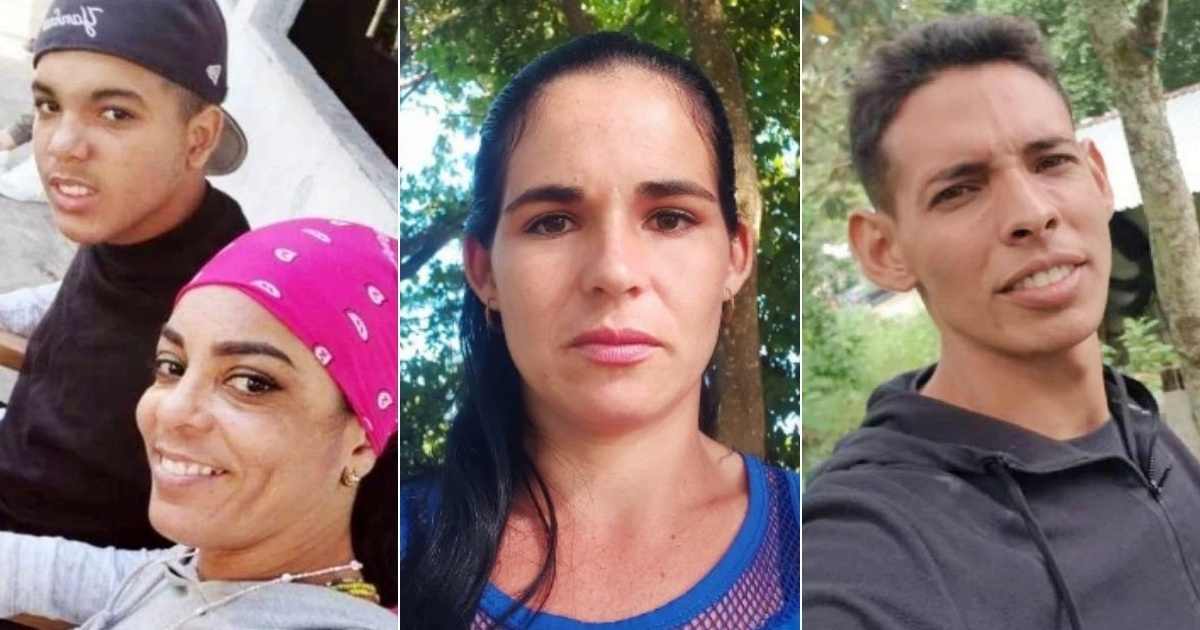
Meiling, a single mother who worked at a bank in Cuba, wanted to reach Mexico to look for a job. Her 14-year-old son Samei loved computer science.
Jorge was a self-taught bricklayer, a lover of cooking. Elianis dreamed of writing a book about her journey. Dayranis didn't want to reach the U.S., she was just searching for some stability.
The last communication with several of the migrants was on December 21, 2024, from the town of San José El Hueyate, when they reported that they were heading to the state of Oaxaca on barges. Since that moment, their phones stopped emitting a signal.
Among the missing are young women, mothers, children, and adult men, all with different dreams: to reunite with family in the United States, to stay and work in Mexico, or simply to escape the difficult circumstances in their home countries.
The official search notices, released weeks later, have barely served to confirm what the families already knew: no one knows where they are, and no one is looking for them.
The unofficial versions that have reached the families range from a possible shipwreck to a kidnapping by organized crime.
However, there are no ongoing investigations with concrete results, nor any rescue operations.
Some families have been victims of extortion: they received threats, ransom demands of up to $12,500, and in all cases, no proof of life.
“On the 21st was the last day he spoke with all of us… The last thing he said to me was: ‘Take care of Lulú,’” recalled the mother of one of the missing, tearfully.
Another family member questioned in desperation, "How can so many people disappear? How does the authority not notice? Either they allow it or they're part of it."
Urgent Proposals from Civil Society
In addition to the formal search, the groups supporting the families have proposed practical measures to expedite the process:
Create a single point of contact at the Chiapas Prosecutor's Office for missing migrants.
Establish accessible protocols for DNA testing and matching with national and international databases.
Publish updated lists of detainees, ensuring data protection.
Coordinate with the Cuban diplomatic corps to verify identities and facilitate consular assistance.
Provide free psychological and legal support to the families during the investigation.
“It’s not just about identifying individuals; it’s about giving certainty back to families who live in uncertainty,” expressed staff from Sin Fronteras IAP and Fray Matías.
An institutional debt
So far, families have filed complaints with the Chiapas Prosecutor's Office and requested the intervention of the CNDH. However, no authority has provided a clear public response regarding the cases. The lack of institutional communication fuels a feeling of neglect.
The disappearance of migrants is not only a personal tragedy but also a reflection of structural failures in public policies and human rights protection. Without effective mechanisms for search, traceability, and accountability, impunity persists.
What can citizens and institutions do?
Demand transparency and access to information in search processes.
Support local organizations that provide legal and emotional assistance to families.
Promote the establishment of regional search mechanisms among border states.
The Interrupted Journey: Reconstruction of Events
A report from the Spanish newspaper El País detailed in June the journey of this group of migrants from their home countries to Chiapas. Most departed from Cuba, but there were also people from Honduras and Ecuador.
They crossed Central America with the help of smuggling networks and arrived in Tapachula, a key city for migrant transit in southern Mexico.
Some waited for weeks for an appointment with the CBP One system to enter the United States legally.
Others, desperate for a change in government in the U.S. or lacking legal opportunities, chose to hire coyotes who promised to transport them to the Mexican capital by sea.
They paid thousands of dollars for a "safe" route, with supposed immigration permits.
In Tapachula, the migrants were taken to a warehouse in San José El Hueyate, a coastal locality known as a starting point for human, arms, and drug trafficking. They remained there from December 18 to 21.
During those days, they sent messages that showed their concern: “There has been a serious shooting here… these people are armed to the teeth and they sent us inside.”
In the early hours of the 21st, families received the last messages: “We’re already on the boat,” “they're putting life jackets on us.” The GPS coordinates marked their position at sea at 08:25. After that, absolute silence.
The business of human trafficking and the state's omission
The migrants were handed over by different drivers in a chain of transfers recorded on video: "Here are your people, safe and sound. Welcome to Tapachula," says one of the coyotes.
The route had often been paid for from the start: between 8,000 and 10,000 dollars per person. The journey included connections from Nicaragua to Mexico City.
What was supposed to be a transition into the future has ended in uncertainty. Families have fallen victim to a machinery of deceit. A coyote shared a list with the names, passports, and signatures of 40 migrants, claiming they were being held captive by a cartel.
He charged $12,500 for the supposed rescues and disappeared.
Despite having information about the individuals who transported them, the locations, the vehicles, and even the routes used, Mexican authorities have not initiated any search operations. Neither the state prosecutor's office, nor the federal authority, nor the armed forces have provided any answers.
“It’s as if the earth… or the sea has swallowed them up”, says one of the Cuban mothers, who today cares for the orphaned children of her missing daughter.
Chiapas, border of terror
The report from El País warns that southern Mexico has become a high-risk area for migrants. The territorial dispute between criminal groups has turned Chiapas into a corridor controlled by trafficking and extortion networks.
In 2024, at least 237 migrants disappeared in Mexico, according to data from the Department of the Interior, while civil organizations report mass kidnappings and disappearances that are not officially registered.
In this reality, migrants face not only physical dangers. They fall victim to a system where state inaction benefits criminal groups.
"In six months, there has been no news, nor any search efforts. There are 40 people," the families' lawyer reported in the middle of this year.
"Whatever the condition may be: whether on the street, kidnapped, or dead... What I want is to bring him back to Cuba," concluded one of the mothers. The phrase encapsulates the desire of dozens of families who, a year later, continue to cry out for justice.
Filed under: