
Related videos:
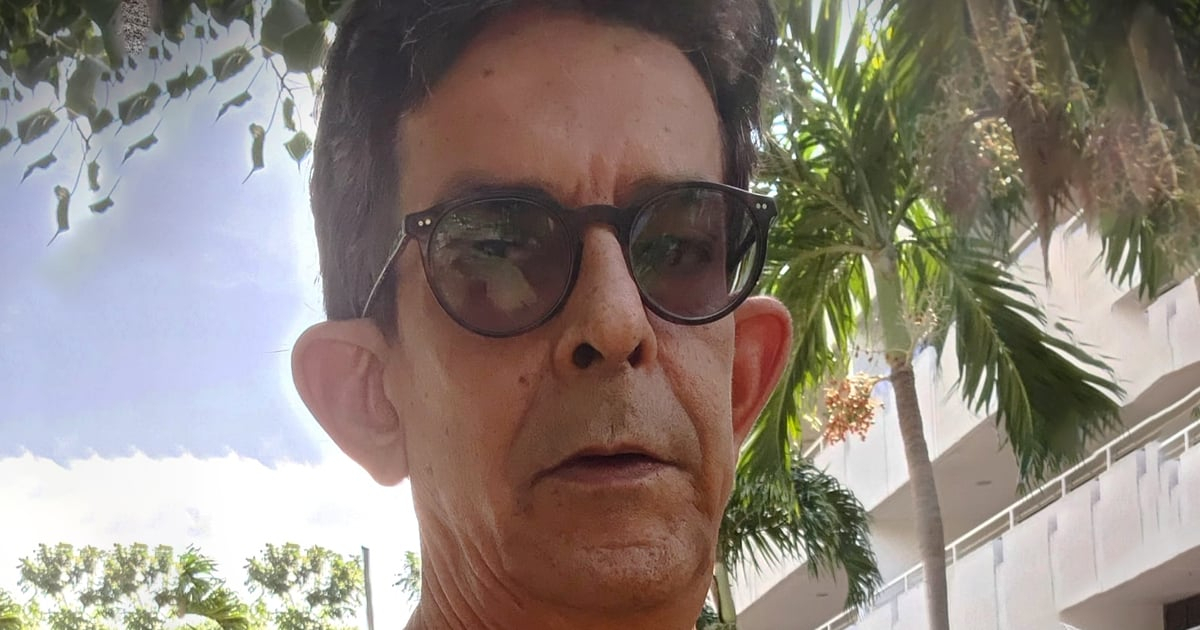
The Cuban comedian Ulises Toirac published a powerful message on Facebook, where he criticizes the country's leadership and warns about the level of deterioration in Cuban society, describing a situation that has reached a critical point where "a single hair in the soup overflows the reaction."
In his post, Toirac points out that "the leadership of this country has a huge problem," distinguishing it even from the everyday issues affecting the population, and emphasizes that social wear is pervasive across all areas of life: "food, electricity, transportation, connectivity, health, education, etc."
For the actor, the accumulation of deficiencies has caused even the slightest trigger to provoke intense reactions within the population.
He insists that the signals are clear: over time, "paths are not found, the present becomes impoverished (and it becomes impossible to glimpse the future), and small changes unfortunately occur along the wrong path."
Toirac also warns about what he defines as a "divorce from reality" between decision-makers and the everyday lives of people, a disconnection that occurs when there is no information without intermediaries or when one is not "in people's shoes."
His final diagnosis is an image that encapsulates his concern: "I see a large snowball rolling down that kilometer-high mountain."
The debate intensified in the comments section when a user responded by arguing that, despite the difficulties, "Cuba and its revolution will come out of this, as it always has, with optimism and faith in victory and progress."
The internet user questioned why Toirac was not involved or contributing to finding solutions and suggested that the paths he does not see will indeed exist in the future.
The actor's response was even more direct and detailed. "The one who doesn't see that there is no longer a way forward is you," he replied, before listing a series of structural problems that highlight the depth of the crisis.
He asked if it is not apparent that "recovering the SEN will take ten years we don't have," or that "the production of this country and its export capacity is almost at zero."
He also remembered that Cuba imports "salt and sugar," two essential products historically linked to national production.
In the healthcare sector, Toirac described hospitals that "provide no service other than consultations with the few doctors who are not abroad fattening an account that is not used to industrialize the country," and where doctors "don’t even write prescriptions because they know that no medicines exist."
He also referred to the contrast between the proliferation of hotels and the absence of tourism: "the hotels are empty of tourists while the city is full of hotels."
Urban and social deterioration also occupies a central place in his critique. He mentioned "the misery of our streets filled with potholes and debris" and the drama of "our youth filled with a desire to leave the country, despite being the future of the nation."
For the comedian, rather than coming to an end, "the cycle... rises again and again without breaks."
His response concluded with a phrase that sums up his stance on optimism without visible results: "One can have faith when there are signs. When there are none, it is called fanaticism."
Toirac's statements reflect a growing social discontent and a direct critique of the government's management, articulating the frustration of broad segments of the population who witness the deepening shortages while, according to most Cubans, no real solutions or clear paths to reverse the crisis are in sight.
Filed under: