
Related videos:
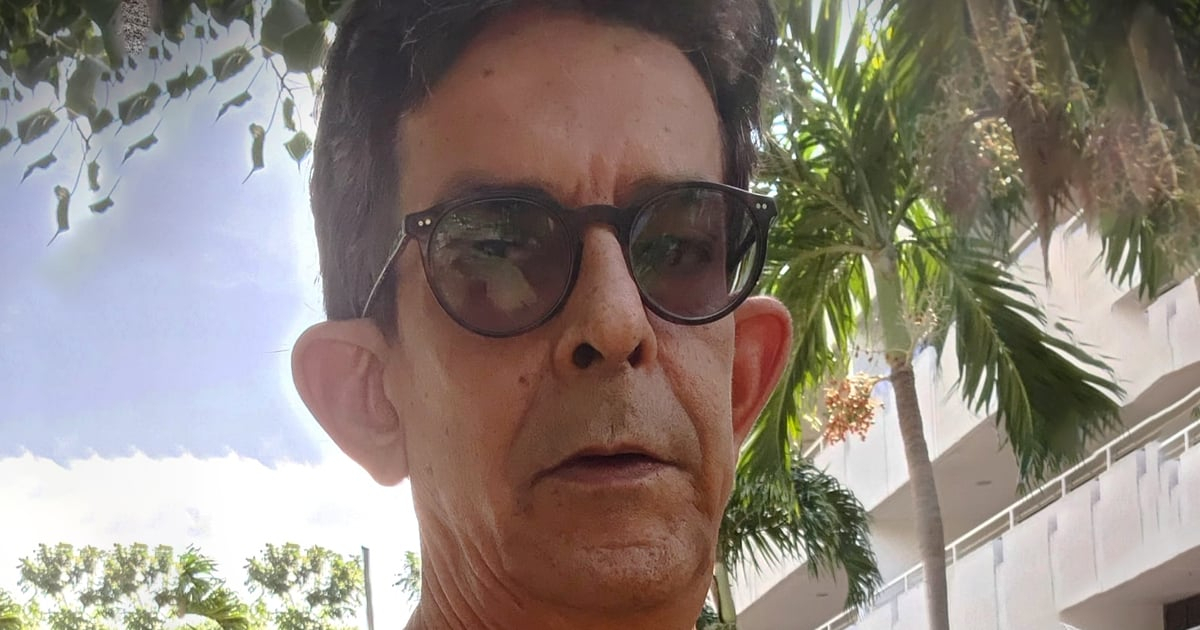
The Cuban comedian Ulises Toirac once again shook social media with a message that, far from any irony, starkly highlights the healthcare deterioration that Cuba is experiencing and the human cost of a crisis that the State appears unable to manage.
From his Facebook profile, the artist issued a direct alert about the shortage of medications, the collapse of healthcare, and the simultaneous spread of various diseases that are causing fatalities on the Island.
"Talent exists, nobility exists, and we shouldn't have had to reach this point (of medication shortages in Cuba)," wrote Toirac, emphasizing that the situation is not a product of fate, but rather a chain of negligence and failed decisions.
In his post, he warned that although chikungunya is usually considered to have low lethality, the parallel circulation of several viruses—such as dengue, Oropouche fever, and COVID-19—creates a highly risky scenario for the elderly and individuals with chronic illnesses.
With a graphic yet unsettling image, he described the health threat: "An Aedes mosquito bites someone with chikungunya, then another with Rift Valley fever, then another with covid... and ends up with an impenetrable cocktail of bugs. Deadly."
Toirac did not only describe the problem but also directly held the authorities responsible for their passivity in the face of an emergency that is costing lives.
He assured that the hygienic conditions in the country continue to be conducive to the proliferation of diseases and that people are dying as a result.
"The inaction of the authorities is keeping me awake at night. People are dying," she stated, denouncing the precarious conditions in which those without physical defenses or material resources to withstand prolonged illnesses are surviving.
In that context, he publicly thanked the individuals who have helped him obtain medicine and care, referring to them as his "guardian angels," making it clear that survival in Cuba increasingly depends on informal networks rather than a functioning healthcare system.
The message comes after weeks in which Toirac himself has experienced the harshness of chikungunya.
In mid-November, he confirmed his infection and candidly described the impact of the virus: debilitating joint pain, fever, extreme exhaustion, and a near-total loss of autonomy to carry out basic tasks.
In his "Diary of a Chikungunya Patient", he recounted how getting out of bed, making coffee, or even turning the coffee pot became exhausting physical challenges.
Although he resorted to black humor to describe his ordeal at the time, the current publication abandons any joking tone and focuses on the seriousness of the national situation.
Days later, in December, the artist explained that the illness continued to be present in his body, especially in his spine and lumbar hernias, forcing him to measure each movement and to "turn off" early due to accumulated fatigue.
With bitter clarity, he summed up his state with a phrase that many Cubans recognized as their own: "I am like the country."
Toirac's words are not just a personal testimony, but a portrait of a broader health crisis, marked by hospitals lacking supplies, empty pharmacies, and a population vulnerable to multiple outbreaks that advance without effective containment.
In a country where obtaining a painkiller or an antibiotic can take weeks, the comedian's warning acts as a direct denunciation of a system that, instead of protecting its citizens, leaves them to fend for themselves.
For Cubans, the message confirms what they experience daily: health has become a privilege, and illness a harsher sentence for those who cannot pay or access alternatives outside the state system.
Toirac's alarm, raised during the festive season, interrupts the comfortable silence of the celebrations and reminds us that, while official speeches are repeated, "people are literally dying because of it."
Filed under: