
Related videos:
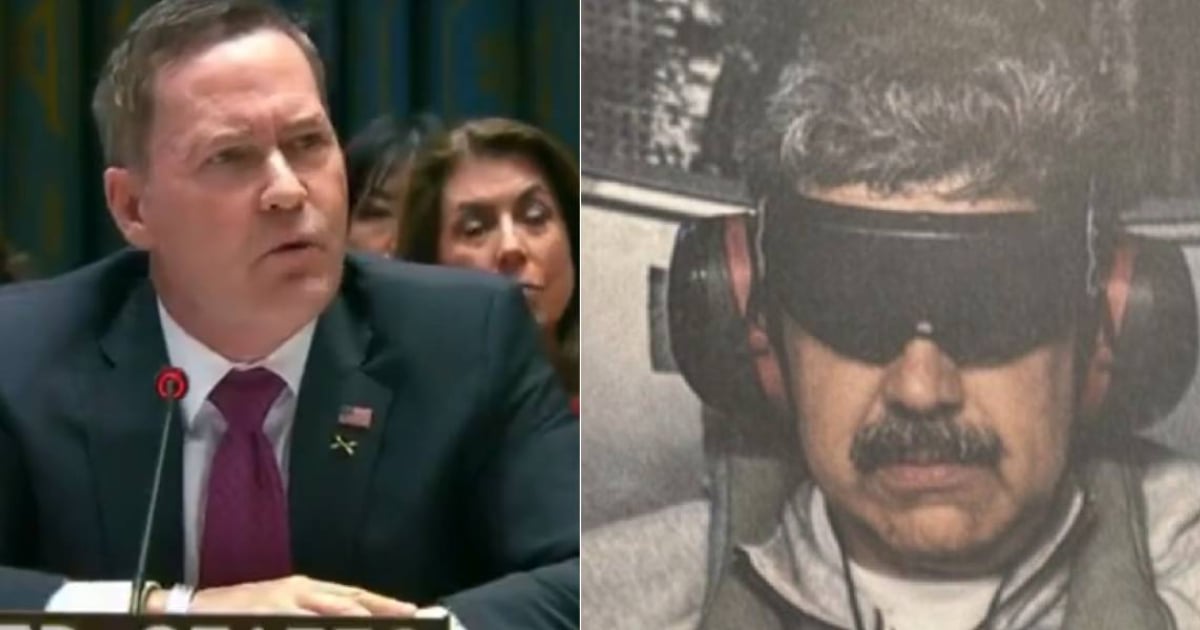
The United States appeared before the UN Security Council this Monday to reject accusations of war and occupation following the detention of Nicolás Maduro, in a session marked by intense diplomatic exchanges with Russia, China, and other countries that questioned the U.S. operation.
According to the agency EFE, the U.S. ambassador to the United Nations, Mike Waltz, emphasized that the action does not constitute an armed conflict or a foreign occupation, but rather a law enforcement operation aimed at a figure whom Washington considers illegitimate and linked to drug trafficking.
“There is no war against Venezuela or its people. We are not occupying any country,” Waltz stated, while defending the decision to detain Maduro and transfer him to the United States, where he will be tried for alleged crimes committed over more than a decade.
The U.S. denies state leader status to Maduro
During his speech, the U.S. diplomat was decisive in denying any political or diplomatic recognition to the Venezuelan leader. “Maduro is not a legitimate head of state,” he asserted, arguing that his hold on power was the result of electoral fraud and institutional manipulation, rather than the will of the people.
According to Waltz, treating Maduro as a legitimate president would be equivalent to granting diplomatic status to a narcoterrorist, a stance that, in his view, contradicts the foundational principles of the UN.
Clash with Russia and China
The session was requested by countries critical of the operation, including Russia and China, which denounced a violation of international law and a dangerous precedent in relations between states.
Waltz directly responded to those criticisms, questioning the role of the Security Council when, he said, it equates leaders accused of drug trafficking with democratically elected governments.
"If this organization legitimizes a narcoterrorist, it must ask itself what it truly represents," he stated.
Justification of the operation
The United States stated that the arrest was carried out in accordance with the constitutional responsibility of the U.S. president to protect his citizens, noting that drug trafficking linked to the Venezuelan regime has had deadly consequences for thousands of Americans.
The ambassador added that Donald Trump had previously offered diplomatic exits to Maduro, which were rejected, before authorizing the operation.
Vision for the Future of Venezuela
Despite the firm tone, Washington stated that its goal is not to punish the Venezuelan people, but to facilitate a political transition that will stabilize the country and the region.
“We seek peace, freedom, and justice for the people of Venezuela,” Waltz concluded, emphasizing that the U.S. will continue to act against narco-terrorism even in the face of international opposition.
The debate revealed a new geopolitical fracture within the Security Council and foreshadows a scenario of prolonged tensions regarding the future of Venezuela and the extent of U.S. intervention.
Rubio denies that the U.S. is at war with Venezuela
The U.S. Secretary of State, Marco Rubio, denied this Sunday that his country is “at war with Venezuela” following the capture of Nicolás Maduro, and assured that the operation ordered by President Donald Trump was a “legal and limited” action within the framework of the fight against drug trafficking.
In an interview with the program 'Meet the Press' from the NBC network, Rubio stated that Washington has not initiated a military intervention, but rather a "law enforcement" action to execute a court order related to the charges of drug trafficking and organized crime against the Chavista leader.
Filed under: