
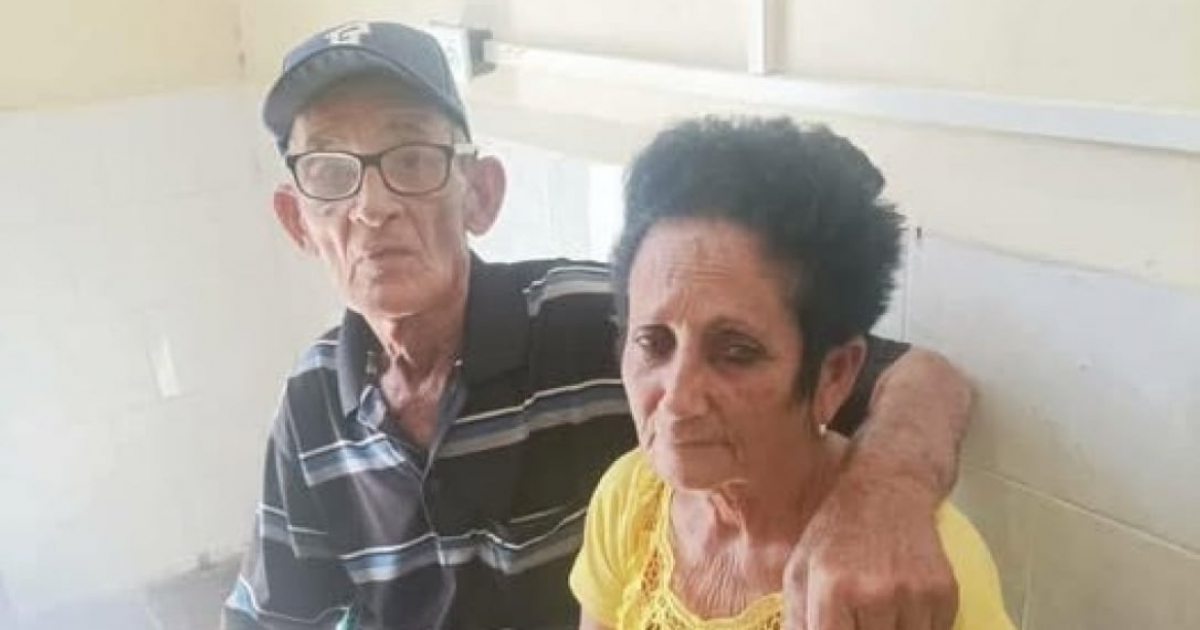
The disappearance and subsequent discovery of an elderly man dead in the town of Espartaco, Palmira municipality, Cienfuegos, has caused shock and outrage, not only due to the sad ending for the gentleman but also because the search fell almost entirely on his family, while the police and local authorities turned a blind eye to the case.
Miguel—an elderly man—left his apartment in the two-story buildings of Espartaco on the morning of Friday, December 19, to go to the countryside to cut wood.
What was meant to be a short outing turned into a permanent disappearance. His family began searching for him day after day.
In that effort, his wife, also elderly, suffered a fall that resulted in a broken arm.
According to a report by the user Yaiset Rodríguez Fernández on Facebook, the police only participated in the search on the first day, and the town delegate joined in only on the eighth day.
On January 5th, a young man fishing in the Canal near Maraboto found part of Miguel's body in the water. The other half appeared nearby the next day.
"I will not delve into sordid details or speculations that will likely never be clarified regarding everything that may have happened to Miguel while he was missing," emphasized Rodríguez Fernández.
Espartaco is a small community of about four thousand inhabitants, an old sugar cane region, where everyone is aware of the harsh reality that Miguel faced.
His only son is in prison, leaving him without the primary support for the household. Miguel and his wife are now responsible for two grandsons, whose mother emigrated alone in search of a better future for them.
Faced with scarcity, Miguel had no choice but to go out and cut firewood for cooking, and, if possible, sell some charcoal to buy food.
In the first post requesting help to locate him, it was mentioned that Miguel was suffering from dementia, although it was not clear if there was a formal medical diagnosis.
"What is certain is that he experienced frequent memory lapses stemming from a significant depression he fell into after visiting his son at the provincial prison in Ariza," the author of the post clarifies.
Miguel's family, like many others in Cuba, had to turn to social media to ask for help, while the authorities responsible for maintaining order and protecting citizens chose to remain inactive.
For those who followed the case, her death cannot be seen as just an isolated event, but rather as a reflection of old age marked by precariousness, government neglect, and institutional indifference.
Cuba, as the complainant stated, is "a land that cries out for justice."
Miguel's story exposes not only a personal tragedy but also the social crisis that drives the most vulnerable to survive in extreme conditions, without effective support from the State that promises protection, yet in practice leaves its citizens alone in the face of the abyss.
Filed under: