
Related videos:
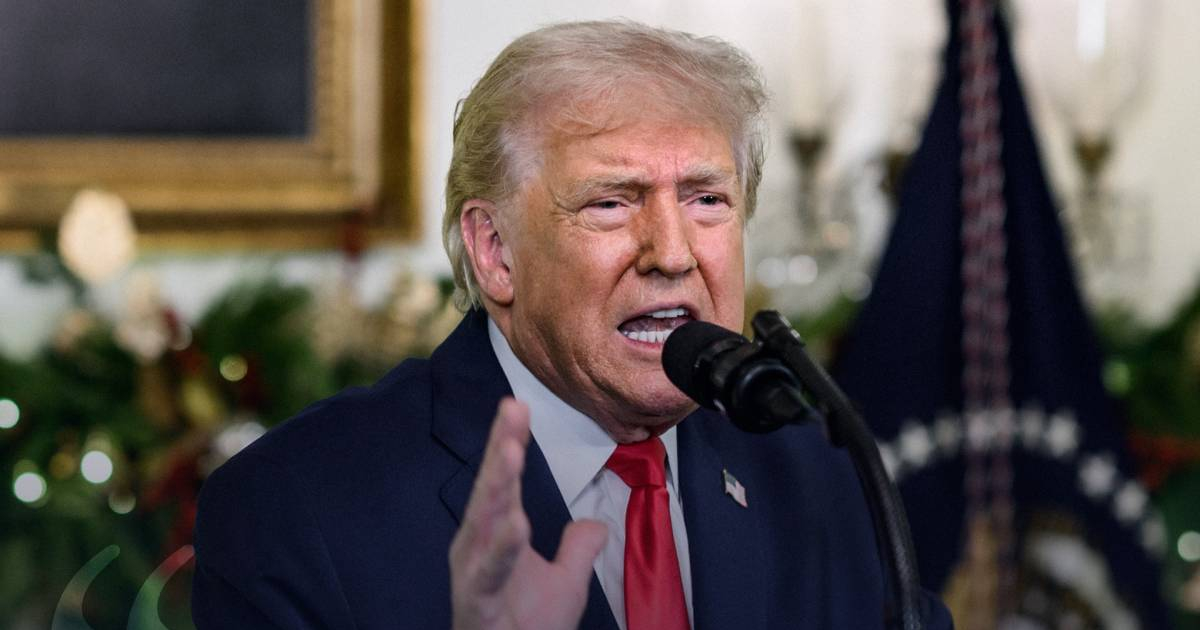
The President of the United States, Donald Trump, stated that he could travel to Venezuela in the future when security conditions allow.
“I believe that at some point it will be safe,” Trump said during an extensive interview with The New York Times in the Oval Office when asked about a possible visit to Venezuela, which is currently under U.S. supervision.
The president assured that the interim government led by Delcy Rodríguez —composed of former allies of the now imprisoned Nicolás Maduro— is fully cooperating with Washington.
"They are giving us everything we consider necessary," he stated.
In the same interview, the leader confirmed that his country will maintain direct oversight of Venezuela for an extended period while the reconstruction of the oil sector progresses.
Trump avoided specifying how long the United States will maintain that political and economic control, although he made it clear that it will be a long-term process.
"Only time will tell," he noted. When presented with concrete options—three months, six months, or a year—he replied, "I would say much more time."
The statements came just hours after officials from his administration announced that the United States would take effective control of the sale of Venezuelan oil for an indefinite period.
The measure is part of a three-phase plan presented by Secretary of State Marco Rubio to members of Congress.
During the interview, Trump emphasized that the reconstruction of the Venezuelan energy sector will be carried out with profitability criteria for the United States.
“Let’s use oil, and let’s take oil. We are lowering oil prices and we are going to give money to Venezuela, which desperately needs it,” he stated.
The president also noted that his administration has already started generating revenue by taking in previously sanctioned Venezuelan crude oil, and mentioned the announcement that the United States would acquire between 30 and 50 million barrels of heavy oil.
However, he acknowledged that fully reactivating the Venezuelan oil industry will take years. "Oil will take some time," he admitted.
Trump also mentioned the military operation that culminated in the capture of Nicolás Maduro and his wife, Cilia Flores, in Caracas, stating that he closely monitored the preparation of the forces involved, including training in a full-scale replica of the presidential complex, built at a military facility in Kentucky.
In comparing the operation with actions from previous administrations, the leader stated that a chaotic outcome was avoided. "There were no helicopters crashing or a disaster like Afghanistan," he said, as quoted by the New York newspaper.
The president declined to explain why his government recognized Delcy Rodríguez as interim president instead of supporting the opposition leader María Corina Machado, who won the Nobel Peace Prize after leading the electoral campaign against Maduro in 2024.
He also did not confirm whether he has spoken directly with Rodríguez, although he indicated that Rubio keeps constant contact with her.
Trump also did not take any commitments regarding the call for elections in Venezuela, nor did he clarify under what circumstances he might authorize the deployment of U.S. troops on Venezuelan territory.
"I wouldn't like to say that," he responded when asked about possible scenarios of military intervention.
Despite the hostile public statements from former allies of Maduro, Trump insisted that there is cooperation with Washington.
"They are treating us with great respect," he stated, and recalled that the United States lost control of oil assets in Venezuela following the nationalizations of previous years.
Filed under: