
Related videos:
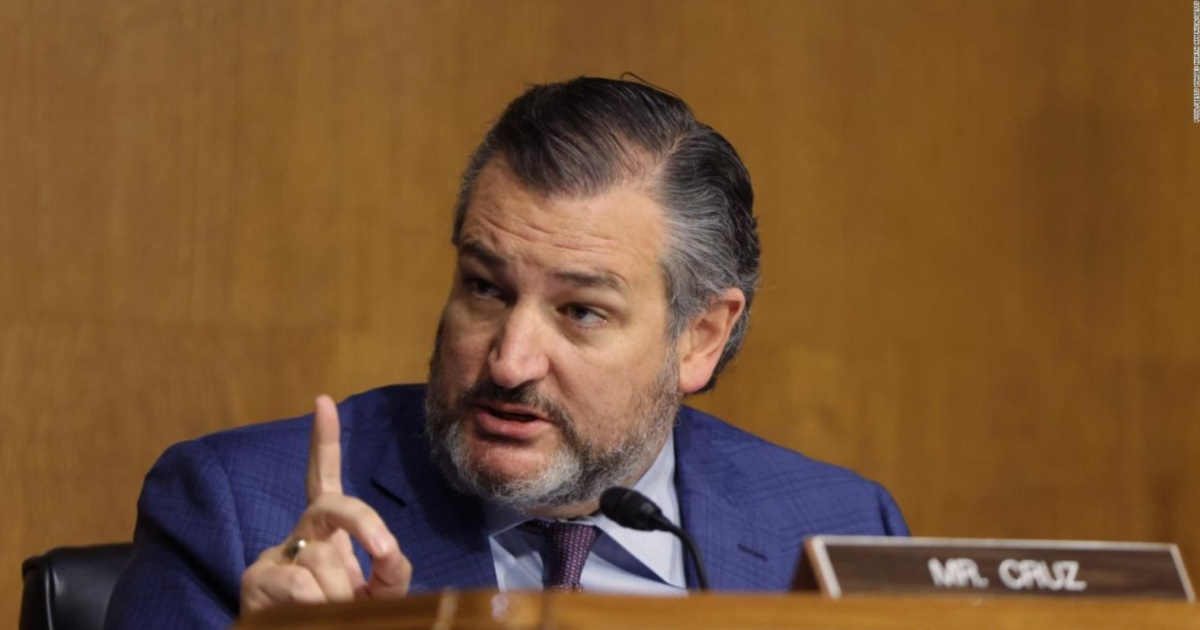
The Republican Senator Ted Cruz stated this Friday that this is "the most promising moment in our lives" to witness the fall of the communist regime in Cuba.
Additionally, he stated that if that happens, many Cuban-Americans “with a lot of resources” will want to invest to “turn the country around,” according to comments made in an interview with Fox News.
"Now I believe this is the most promising moment in our lives to see the communist regime fall," he assured.
In that intervention, Cruz compared the Cuban situation to Venezuela and held figures of chavismo responsible for having destroyed the Venezuelan economy.
“Both Hugo Chávez and Nicolás Maduro, along with two communists, completely destroyed the economy,” he said, before adding that “it’s the same” as —according to him— “the Castros did in Cuba” and that the Cuban economy is “in free fall right now.”
The senator described a potential post-communist scenario in economic and tourism terms.
He stated that Cuba "could be a paradise island" if the communists were to leave power and "free enterprise" were allowed, and criticized what he called "the madness" of the Obama administration "targeting" the Castros, contrasting it with a stance of having "nothing to do with them."
Cruz's statements come alongside other recent reactions from U.S. officials regarding Cuba.
Secretary of State Marco Rubio stated this week that Cuban leaders must choose between “having a real country” with a “real economy” or continuing with a “failed dictatorship,” and he warned that persisting with the current model would lead — in his view — to a “systemic and social collapse.”
Rubio stated that the “fundamental problem” in Cuba is that it is “surrounded by incompetent people” who “don’t know what an economy is, let alone one that functions,” and he affirmed that the regime has prioritized political control over an operational economy for decades.
In his argument, the official recalled that the Cuban system sustained itself for over "60 something years" thanks to external donors, initially the Soviet Union and more recently Venezuela, but emphasized that this support "is already gone," which puts the Cuban leaders in a dilemma, according to his words.
He warned that if the regime insists on "continuing with its dictatorship" —which he also described as "false" in the same exchange— that "will lead to a systemic and social collapse."
“It is a very strong and dramatic choice,” he added, while pointing out that the United States does "not" have an interest in "destabilizing" Cuba. However, he attributed any potential destabilization to the Cuban government's refusal to allow "economic or political freedom" to its people.
Filed under: