
Related videos:
While the interim government of Venezuela projects a discourse of tribute and support for the families of those who died during the U.S. attack that culminated in the capture of Nicolás Maduro, in Cuba, there is growing discontent among families who claim to have no clear information, nor even the certainty of being able to recover the remains of their loved ones sent to the Venezuelan country.
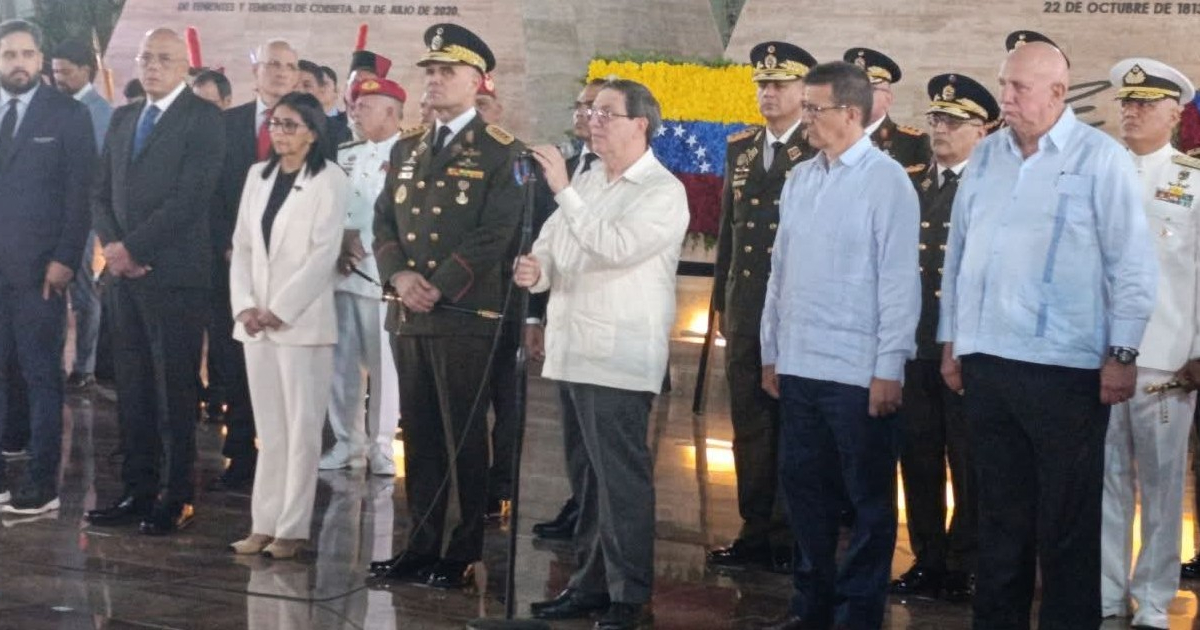
This week, the interim Venezuelan president, Delcy Rodríguez, led the official ceremony dedicated to those who fell on January 3rd, the day U.S. military forces captured Maduro.
During the ceremony, Rodríguez announced the creation of a commission aimed at providing comprehensive support to the families of fallen combatants and promised that the Venezuelan state would not leave them alone.
It was also reported that a monument will be built to preserve the memory of those who, according to his speech, died defending the country against "foreign aggression."
"A monument in honor of our heroes, heroines, and martyrs. Honor and glory to the men and women who died in combat. No one surrendered here, there was combat!", he emphasized.
Delcy referred to the deceased as "heroes and heroines of the homeland of Simón Bolívar" and explicitly included the 32 Cuban fighters who died during the operation, whom she described as "brothers of Cuba" who fought alongside the Venezuelans "as one people."
Meanwhile, in Cuba, in the days following Maduro's capture, the government revealed for the first time the identities of the 32 soldiers who died in Caracas.
They all belonged to the Revolutionary Armed Forces or the Ministry of Interior and, according to the official version, were carrying out "missions at the request of homologous bodies in Venezuela."
The publication included names, photographs, and ranks, thereby acknowledging a Cuban military presence that had been denied by Havana for years.
But beyond the national mourning declared by Miguel Díaz-Canel, several families have begun to report a situation characterized by a lack of precise information, opacity, and uncertainty regarding the fate of their relatives' remains.
The case of the MININT captain Adriel Adrián Socarrás Tamayo, aged 32, has humanized that situation.
Socarrás Tamayo, a native of Yara, Granma, was part of a unit from Matanzas and had been deployed in Venezuela for two years. His relatives were unaware that he was part of Maduro's direct security detail.
After being notified of his death, the authorities informed his family that it would not be possible to repatriate or release the body due to the wartime context and supposed operational limitations at Venezuelan airports.
Family members, however, assert that they have not received clear details about the circumstances of his death nor direct confirmation that the body is in official custody.
"Nobody has put the bell on the cat, nor has anyone said 'we have the body in hand, he died this way, he died that way.' We still don't have clarity on that," a relative declared to Martí Noticias.
According to reports from military officials, the captain is said to have died "shot by shot" while he was part of Maduro's security detail.
Socarrás regularly sent money to his mother and wife from Caracas and had spent his last vacation period in Cuba last year.
The contrast between both scenarios is evident.
While in Venezuela the official discourse seeks to demonstrate institutional support for the victims, in Cuba the families of the fallen are denouncing a limited response, characterized by silence and a lack of certainty that would allow them to find closure in their grief.
Both countries are governed by authoritarian regimes, but the difference in the public treatment of the families of the deceased has revealed a painful gap.
Filed under: