
Related videos:
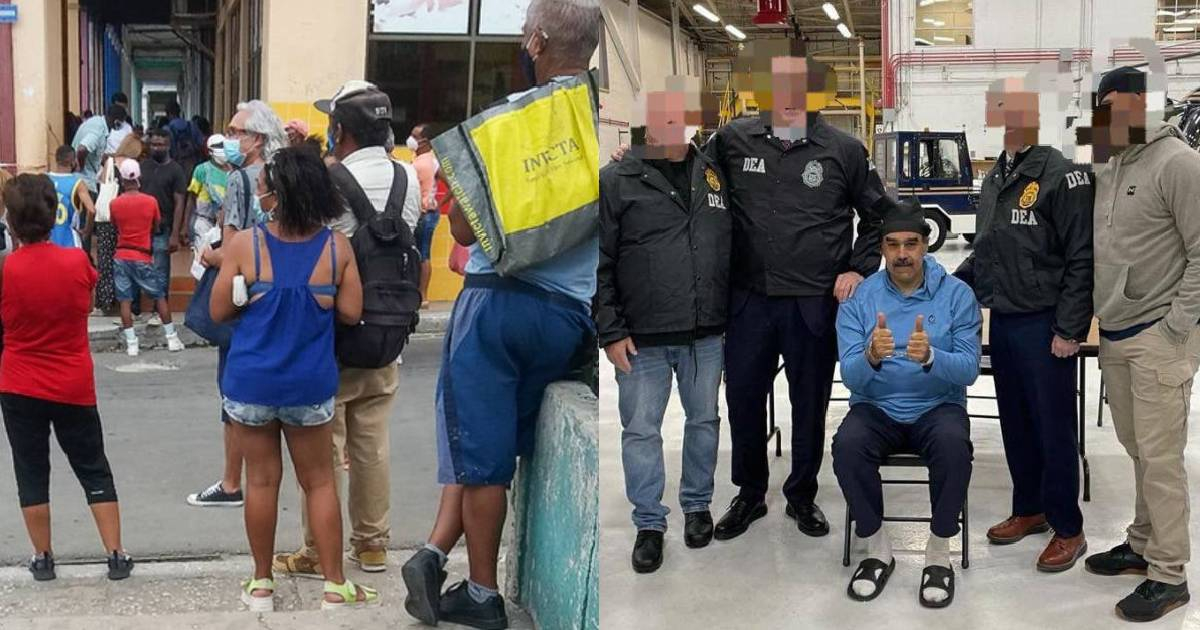
A report from state television showed Cuban citizens repeating slogans from the official discourse regarding the capture of Nicolás Maduro in Caracas following the U.S. military operation, which has sparked a wave of critical reactions among users both on and off the island.
In the images shared on his Facebook page by journalist Mario J. Pentón, several interviewees express solidarity with the Venezuelan regime and condemn the U.S. operation.
A man claims that he "feels a lot for the Venezuelan people and for the many Cubans there," while a woman states that Cuba and Venezuela are "brother countries" that have helped each other, especially in the field of public health.
Another participant describes the news as "harsh" and explicitly rejects "the aggression of the United States against Venezuela."
The statements are interspersed with archival footage of Nicolás Maduro making rhetorical challenges, as well as a clip showing agents from the Drug Enforcement Administration (DEA) escorting him upon his arrival in New York.
The video culminates with confrontational slogans, including an intervention from the ruler Miguel Díaz-Canel, in which he describes "imperialism" as genocidal and fascist, and with opinions asserting that they are "ready to go there for whatever it takes" in defense of the Venezuelan leader.
The publication sparked an avalanche of critical comments. Numerous users questioned whether those opinions truly represent the Cuban people and pointed out fear, indoctrination, and political pressure as determining factors.
Many agreed that the interviewees "repeat a learned verse," without their own reasoning, and that many speak this way to avoid issues with the authorities.
Other comments pointed to the contradiction of defending allied regimes while living amid shortages, blackouts, and reliance on remittances.
It was also highlighted that a large part of the population, especially those without access to the internet or other sources of information, only consumes official propaganda, which limits their critical thinking ability.
In contrast, some users recalled the protests of July 11 and the subsequent repression, emphasizing that silence or the repetition of official discourse does not necessarily stem from conviction but rather from a survival calculation in a context of control and punishment.
Before being captured, Maduro had a moment that now takes on a new significance following his arrest. In one of his last statements as president, he directly challenged the forces that currently hold him captive.
"Come for me, I'm waiting for you here in Miraflores, don't take too long to arrive, cowards," emphasized the now-captive former leader, a challenge originally directed at his political opponents from the presidential palace in Caracas, which Washington used ironically after announcing his capture.
Maduro arrived late at night on January 3 at the DEA offices in New York, having been transported by U.S. forces from Stewart Air Force Base in New York State.
A video that was released showed him descending from the plane under guard, walking handcuffed and escorted by federal officers while he was heard saying, “I’m famous, famous...” and then, once at the DEA headquarters, repeating “Happy New Year” to the agents who received him under heavy security.
His capture marked the beginning of a judicial process in which he will face federal charges related to drug trafficking and conspiracy, in a case that could become a historic moment in relations between Washington and Caracas.
Filed under: