
Related videos:
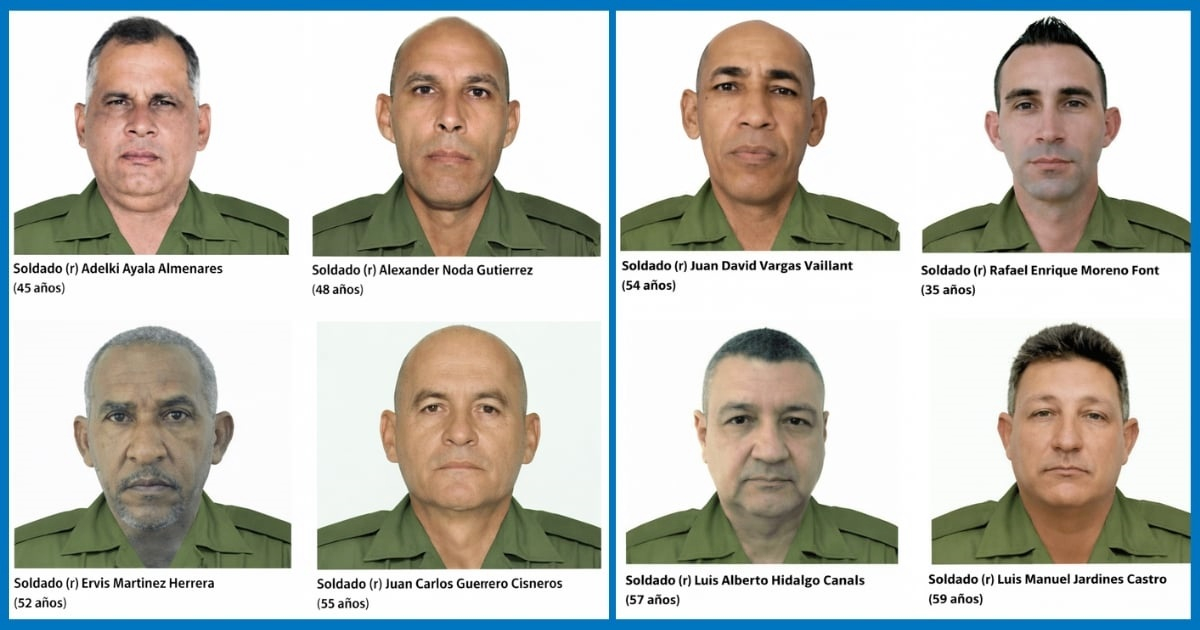
The remains of the 32 Cuban soldiers who lost their lives in Venezuela during the operation to capture Nicolás Maduro will be repatriated to Havana this Thursday, January 15, amid a ceremonial display filled with political symbolism.
In an official statement released by the Communist Party of Cuba, the attack has been labeled a "criminal" act perpetrated by the U.S. government, and the narrative of unity between Cuba and Venezuela in the face of foreign aggression has been reaffirmed.
"This Thursday, January 15, 2026, the remains of the 32 combatants who fell heroically during the criminal attack perpetrated by the government of the United States against the sister Bolivarian Republic of Venezuela will arrive in our homeland," states the release published this Monday.
Official ceremony and tribute program
According to the program released by the authorities, the bodies will be received in a military ceremony at José Martí International Airport in Havana, where they will receive an initial posthumous tribute with honors.
After that event, there will be a solemn procession along Avenida Rancho Boyeros to the headquarters of the Ministry of the Revolutionary Armed Forces (MINFAR), with the participation of a "representation of the people" stationed on both sides of the road to pay tribute.
From 10:00 a.m. on that very Thursday, January 15th, the public will be able to access the MINFAR headquarters, where the remains of the fighters will be displayed in a wake set up for the occasion.
The commemorations will continue on Friday, January 16, the day when a massive gathering is expected at 7:30 am at the José Martí Antimperialist Tribune, on the Havana promenade, where the opening event of the so-called March of the Combatant People will take place, conceived as a reaffirmation of patriotic commitment.
On January 16 at 9:00 a.m., simultaneous tribute ceremonies will take place in all provincial capitals across the country, while at 4:00 p.m. the remains will be interred in the Pantheons of the Fallen for Defense in their respective localities.
“All municipalities in the country will hold tribute ceremonies. Honor and glory to our heroes!”, concludes the publication of the Communist Party.
Advance tribute and diplomatic presence in Venezuela
The official announcement comes just days after the surprise visit of Cuban Foreign Minister Bruno Rodríguez to Venezuela, where he took part in a ceremony honoring fallen fighters, both Cuban and Venezuelan.
The presence of the Minister of Foreign Affairs had not been disclosed by official media nor confirmed through the usual diplomatic channels.
It was he himself who shared images and messages about his visit through the social network X.
"The blood of both peoples merged on Venezuelan soil, as befits brother nations," wrote Rodríguez, accompanied by photographs of the official event with the acting president of Venezuela, Delcy Rodríguez, and other high-ranking officials of the Bolivarian government.
The event included posthumous promotions and decorations for the fallen and wounded "in defense of the homeland," reinforcing the message of resistance and brotherhood shared by both regimes.
Informational silence and diplomatic tensions
The death of the 32 Cuban soldiers has not been accompanied by a detailed official explanation regarding the specific circumstances of the armed conflict in which they lost their lives.
The media silence surrounding both their deployment in Venezuelan territory and the operation that led to their deaths has raised questions among independent circles and among the victims' families.
The U.S. military intervention, rejected by a large part of the international community, has had unpredictable consequences for regional balance.
The operation, which the United States justified as an “urgent action to prevent a humanitarian catastrophe,” led to the collapse of Nicolás Maduro's government and opened a transitional period in Caracas under the interim leadership of Delcy Rodríguez.
A narrative of sacrifice and unity
The national tribute and the accompanying symbolic campaign aim to reinforce a key message for Havana: loyalty and sacrifice for the sovereignty of allied nations, in the face of "North American imperialism."
It is a narrative that has been used in other historical moments—from Angola to Ethiopia—and in this case, it is reiterated with elements of the current geopolitical landscape.
With massive marches, military honors, coverage in state media, and calls for popular mobilization, the Cuban state is constructing a new episode in its epic narrative. One that aims to reaffirm the pillars of its foreign policy: solidarity, internationalism, and confrontation with the United States.
Filed under: