
Related videos:
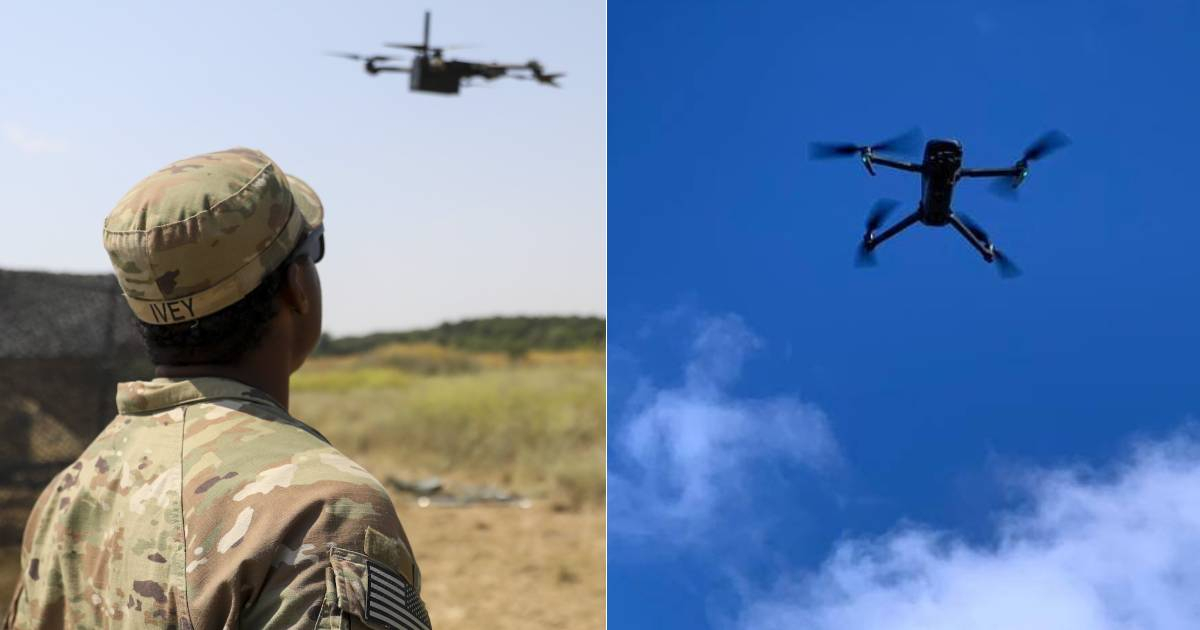
While in the United States drones are portrayed as a key element of air superiority and national security, in Cuba the regime showcases them as part of military exercises filled with symbolism and propaganda.
The U.S. Secretary of Homeland Security, Kristi Noem, stated that drones represent “the new frontier of American air superiority” and that, under the leadership of President Donald Trump, the country is entering a new stage to protect its borders and territory.
According to the explanation, the establishment of a specialized executive office focused on unmanned aerial systems and combating hostile drones aims to strengthen internal security, protect critical infrastructure, and ensure safety at large events, such as those planned for the 250th anniversary of the U.S. and the 2026 World Cup.
In Cuba, the scene was different. In Holguín, during National Defense Day, official media displayed images of military exercises featuring drones, alongside outdated artillery pieces, militia members, reservists, students, and civilians. All under the slogan of the "War of All the People" and the call to defend sovereignty against an unspecified external threat.
The images reveal drones operated in rural environments, with no public information regarding their range, actual function, or integration into a modern defense system. More than a technological demonstration, they are part of a political staging where the focus is not on military capability, but rather on the narrative of unity, discipline, and loyalty to the regime.
For many Cubans, both inside and outside the island, the contrast is apparent. While the country faces prolonged blackouts, food shortages, a transportation crisis, and an unstoppable exodus, the government mobilizes civilians and youth to participate in exercises that have little to do with the real problems facing the population.
In that context, the drones displayed in Holguín do not represent air superiority or a response to specific threats. They function more as propaganda "toys" within a political-military ritual that is repeated every year, anchored in fear of the external enemy and a discourse of resistance that no longer resonates with the daily life of Cubans.
Filed under: