
Related videos:
Iran has confirmed that it maintains open channels of communication with the United States amidst a wave of massive protests, government repression, and a potential military response from President Donald Trump.
The admission recalls the steps taken by the Venezuelan regime before its forced opening to dialogue with Washington following Nicolás Maduro's downfall.
According to the Iranian Foreign Minister, Abbas Araqchi, talks with U.S. special envoy, Steve Witkoff, are ongoing "before and after the protests," reported the news agency Reuters.
Although he described Washington's proposals as "incompatible with the threats," the gesture marks a significant shift in Tehran's stance, which for years avoided any direct contact with the U.S. government.
The announcement arrives at one of the most delicate moments for the Islamic Republic since 1979.
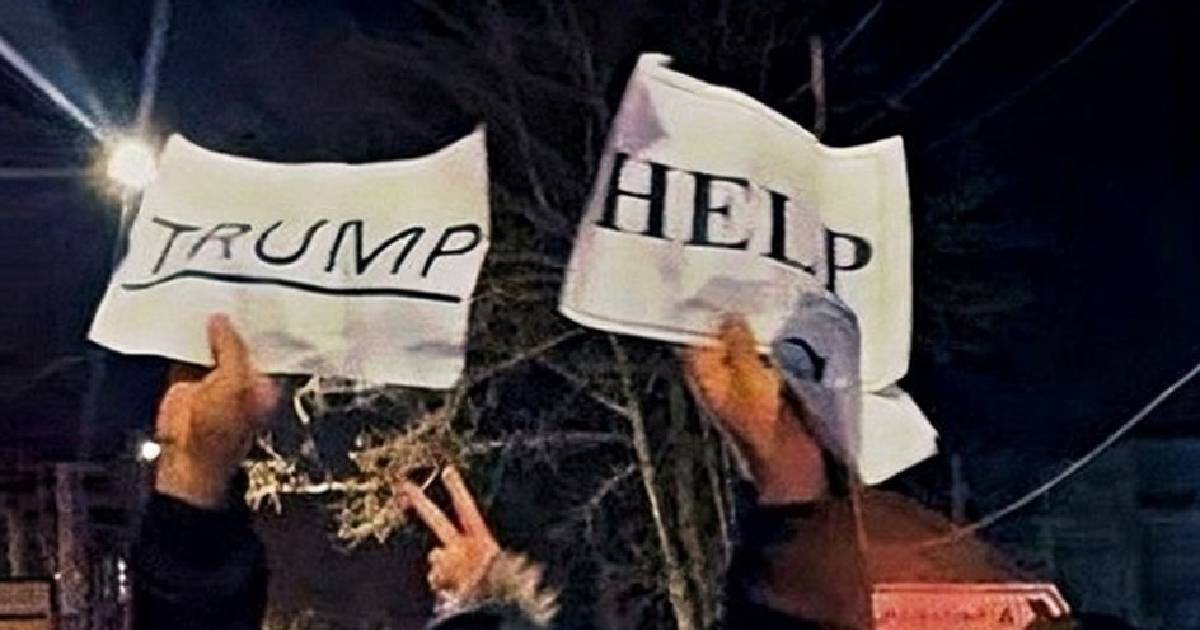
The protests, which began on December 28 due to the rising cost of living, have transformed into a national outcry against clerical power.
The human rights organization HRANA reported at least 646 confirmed deaths, including 505 protesters and over a hundred members of the security forces.
The repression has been brutal, with thousands detained and an internet blackout aimed at preventing the spread of images of state violence.
However, some citizens continue to connect using the Starlink satellite service, owned by Elon Musk.
From Washington, Trump warned that the United States will “act” if Iranian forces fire on protesters again.
In response, the president of the Iranian Parliament, Mohammad Baqer Qalibaf, assured Washington and its allies that any attack against Iran would turn American bases and ships in the region into "legitimate targets."
Trump also announced a new 25% tariff on any country that conducts business with Iran, a measure that increases economic pressure on the regime.
“This order is final and conclusive,” the U.S. president wrote on his social media account.
China immediately rejected the decision and warned that it will take "all necessary measures" to protect its interests, while Turkey, Iraq, and the United Arab Emirates remain silent.
Regional tensions have pushed oil prices to their highest level in seven weeks.
Similar to Venezuela, where the collapse of Maduro's regime led to discreet contacts with Washington, the Iranian theocracy seems to be seeking a negotiated exit from its international isolation.
Analysts agree that the opening of diplomatic channels could be a sign of internal weakness rather than a genuine willingness to engage in dialogue.
In Tehran, the Speaker of Parliament, Mohammad Baqer Qalibaf, stated that the country is engaged in "an economic, psychological, military, and terrorist war" against the United States and Israel, while attempting to project an image of total control.
However, reports of internal divisions within the Revolutionary Guard and the growing social discontent contradict that message.
Trump plans to meet this week with his top advisors to assess options regarding Iran, including cyberattacks, expanded sanctions, or logistical support for opposition groups within the country.
“Diplomacy is always the first option for the president,” said his spokesperson Karoline Leavitt, although she acknowledged that the signals from Tehran “are contradictory.”
Meanwhile, the families of the victims continue to challenge the repression and visit the cemeteries of Tehran to pay tribute to their dead, repeating the same slogans that call for the end of the regime.
What began as an economic protest has turned into an open struggle against the clerical system that has governed Iran for more than four decades.
Filed under: