
Related videos:
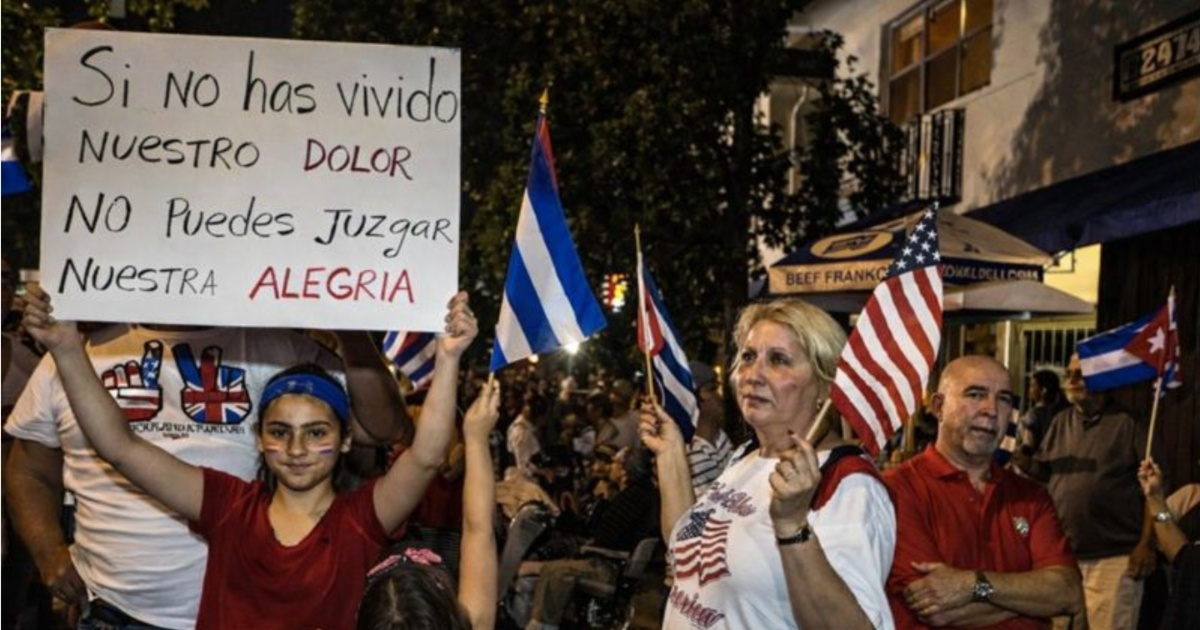
In Miami, segments of the Cuban exile community express that they would support a U.S. operation in Cuba "similar to the one that removed Nicolás Maduro from Venezuela" on January 3, considering it justified by years of "misery and oppression" under the regime.
A report from EFE includes statements from Luis Zúñiga, a member of the Assembly of the Cuban Resistance (ARC), who told the agency from the organization's headquarters in Doral (west of Miami) that, “aside from economic” and “political” pressure, if a “surgical operation to remove the oppressors is needed… blessed be it.”
EFE points out that, although few exiles in Miami are willing to speak out publicly for fear of reprisals against family members in Cuba, among those who do speak "support prevails" for an operation similar to that implemented in Venezuela.
Zúñiga also argues that there is a "right to intervene" in Cuba's internal affairs due to the abuses of the regime, and contends that if the dictatorship was established with Soviet assistance, other powers would have the right to help "liberate" the island.
These positions are framed within a context of increasing pressure from Washington since Donald Trump's return to the presidency.
According to the report, the president returned Cuba to the list of state sponsors of terrorism, which resulted in new financial sanctions, and Marco Rubio's appointment as Secretary of State was interpreted by the exile community as a sign of a tougher stance toward Havana.
In interviews, the Cuban-American José Ramón Pérez Campos described Maduro's downfall as a "very sensitive link" for Cuba, due to the impact of a break with Venezuela that, in his view, leaves Miguel Díaz-Canel's government in an "extremely difficult" situation.
Pérez Campos suggested that the regime would have to choose between seeking "alternatives" through "conversational diplomacy" or facing an uncertain scenario. He implied that a change would require abandoning communism, although he doubts that the authorities are willing to relinquish control.
EFE also quotes Álex Arellano, who praised Rubio and stated that he would go down in Cuban history if he manages to bring an end to the regime, and José Ramón Cardona, who took the most radical position by asserting that Cuba would be free by the end of next April and arguing that pressure—though painful for the population—is “the only way” to force the collapse of the system.
The report concludes that, for these interviewees, a potential change would open the door to a reconstruction of the country with support from the exile community, amid a crisis described as economic, energy-related, and demographic, while fears of speaking in public persist due to the possible consequences for relatives on the island.
Filed under: