
Related videos:
The countries of the European Union (EU) reaffirmed their "full support" for Denmark and Greenland following the escalation of tensions with the United States and warned that they have "the power and means" to defend themselves against any form of coercion.
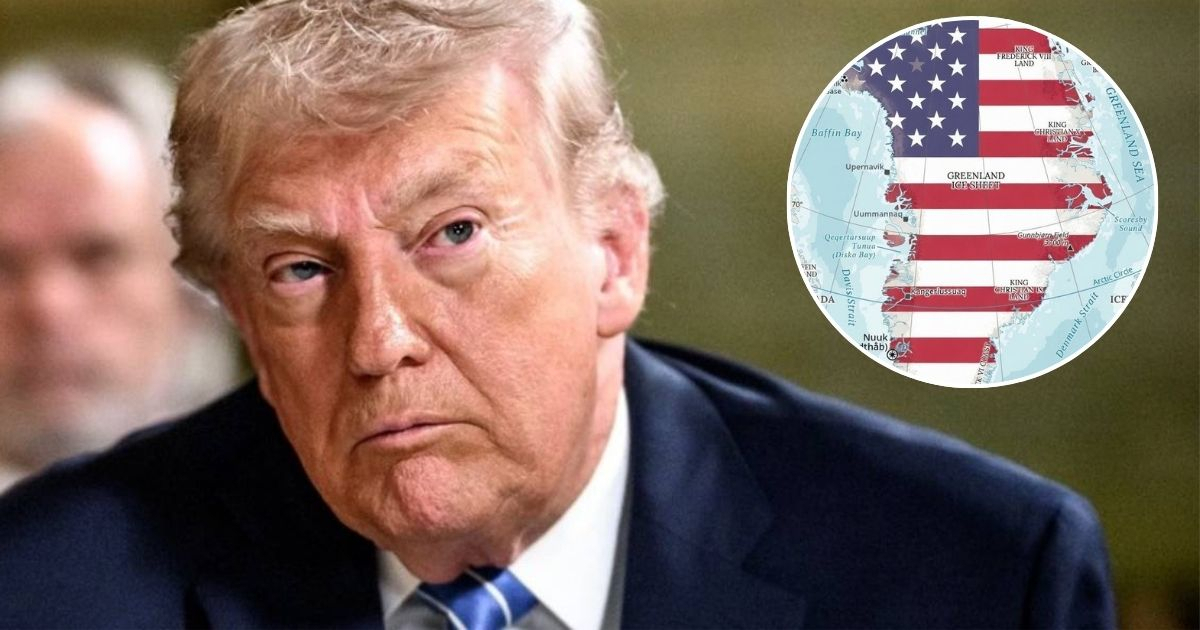
The statement was made at the end of an extraordinary summit held in Brussels, convened urgently following the tariff threats from President Donald Trump against the countries that opposed his intention to control the Arctic island, an autonomous territory belonging to the Kingdom of Denmark.
According to a report by EFE, the heads of state and government of the Twenty-Seven expressed their unity in the face of the crisis in transatlantic relations.
In an appearance before the press after the summit, the President of the European Council, António Costa, emphasized that "Denmark and Greenland have the full support of the European Union," and stressed that "only the Kingdom of Denmark and Greenland can decide on matters related to Denmark and Greenland."
Costa described Trump's announcement made on Wednesday at the World Economic Forum in Davos as "positive," where he reported the withdrawal of his threat to impose new tariffs, a measure that, if it had been carried out, "would have been incompatible with the trade agreement between the EU and the United States" concluded last summer.
However, he warned that the EU will continue to defend its interests and that "it will protect itself, its member states, its citizens, and its businesses from any form of coercion."
"The EU has the power and the tools to do so, and it will do so as long as necessary," Costa insisted.
Among the potential retaliatory measures that Brussels had planned in case Washington imposed trade penalties were tariffs amounting to 93 billion euros, and even the launch of the EU's anti-coercion instrument, known as the "trade bazooka."
For her part, the President of the European Commission, Ursula von der Leyen, acknowledged that Europe has invested "insufficiently in the Arctic and its security" and stated that the time has come to intensify efforts.
"Collectively, we have invested insufficiently in the Arctic and Arctic security. Therefore, the time has come to intensify our efforts and build upon what we already achieved two years ago," he stated.
Von der Leyen recalled that the EU has already launched initiatives on additional investment in clean energy, critical raw materials, and digital connectivity, and announced that for the next multiannual budget, it has been proposed to double financial support for Greenland.
"We are working on strengthening the EU's relationship with Greenland and, as part of this, the Commission will soon present a substantial investment package," he stated.
In addition to the investment, the head of the community executive emphasized the intention to deepen cooperation with the United States and other partners in Arctic security, including the possibility of increasing defense spending to acquire capabilities tailored to that region and strengthening agreements with countries such as the United Kingdom, Canada, Norway, and Iceland.
Before the summit, the High Representative for Foreign Affairs, Kaja Kallas, warned that the relationship with Washington "has taken a heavy blow" due to the threats regarding Greenland, and that this situation "benefits Russia and China."
In the same vein, French President Emmanuel Macron stated that the EU will "remain vigilant" and will use the tools at its disposal if any of its partners are pressured again.
Macron stated that recent events have shown that "when Europe is united, strong, and reacts quickly, things return to order and calm" and that "when threatened, it can assert itself."
Austrian Chancellor Christian Stocker added that the EU must prepare for potential new crises with the United States and adapt "very quickly" to a changing world order.
Swedish Prime Minister Ulf Kristersson stated that although the escalation has damaged trust between Europe and Washington, "there is never anything that cannot be fixed."
For her part, Danish Prime Minister Mette Frederiksen expressed gratitude for the "extremely important support" from EU countries and stated that when Europe is united, "the results are visible."
Days earlier, Donald Trump had traveled to Europe to meet with NATO Secretary General Mark Rutte and announced the start of formal negotiations regarding the future of Greenland and the Arctic region.
"After a very productive meeting with the NATO Secretary General, we have established the framework for a future agreement regarding Greenland," said the leader in a statement.
At the World Economic Forum, Trump stated that he will not impose the tariffs planned for February 1 and asserted that the United States is "the only country capable of protecting this vast land mass," referring to Greenland.
The president insisted that "everything the United States is asking for is a place called Greenland," referring to the strategic importance of the island in relation to Russia and China.
The president appointed Vice President JD Vance, Secretary of State Marco Rubio, and Special Envoy Steve Witkoff to lead the negotiating team.
Days earlier, he had sent a message to the Prime Minister of Norway, Jonas Gahr Støre, in which he stated that he no longer feels "obligated to think solely about peace", while defending his position to take control over the autonomous territory of Denmark.
"The world will not be safe unless we have total control of Greenland," a phrase that raises alarm and reveals Washington's strategic ambitions in the Arctic.
Meanwhile, thousands of Greenlanders protested over the weekend against any attempt at U.S. control, stating that "the island will not be pressured."
Filed under: