
Related videos:
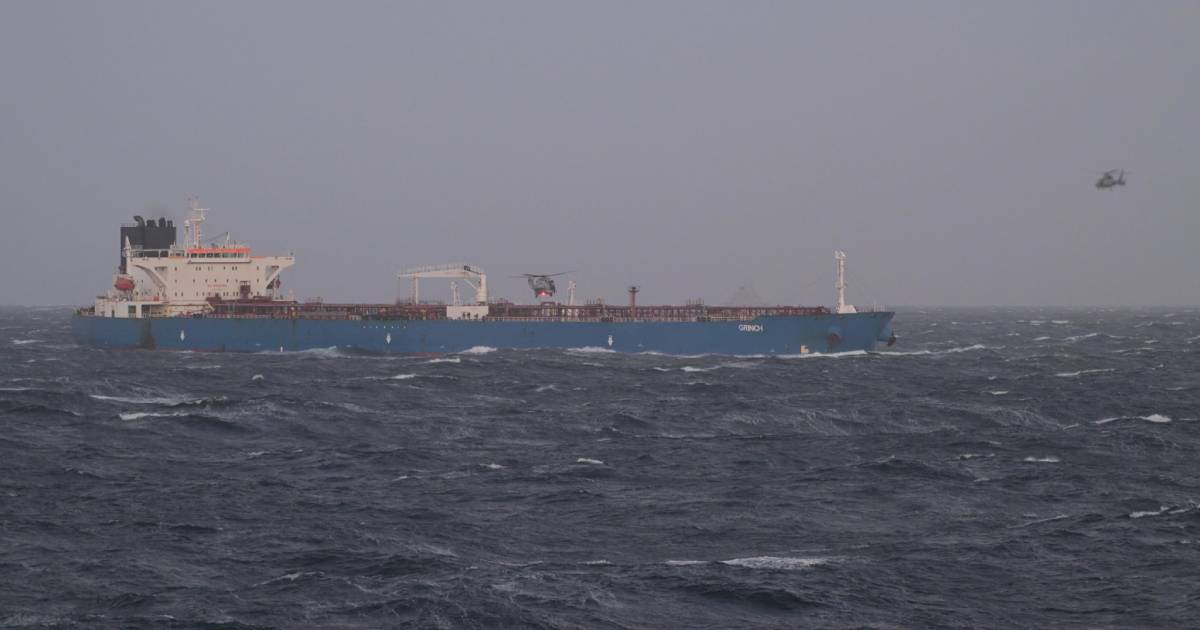
The French Navy intercepted a tanker coming from Russia in the Mediterranean waters that was violating international sanctions prohibiting crude oil exports from that country, in an operation that once again brings to light the crucial role of oil in financing the war in Ukraine.
President Emmanuel Macron himself confirmed the operation in a message posted on the social media platform X, where he specified that the operation took place in international waters, with the support of allies, and under the framework of the UN Convention on the Law of the Sea.
According to the explanation, the ship was sailing under a false flag and was subject to international sanctions, which is why it was boarded by the French Navy.
“We will not allow anything to go unpunished,” warned the president, while also announcing that a judicial investigation had already been initiated and that the tanker was diverted, without detailing its final destination, reported the agency Efe.
The French Navy specified that the operation took place in the Alboran Sea and that the intercepted tanker is the GRINCH, a ship coming from the Russian port of Murmansk.
The control was carried out in accordance with Article 110 of the UN Convention, which authorizes the verification of a ship's nationality when there are well-founded suspicions about its flag.
After the boarding and review of the documentation, the authorities confirmed doubts regarding the legitimacy of the flag under which the tanker was operating. At the request of the prosecutor of the Republic of Marseille, responsible for maritime matters, the vessel was diverted on January 22 and is currently being escorted by units of the French national navy to an anchorage point, where further checks are ongoing.
According to Paris, the operation was carried out in coordination with several allies, including the United Kingdom, and reflects the commitment of France and its partners to uphold international law and ensure the effectiveness of European sanctions against Russia, which have already amounted to nineteen packages since the beginning of the invasion of Ukraine.
For his part, the French leader emphasized that Paris and its partners are determined to ensure the effectiveness of European sanctions against Russia, imposed following the invasion of Ukraine, a conflict that is nearing its fourth year.
He also recalled that the so-called "phantom fleets" or "dark fleets" are a key component in keeping the Kremlin's war machinery afloat, as they enable the covert export of oil through name changes, flag alterations, or opaque routes that evade international controls.
Ukrainian President Volodymyr Zelensky publicly thanked France and Macron for what he described as the kind of firmness needed to prevent Russian oil from continuing to finance the war.
In a message shared also on X, he insisted that Russian ships operating near European coasts must be stopped and even suggested the confiscation and sale of the crude oil transported by these tankers.
The French interception occurs in a context of rising tension at sea, where control over energy routes has become an additional front in the geopolitical conflict.
The European Union has so far approved nineteen sanction packages against Russia, several of which specifically target its oil network, banning the maritime import of crude oil and refined products. The loss of this market has dealt a structural blow to Moscow, whose budget largely relies on oil revenues.
At the beginning of January, U.S. forces captured the tanker Marinera in the Atlantic, linked to the transport of sanctioned crude oil, despite being under direct escort from the Russian Navy, including a submarine.
That episode raised alarms within NATO and made it clear that any engagement can turn into a high-risk diplomatic incident.
Filed under: