
Related videos:
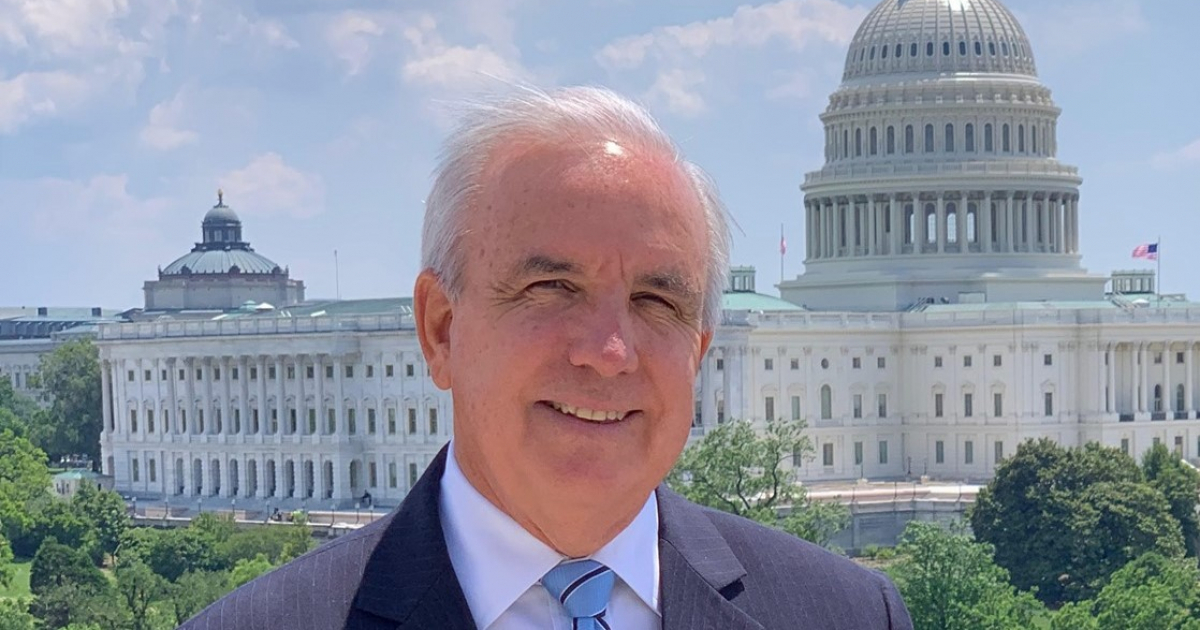
The Republican congressman from Florida, Carlos A. Giménez, expressed his support this Friday for a complete oil embargo against Cuba as part of the measures to pressure the island's government and limit its capacity for repression.
In a message posted on X, the legislator was emphatic: "From the federal Congress, we support any measure that limits the flow of money and resources to the murderous dictatorship in Cuba."
"Aoil embargo is key for the regime to be unable to mobilize to repress the people," he declared.
Giménez added that his stance goes beyond the energy issue and defended the complete tightening of restrictions: "We continue to push for the end of all travel and shipments to Cuba, with the sole exception of humanitarian cases."
His statements come at a time when the U.S. government is discussing new actions to increase pressure on Havana.
The congressman's words come in light of recent revelations from the Politico portal, which reported that President Donald Trump's administration is internally evaluating the possibility of blocking all oil imports to Cuba, a measure that would represent a significant escalation compared to previous sanctions.
The proposal, which has not yet been approved, is part of a set of options that could be presented to the leader.
According to sources quoted by Político, the plan is being driven by critics of the Cuban regime within the administration and is expected to have the support of Secretary of State Marco Rubio.
One of the consulted individuals described energy as the true "strangulation" of the Cuban system and asserted that, in the view of those who advocate for a hardline stance, the regime's collapse would be an "event" that could occur in 2026.
However, within the U.S. government itself, there are differences.
Some voices warn that a total oil blockade could trigger a large-scale humanitarian crisis, given the fragility of Cuba's electrical system and the island's dependence on imported crude.
Cuba imports about 60% of its oil supply, and prolonged blackouts are already severely affecting the daily lives of millions of people.
The Island historically relied on Venezuela, but after the confiscations of sanctioned shipments during the Trump administration, Mexico has become the main supplier, although charging for the crude and lacking sufficient capacity to meet the entire demand.
Nevertheless, Mexican oil tankers like the Ocean Mariner have continued to arrive at Cuban ports, while Claudia Sheinbaum's government has defended these shipments as "humanitarian aid."
Politician also emphasized that, for now, there are only internal discussions, not a policy that has already been implemented.
The White House and the Cuban embassy in Washington did not respond to requests for comments on the matter.
In fact, the information released reveals a gap between political rhetoric and practice: although Trump has promised to cut off the "economic oxygen" to the regime, the United States has not blocked Mexican oil shipments to the island, according to CBS News.
In this context, Giménez's stance represents one of the toughest lines within Congress.
For the Cuban-American legislator, the energy embargo is not just an economic sanction but a political tool to prevent the Cuban government from sustaining its repressive apparatus.
While deliberations continue in Washington, the future of a complete oil embargo remains undefined, but the issue has already become one of the central themes in the debate about U.S. policy toward Cuba in 2026.
Filed under: