
Related videos:
Cuba is facing a new fuel crisis that, while not unprecedented, is hitting particularly hard this time. In addition to the traditional instability in supply, the loss of one of its most important energy pillars, Venezuelan oil, compounds the situation.
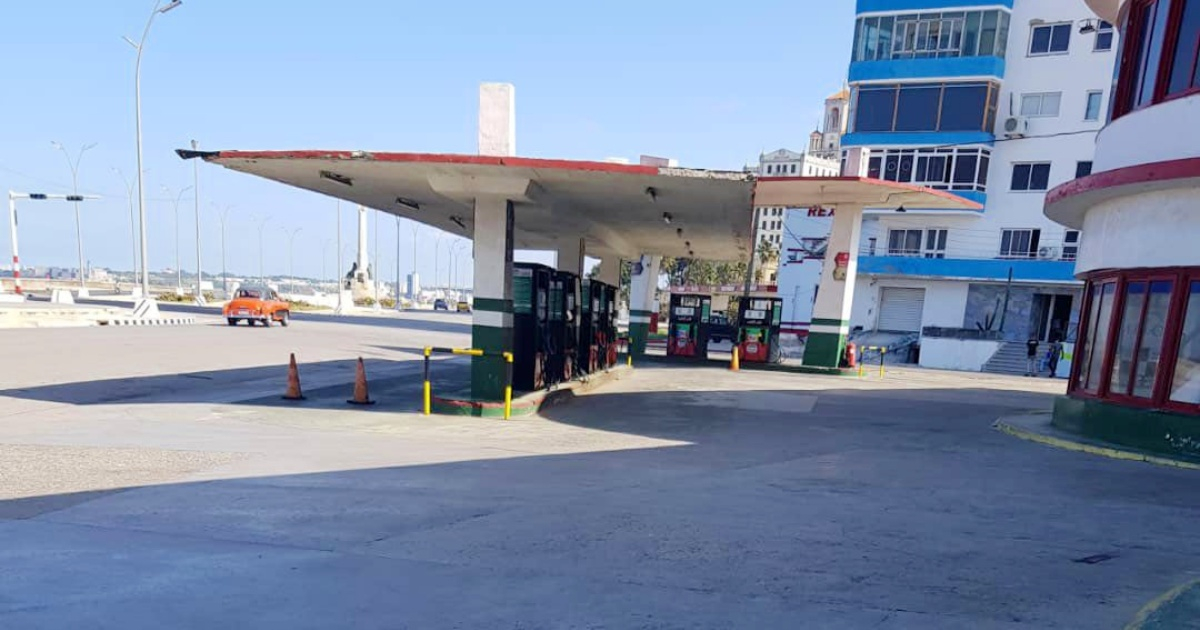
The interruption of the flow from Caracas has unleashed a chain of visible consequences throughout the country: closed gas stations, long lines, and exorbitant prices in the informal market.
"He who has it, sells it at the price he wants", summarized an activist interviewed by Martí Noticias.
The phrase captures the heartbeat of the black market, which has now become the only resource for many Cubans.
An uncontrolled informal market: Gasoline priced up to 1,500 pesos
The scarcity has pushed the population toward the informal market, where prices have reached unimaginable figures just a few months ago.
In places like Quivicán and Santiago de las Vegas, the price for a liter is reported to be between 700 and 900 pesos; in San Antonio de los Baños, it hovers around 1,000, and in Camagüey, prices have been recorded as high as 1,300 and 1,500 pesos.
“There is no gasoline in Havana or in 'Americano' (dollars)”, complain drivers and residents.
Not even those with priority assignments, such as users with power generators, are receiving fuel.
A mother recounted that she had to buy two liters for 1,500 pesos to be able to cook, due to the power outages. “I couldn’t buy more because the situation here doesn’t allow it,” she said.
The urgency outweighs economic logic and highlights the severity of the supply shortage.
Kilometer-long queues and fear of total shortages
In provinces like Camagüey, according to reports from the Cuba Herald, the crisis is manifesting in long lines since early morning.
Private drivers and transporters stand by for hours, uncertain about availability or schedules.
Tension is rising due to the lack of official information and the unpredictability in distribution.
"The lines are no longer just for waiting for the tanker truck. Now they are out of fear. People come to stock up for fear of running out of everything," recounted a driver from Havana.
What used to be "ghost lines" are now scenes of collective anxiety.
The situation has forced many people to limit travel, reduce services, and in some cases, store fuel at home, reviving practices reminiscent of the Special Period.
Energy blow after Maduro's fall
The arrest of dictator Nicolás Maduro and his wife on January 3rd during a U.S. military operation marked the abrupt end of one of the main supporters of the Cuban regime.
In recent quarters, Venezuela supplied between 32,000 and 35,000 barrels of crude oil daily to Cuba, an amount vital for sustaining the operation of transportation, industry, and, above all, electricity generation.
"If they lose those 35,000 barrels from Venezuela, it’s basically a major collapse. It’s the collapse of the Cuban economy,” warned Jorge Piñón, director of the Energy Program for Latin America and the Caribbean at the University of Texas.
According to the agency EFE, "in 2025, Venezuelan oil covered about 30% of Cuba's energy needs."
That fact turns that loss into a structural blow that the Cuban state can hardly offset through other means, especially in the face of the simultaneous reduction of shipments from Mexico and the chronic shortage of foreign currencies.
The decline of Venezuelan oil not only leaves cars without gasoline. It leaves homes without electricity, hospitals, factories, and schools without activity. The impact multiplies.
Gasoline in dollars, salaries in pesos
One of the most aggravating factors is the inequality imposed by the partial dollarization of the economy. While the stations that sell in the national currency remain closed, those that operate in foreign currency are given priority. The paradox is striking: the majority of Cubans do not earn in dollars.
"In national currency they haven't replenished stock, so you have to buy in foreign currency. You know well that no one here earns in dollars," stated a citizen who had been waiting for four hours to fill up his tank.
This gap pushes many to turn to the black market or to exchange their few pesos for dollars at astronomical rates, exacerbating inflation and general impoverishment.
The warning of a major storm
Economist Miguel Alejandro Hayes warned that the cut in Venezuelan oil could result in a 27% decline in Cuba's GDP, a 75% increase in transportation costs, and a 60% rise in food prices. This is all occurring in a country that was already struggling with negative figures in these indicators.
Furthermore, international reports indicate that the United States is considering a complete blockade on oil imports to Cuba, and that Mexico is also evaluating its shipments. The island thus finds itself at an energy crossroads with few options.
Filed under: