
Related videos:
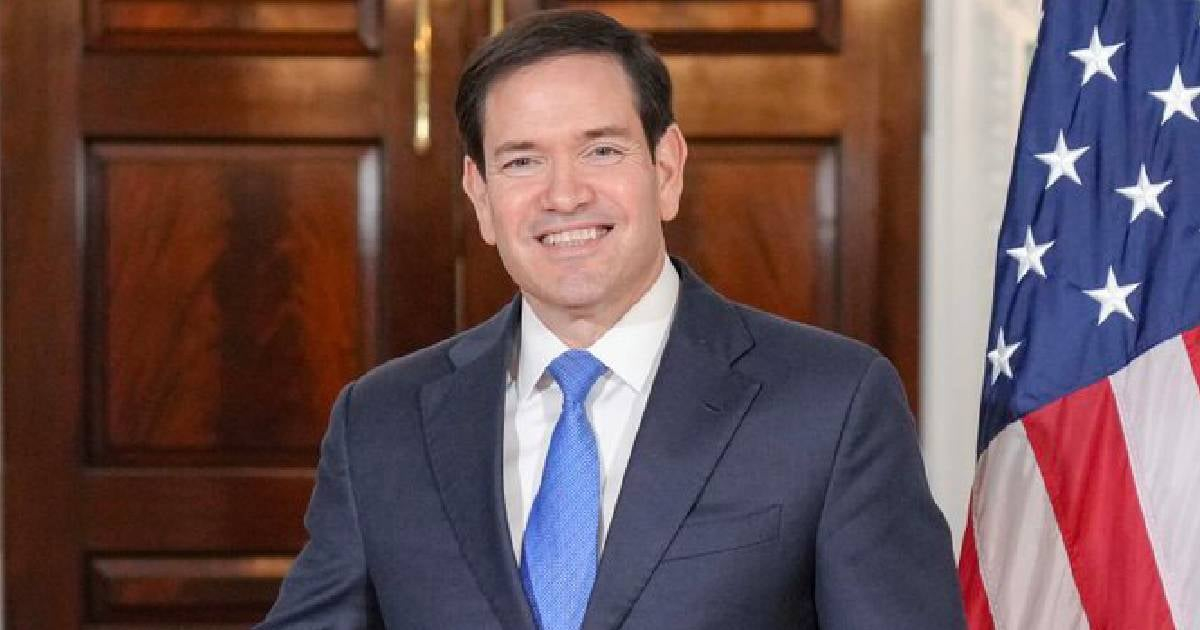
The United States Secretary of State, Marco Rubio, asserted this Wednesday that the Donald Trump Administration is not planning any military actions in Venezuela and categorically dismissed the possibility of a troop deployment in the South American country.
During a Senate hearing to explain Washington's policy towards Caracas, Rubio was explicit: "The only military presence you will see in Venezuela is our Marines at an embassy. That is our objective, that is our expectation, and everything described points towards that."
The head of American diplomacy firmly emphasized that "we are not preparing, nor do we intend or expect to take any military action in Venezuela at any time."
With this, he aimed to dispel rumors about a potential intervention following the recent diplomatic and security movements in the region.
Rubio insisted that the operation on January 3 did not constitute an invasion, but rather a targeted action to support law enforcement forces. "There is no war against Venezuela, and we are not occupying a country. There are no U.S. troops on the ground," he emphasized before the senators.
Nevertheless, he made it clear that President Trump, as commander-in-chief, does not rule out options if direct threats to regional security arise.
"If an Iranian drone factory emerges and threatens our forces in the region, the president reserves the option to eliminate that threat," Rubio illustrated, while emphasizing that these are hypothetical scenarios related to the protection of national interests.
Very close to opening the embassy
This week, the United States government formally notified Congress that it is taking the first steps to reopen its embassy in Venezuela and moving towards diplomatic normalization with the South American country.
The State Department explained that it will send a team of temporary personnel to Caracas to carry out "select diplomatic functions" while the full reopening of the mission is being evaluated.
"We are implementing a gradual approach to resume operations at the Embassy in Caracas," reported AP.
The document outlines that the diplomatic staff will live and work in a temporary facility while the former embassy complex, closed since March 2019, is being renovated.
The announcement represents the first formal communication from the Trump Administration regarding its intention to restore diplomatic relations with Venezuela, which were severed almost seven years ago.
In recent statements, Delcy Rodríguez affirmed that her government "has established respectful and cordial communication channels with the Trump Administration since January 3" and is working alongside the U.S. president and Senator Rubio on a "common reconstruction agenda."
Transition, elections, and political prisoners
In his speech, Rubio explained that the central goal of U.S. policy is to facilitate a democratic transition.
"The ultimate goal is that we want to reach a transitional phase in which we have a friendly, stable, prosperous, and democratic Venezuela, where all sectors of society are represented in free and fair elections," he stated.
He clarified that it is not enough to call elections if the opposition does not have access to the media or guarantees to compete: without those conditions, "they would not be free or fair."
Following the capture of Nicolás Maduro, he added, the immediate priority was to prevent a scenario of instability that could lead to "a civil war" or a massive exodus to Colombia.
To that end, the United States opened "direct and respectful conversations" with the interim authorities led by Delcy Rodríguez, who, unlike Maduro, is not facing charges in U.S. courts.
Still, in a written statement to the Senate Foreign Relations Committee, he warned that Washington might consider the "use of force" if the new government does not fully cooperate.
María Corina Machado and diplomatic reopening
Rubio also mentioned the role of the opposition leader María Corina Machado, whom he described as a figure that "can be part of" the transition process.
"What we are trying to unleash here is a process of stabilization, recovery, and transition towards a situation in which María Corina and others can be part," he said, although he acknowledged that for now "the control of the weapons and government institutions is in the hands of the regime."
The secretary confirmed that Washington already has a team on the ground assessing a diplomatic reopening, which would allow for the reestablishment of contacts with both the interim authorities and the opposition and civil society.
"We want to have a relationship again like the one that existed before Chavismo," he declared, and announced a change at the helm of the Venezuelan Affairs Unit of the State Department.
Rubio also emphasized the urgency of opening political spaces for the opposition and recalled that there are still around 2,000 political prisoners in the country. He acknowledged that the releases are progressing "more slowly than desired," but assured that "they are being released."
Oil, stability, and recovery
As part of the strategy, Washington is promoting a mechanism for Venezuela to sell sanctioned oil at market prices under U.S. supervision, in order to finance the police and government apparatus, and ensure that the resources are used "for the benefit of the Venezuelan people."
"This short-term mechanism stabilizes the country and ensures that the revenue from sanctioned oil benefits the Venezuelan people, not the previous system," Rubio explained.
The second phase, he added, focuses on economic recovery and the normalization of the oil industry—which holds the largest reserves in the world—promoting "sales without corruption and favoritism."
In that sense, he welcomed that the Venezuelan Parliament recently eliminated several restrictions on the participation of private companies in the hydrocarbons sector.
On the same day of the hearing, Rubio met with María Corina Machado, who had been received by President Trump at the White House just days earlier, in a gesture that reinforces Washington's support for a democratic and negotiated solution for Venezuela.
Filed under: