
Related videos:
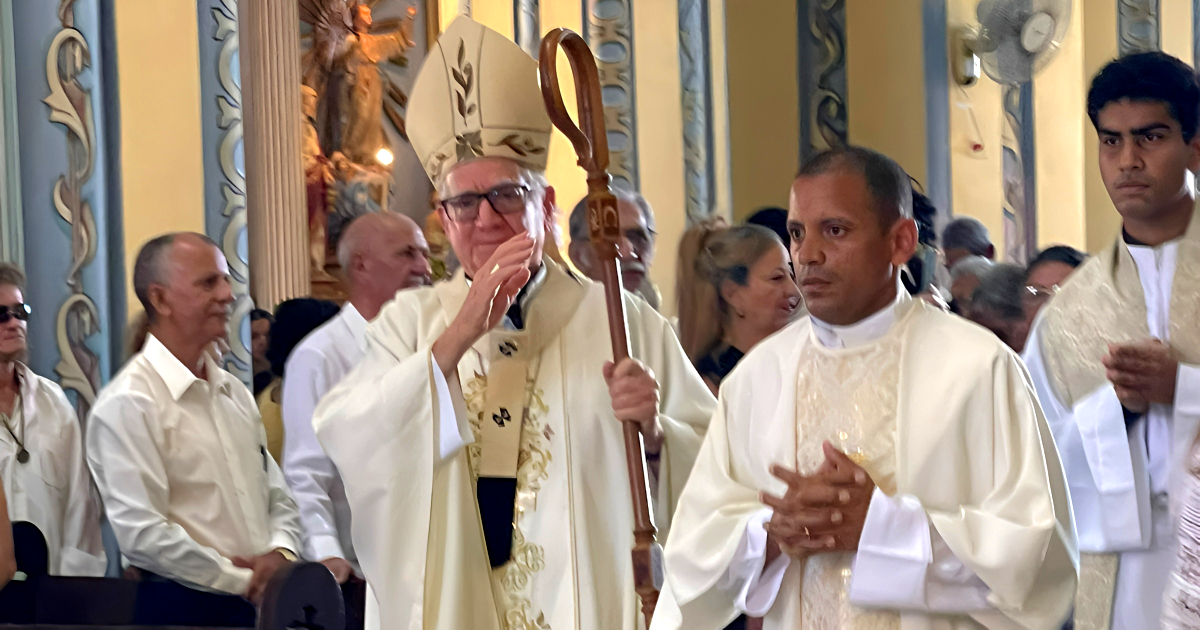
The Conference of Catholic Bishops of Cuba (COCC) issued a strong call to national consciousness this Friday in light of the worsening economic and social crisis in the country, urging the pursuit of “structural, social, economic, and political changes” that would restore hope to the people and prevent an outbreak of violence.
In a message addressed "to all Cubans of good will," the prelates expressed their "deep concern for the growing despair" and warned that the country is facing one of its most critical moments in decades, with the risk of "social chaos" if spaces for dialogue and real reforms are not opened.
The episcopal statement—issued by the Archdiocese of Santiago de Cuba and read in all parishes across the country—quoted: “Cuba needs changes, and they are increasingly urgent, but it does not need any more anguish or pain. No more blood or mourning in Cuban families.”
The bishops recalled that in June 2025, during the Jubilee Year under the theme "Pilgrims of Hope," they had called on the government to initiate profound transformations “without internal or external pressures or conditions.”
But, they emphasized, “the situation has worsened and the anguish and despair have intensified,” especially following announcements regarding the possible halt of oil supply to the island.
The text made implicit reference to the recent measures by the United States, driven by President Donald Trump, aimed at sanctioning countries that supply fuel to Cuba, and noted that such pressures “raise alarms, especially for the less fortunate.”
However, the bishops also warned that conflicts must be resolved "through dialogue and diplomacy, never through coercion or violence."
Appealing to the words of Saint John Paul II during his historic visit in 1998, the prelates urged that "the world should open up to Cuba, but Cuba should open up to its own people, without exclusions," and recalled that economic and political isolation "indiscriminately impacts the most vulnerable."
The message also expressed gratitude for the solidarity received following Hurricane Melissa, highlighting the work of Cáritas and the assistance from governments and international institutions that "have looked upon the victims with love and compassion."
Without directly naming the regime, the bishops called for "an atmosphere of plurality and respect" within the country, where fundamental freedoms are recognized and all social sectors, particularly the poorest and most marginalized, are given a voice. "To build a homeland with everyone and for the good of all, a great spirit is needed, like that of José Martí," they expressed.
The document reaffirmed the Church's commitment to defending human dignity and its willingness to collaborate on mediation or reconciliation initiatives if requested by the parties involved.
"The Catholic Church will continue to stand by this beloved people... offering its willingness to help dial down the tone of hostilities and create spaces for fruitful cooperation for the common good," the letter stated.
The message concluded by invoking the Virgin of Charity of El Cobre, the patroness of Cuba, to bring about “the hour of love” and for sensibility and reason to prevail over “threats, discord, and irreconcilable positions.”
With a calm yet firm tone, the bishops' statement emerges as one of the clearest voices calling from within the country for urgent changes, inclusive dialogue, and a renewal that restores to the Cuban people the hope and dignity they have lost.
The voices of the clergy that challenge fear
The message from the bishops arrives at a time when several Cuban priests, including Father Alberto Reyes, have become moral referents for an exhausted and disillusioned people.
Reyes, the parish priest of Esmeralda in Camagüey, has published a series of reflections stating that “change is already among us” and that Cuban society, although shaped by decades of indoctrination and fear, “can learn to live in freedom.”
His speech has become a constant call for the ethical reconstruction of the country: to leave behind simulation, double standards, and dependence on the "paternal State" in order to learn how to think, decide, and coexist in plurality.
"Perhaps we are not entirely prepared for freedom, but we are also not prepared to continue in decay," he wrote in one of his most recent posts.
The priest has frequently been a target of the State Security, which summoned and threatened him along with Father Castor José Álvarez for their criticisms of the political system. Nevertheless, he has reiterated his commitment to "seeking the greater good of the homeland," despite the regime's warnings.
In previous texts, Reyes questioned the repression, the exemplary trials, and the total disconnection of power from the reality of the country: “This people has long ceased to identify with the Revolution. Cuba is falling apart and collapsing in every sense,” he denounced after the condemnation of the writer José Gabriel Barrenechea for protesting during a blackout.
In another of his reflections, the priest urged his fellow countrymen to look beyond mere survival and to transform the everyday into service: "Life is not just about enduring, but about making the environment a more humane place."
The figure of Reyes symbolizes the increasingly visible role of a Church that, despite pressures and threats, is beginning to regain a public voice in the face of national collapse. Its message of change, grounded in Christian ethics and personal dignity, aligns with the bishops' call for sincere dialogue, without exclusions, that allows Cuba to finally open up to its own people.
Filed under: