
Related videos:
The United States has demanded that the Government of Saint Lucia, a small country located east of the Caribbean Sea, prohibit its nationals from studying medicine in Cuba, a decision that has raised alarm on the island and that its own Prime Minister, Philip J. Pierre, described as "a serious problem" for the country, according to statements reported by the agency EFE.
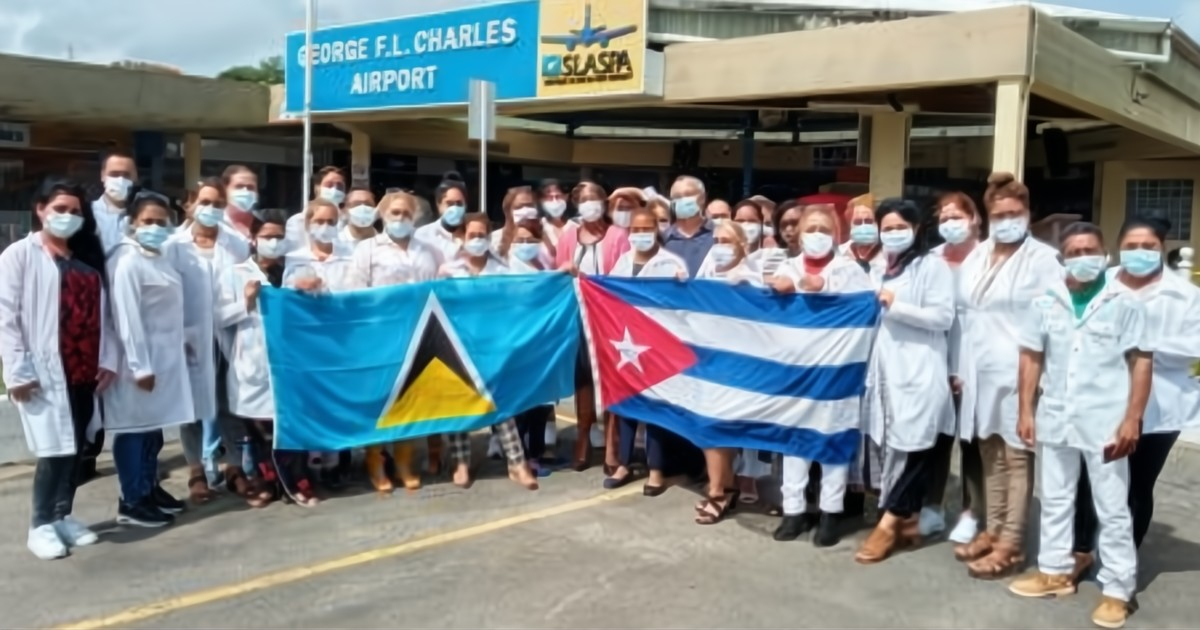
The healthcare system in Saint Lucia heavily relies on professionals who graduated from Cuban universities. "Many of our doctors were trained in Cuba, and now the United States has said that we can no longer do this," Pierre acknowledged during an international forum held in Castries, the capital, admitting that the measure adds extra pressure to an already overloaded healthcare system. The leader went further by lamenting that, in addition to local doctors who graduated from Havana, Saint Lucia also has Cuban professionals currently working in the country.
Washington's warning is part of a broader offensive against Cuban medical missions and the professional training agreements that Cuba has maintained for decades with several Caribbean countries. The United States claims that this program is based on "coercion and abuse," a narrative that has served as the basis for threats of diplomatic sanctions and visa restrictions.
According to Caribbean Life, Saint Lucia is, thus far, the only country that has publicly acknowledged receiving a direct order to prevent its students from studying medicine and other fields in Cuba. This decision places Prime Minister Pierre in front of a significant political and social dilemma, in a region where Cuban medical training has been crucial in preventing the collapse of healthcare systems.
The case of Santa Lucía adds to recent precedents. Bahamas suspended the hiring of Cuban healthcare personnel and canceled existing contracts, while Antigua and Barbuda chose to recruit nurses from Ghana in response to pressure to dismiss professionals from the island. Although the countries of the Caribbean Community initially defended Cuban medical missions as vital, many have ultimately yielded.
Tension is mounting just weeks before a regional summit in Saint Kitts and Nevis, presided over by Prime Minister Terrance Drew, a doctor trained in Cuba and one of the strongest advocates for health cooperation with Havana. Drew has rejected allegations of exploitation and emphasized the human impact of the program, recalling that Cuban professionals "have saved lives" and have become cornerstones of their communities.
For Cuba, the new U.S. demand not only represents an economic and political blow, but also another attempt to isolate one of the few sectors where it still maintains international influence. For the Caribbean, it means choosing between the pressure from Washington or the real risk of leaving its populations without sufficient medical care.
Filed under: