
Related videos:
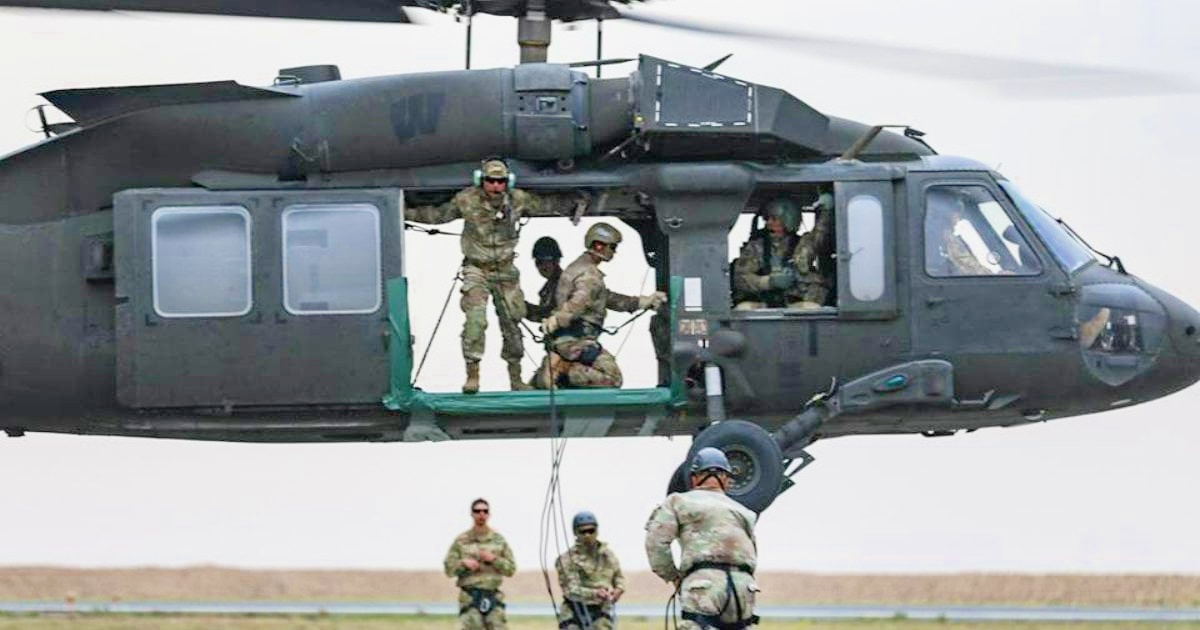
Puerto Rico has become the epicenter of a renewed military strategy by the United States in the Caribbean in recent weeks.
The increasing presence of military personnel and equipment on the island has begun to transform its economic and political landscape.
The reinforcement of troops, the multimillion-dollar investments in military infrastructure, and the operational deployment of special units signify a phase of military consolidation that - while officially aimed at combating drug trafficking - also seeks to "tighten the screws on Venezuela and Cuba."
This was revealed by an analysis released by Bloomberg in recent hours, based on a study conducted by the Puerto Rico Planning Board.
The Puerto Rican authorities estimate that investments related to military operations and infrastructure projects will reach 833 million dollars in fiscal year 2026.
An estimated economic impact of up to 2 billion dollars is expected, along with the creation of more than 12,000 jobs.
A grassroots-driven economy
On an island whose annual Gross Domestic Product hovers around 126 billion dollars and where the expected economic growth is below 1%, this influx of funds represents an unprecedented boost.
A significant portion of the investment—around 500 million dollars—will be directed to Fort Buchanan, on the outskirts of San Juan, where approximately 15,000 personnel are already stationed.
Other bases like Fort Ramey, in the west, will receive around 81 million, while Roosevelt Roads, on the eastern coast, will be rehabilitated with an injection of 79 million dollars.
The study indicates a positive outlook for the labor market, with direct hires in the construction, services, and logistics sectors, as well as indirect jobs in related businesses.
Governor Jenniffer González has openly supported this expansion, calling it "good for Puerto Rico, good for our security, good for the economy."
As a Republican and staunch ally of President Donald Trump, González has argued that the island's geographical position allows the United States to project its power in the region effectively.
Covert operations and regional tensions
Although the official discourse has insisted that the main objective of this deployment is to combat drug trafficking routes, the accelerated militarization of Puerto Rico has also coincided with direct high-profile operations.
The climax occurred on January 3, when U.S. special forces captured Nicolás Maduro in Caracas and transported him on an aircraft carrier to New York for trial.
This event marked an unprecedented escalation in U.S. foreign policy toward Latin America.
After that operation, the Trump administration's focus has shifted to suffocating the Cuban government, which indicates a prolongation of military activity in the region and, by extension, in Puerto Rico.
The island reaffirms itself as a key strategic enclave, both for its geographical location and its political status.
Social division and historical memory
However, not everything is enthusiasm. The military expansion has sparked protests in various sectors of Puerto Rican society, where the memories of the environmental, social, and health consequences caused by decades of military occupation in Vieques and other areas still linger.
Community groups and social leaders warn that this new phase could consolidate a structural dependency of the local economy on military funds, without addressing fundamental issues such as poverty, mass emigration, or the precariousness of public services.
Also, there is concern about the role the island plays as a platform for military operations toward third countries. For many, the military reinforcement responds less to internal security needs and more to a global power dynamic, where Puerto Rico acts as a forward base in an increasingly unstable region.
The balance between immediate economic benefits and long-term geopolitical risks is at the heart of the debate. While military investment provides jobs and resources, it does not replace public policies aimed at sustainable and autonomous social development.
As troops increase and funds arrive, so too does the question of what the true cost of this "projection of force" is.
Filed under: