
Related videos:
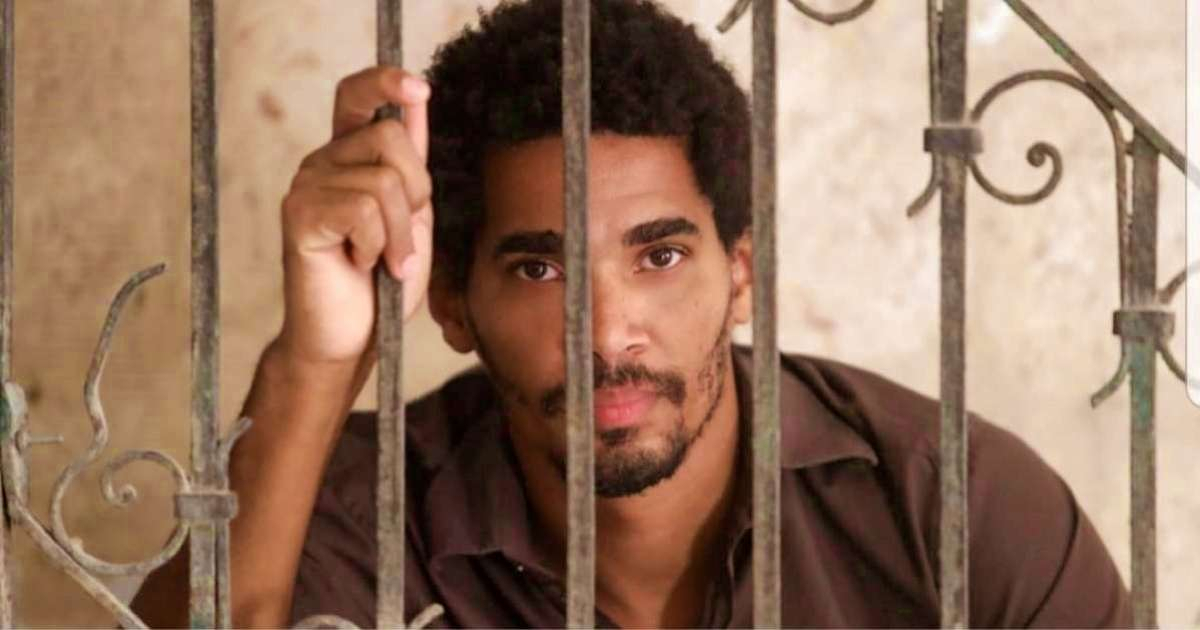
The Cuban artist and activist Luis Manuel Otero Alcántara urged the Cuban regime to yield to the crisis the country is facing and allow "life to find a way," in a message shared through his social media.
In the publication made on February 3, Otero Alcántara urged the authorities from prison to observe the national reality through art and to acknowledge the precarious situation the population is experiencing. “I demand that the Cuban regime look through the painting 'Happy Peasants' and recognize the conditions of poverty in which our people currently live. Art can also be a mirror,” he wrote.
The artist stated that the change should not occur due to external pressures, but rather as a response to the internal deterioration affecting Cuban society. “In the face of such material and spiritual destitution, it is necessary to yield and allow life to forge its own path. Do not do it out of external pressure; do it so that our people do not continue to suffer,” he added.
In the same message, he linked the permanence of political power with a scenario of social collapse: "Do it so that disaster and violence are no longer the faces of Cuba."
The reflection was accompanied by a reference to the work Happy Peasants (1938), by Cuban painter Carlos Enríquez.
Two days after the artist's publication, Cuban leader Miguel Díaz-Canel appeared in a televised message in which he publicly acknowledged the seriousness of the crisis that the island is experiencing. During his speech, he admitted that Cuba is reliving "the hard years of the Special Period" and that since December 2025 the country has not been receiving oil from Venezuela.
“We have a complex energy situation,” Díaz-Canel stated, explaining that the fuel deficit impacts electricity generation, transportation, agricultural production, and other essential services. The leader announced that the Council of Ministers approved “restrictive” measures focused on saving, prioritizing state consumption, and reducing non-essential activities.
In his speech, Díaz-Canel emphasized the narrative of sacrifice and resilience, stating: “I know that people say: sacrifice again. But if we do not sacrifice ourselves and do not resist, what are we going to do? Are we going to surrender? And surrender is not an option for Cuba.”
Otero Alcántara's statement comes in a context marked by repression against creators and activists on the island. The artist has been imprisoned since the popular uprising on July 11, 2021, accused of crimes that international human rights organizations deem politically motivated.
In recent months, independent reports have warned that at least 17 artists remain imprisoned in Cuba and another 10 face restrictive sanctions, describing it as a systematic criminalization of artistic creation and dissent.
Additionally, the premiere of the documentary Luis Manuel Otero Alcántara: We Are Connected, directed by Cuban filmmaker Ernesto Fundora, is scheduled. It reviews his artistic and civic journey, his role in the San Isidro Movement, and the impact of his actions on public debate both inside and outside the island.
Otero Alcántara's call thus adds to a series of statements that use art as a vehicle for denouncing and reflecting on the social, economic, and energy crisis that Cuba is experiencing, which was publicly acknowledged by the authorities just a few days after his message.
Filed under: