
Related videos:
The Cuban activist Aniette González García, a symbol of the citizen initiative #LaBanderaEsDeTodos, regained her freedom this Saturday after serving a three-year prison sentence for the alleged crime of "insulting national symbols."
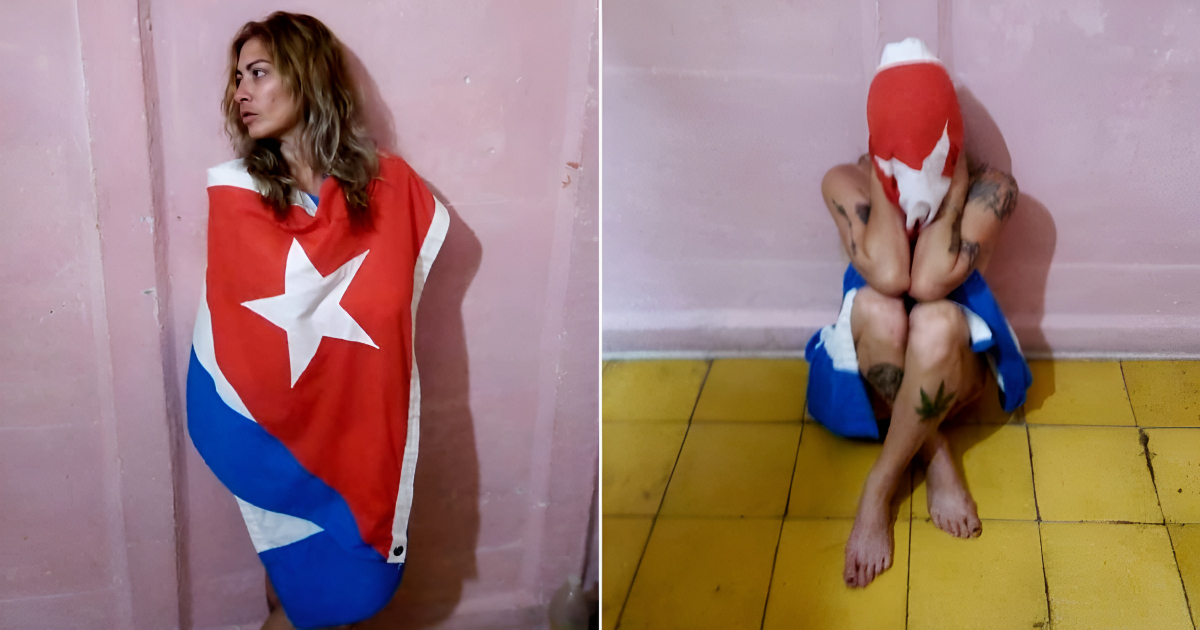
His only "crime" was taking a photograph with the Cuban flag, a gesture that the regime interpreted as an offense, but for many Cubans, it represented an act of love and dignity towards their homeland.
Aniette was arrested on March 23, 2023, in Camagüey, after posting on her social media some images where she posed wrapped in the national flag. That gesture, part of a peaceful challenge launched by the San Isidro Movement to reclaim the flag as a symbol of all Cubans, was met with institutional violence.
For months, her family reported her arbitrary detention and the harassment she endured in the Villa María Luisa prison, the operations center of State Security in Camagüey.
In February 2024, a municipal court . The appeal was rejected in April of that same year. Her daughter, Aniette Ginestá, expressed the outrage of an entire family on social media: “Is it for thinking differently? For a photo? For a flag?” she questioned.
A free woman, but marked by injustice
After serving her sentence, Aniette walks free again, although freedom in Cuba, under a regime that punishes ideas, remains relative. Her case illustrates how the judicial system of the communist regime turns love for the homeland into a crime when that love does not conform to the norms of power.
During her imprisonment, feminist organizations, artists, and activists both inside and outside of Cuba demanded her immediate release.
The magazine Alas Tensas reported that its condemnation was a political reprisal and an attempt to silence citizens' solidarity with the artist Luis Manuel Otero Alcántara, imprisoned for similar reasons. Both share a common cause: the defense of the right to reinterpret national symbols without fear of punishment.
Meanwhile, the government allowed artists aligned with the regime, such as Haila María Mompié, or even international figures like Laura Pausini, to use the flag in public performances without facing consequences. "They do not own our symbols," the activists shouted at the time, and that phrase became a motto of resistance.
The human cost of thinking differently
Aniette is a mother, daughter, and working woman. Her imprisonment was not only a violation of her human rights but also a profound emotional blow to her family.
His daughter, who has been one of the strongest voices denouncing injustice, was forced to grow up in a country where freedom of expression comes at the cost of imprisonment.
The release of Aniette does not erase the three years of confinement, the humiliations, or the fear. However, her exit from prison rekindles hope for those who continue to fight for a Cuba where speaking out against injustices while holding the flag is not a cause for condemnation, but a source of pride.
A country that needs to reconcile with its flag
The case of Aniette González is a painful example of how the Cuban regime has hijacked national symbols to use them as tools of ideological control. The flag, the anthem, the coat of arms become weapons of exclusion against those who do not align with the official narrative.
However, Aniette's photo, the one they attempted to erase with a court order, has multiplied on social media as a symbol of resistance. Every repost, every hashtag with her name, serves as a reminder that the Cuban flag does not belong to the Communist Party nor its leaders: it belongs to its people.
Today, as she leaves prison, Aniette González once again embraces that flag. But she no longer does it just for herself. She does it for all Cubans who dream of a country where thinking differently is not a crime, and where justice is not dressed in olive green.
Filed under: