
Related videos:
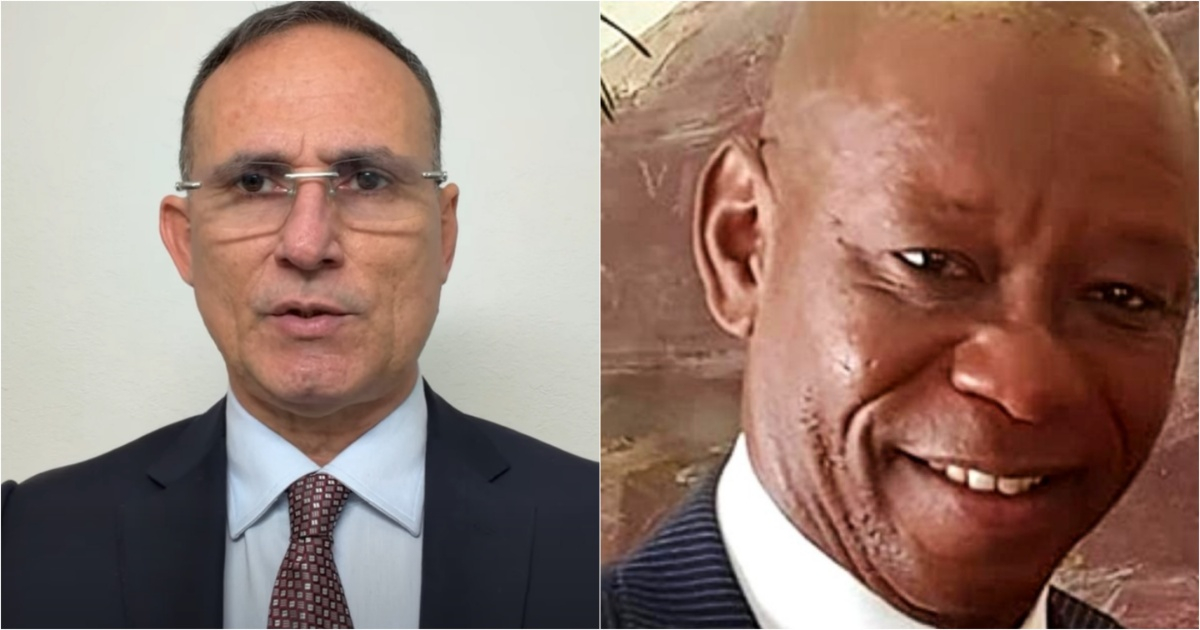
The Cuban opposition leader José Daniel Ferrer responded to fellow opposition member Manuel Cuesta Morúa regarding the pressures from the Trump Administration on the Cuban regime.
"With the U.S. policy of maximum pressure against the tyranny, Cuba is not being suffocated as Cuesta Morúa claims," Ferrer stated in a comment on the article where CiberCuba reported Morúa's remarks that "suffocating Cuba only strengthens repression."
"The tyranny is being pressured. The goal is to save Cuba. When Obama's policy of rapprochement was in place, repression was at its highest. Repression increases as activism against tyranny grows, and the policy of maximum pressure is the only one that can contain the regime from repressing as it did on July 11, 2021," Ferrer believes, in contrast to Morúa.
"Nothing could be further from the truth. Tyranny is cowardly, and when it knows there will be no consequences, it represses even more forcefully. The increase in repression at this time is due to the rise in activism, and if the U.S. shows that things are very serious, and that as repression increases, so does the punishment, they will ultimately hold back," he added.
"And if Europeans and Canadians also adopted a maximum pressure policy, it would be contained more quickly. The U.S. must continue with its current policy. It is the most supportive of the Cuban people and the democratic opposition," he concluded.
Ferrer’s statements respond to an interview where Cuesta Morúa again highlights the root of the crisis facing the Island: a political system incapable of managing the country that, rather than creating spaces for dialogue, responds with increased control and punishment.
In an interview with EFE, the newly elected president of the Council for Democratic Transition in Cuba (CDTC) stated that “90% of this country wants change and that this social majority is the foundation for a democratic transition with sovereignty, driven from within and without external impositions.”
Cuesta Morúa describes a country trapped in a “geopolitical trap” created by the government itself, which is unwilling to negotiate either with the Cuban people or with the international community.
However, regarding Washington's role, Cuesta Morúa advocates for it to be one of support and respect for sovereignty.
"If a negotiation table is set up among Cubans, then (the U.S.) should support it, encourage it, and do whatever is necessary to ensure that process reaches a successful conclusion," he said.
At the same time, he warns against delegating the transition to external actors: "What Venezuela is currently showing is that those who placed the strongest bets on a transition by relinquishing sovereignty are out of the transition game."
One of the most sensitive points of his analysis is the strategy of "suffocating" Cuba by blocking the arrival of oil and fuels. The country imports two-thirds of its energy, and cutting off supplies exacerbates blackouts and paralyzes production.
For Cuesta Morúa, that tactic does not bring us closer to democracy.
"Provoking an outburst only serves to strengthen the repressive machinery of the State." He also warns that this path could lead to "a humanitarian situation worse" than the current overall collapse, he cautioned.
He also does not believe in military solutions that would not address "the great demands of Cubans to democratize the country," he clarified regarding a military intervention.
In response, he proposes a "humanitarian solution" that combines political and diplomatic pressure with clear objectives: "to free political prisoners, establish a negotiation table with Cubans, and open the economy."
Filed under: