
Related videos:
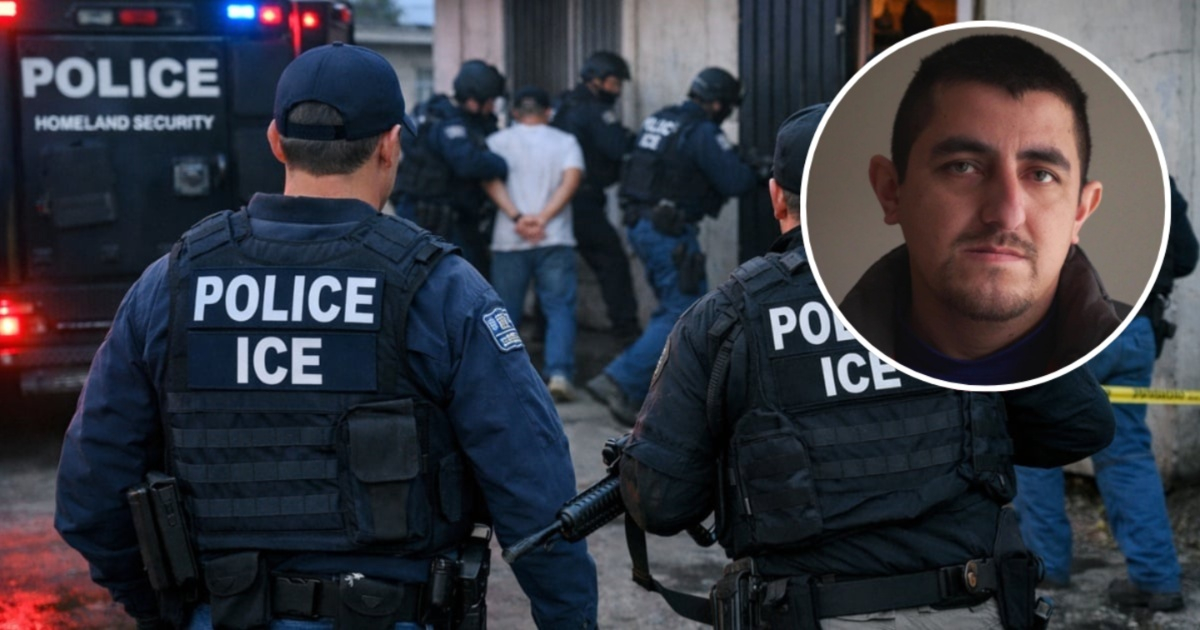
The Mexican immigrant Alberto Castañeda Mondragón, 31 years old, reported that he was beaten by agents of the Immigration and Customs Enforcement (ICE) during his arrest on January 8 in St. Paul (Minnesota).
During the episode, he suffered eight skull fractures and five cerebral hemorrhages that put his life in jeopardy, according to his testimony to The Associated Press (AP).
Castañeda Mondragón reported that, due to the severity of the injuries, his memory was so severely affected that he could not remember having a daughter and continues to struggle to regain personal memories, while the violence of that day remains "etched" in his mind, according to the report.
A tomography revealed fractures in the front, back, and both sides of the skull, injuries that—according to a doctor quoted by AP—were not consistent with a fall.
The immigrant claims that the officers struck him with an instrument that he later identified as an ASP (expandable baton).
Castañeda Mondragón recounted that he was taken out of a friend's car after having gone shopping and was handcuffed. Subsequently, according to his account, he was beaten and injured in the head with a steel baton.
He added that he was taken to a detention center, where—he claims—they hit him again.
AP reports that he was disoriented for days at the Hennepin County Medical Center (HCMC) in Minneapolis, with officials constantly monitoring him.
Later, according to court records cited by AP, he was transferred to the emergency room and later to a medical center in Minneapolis, where he reported having been “dragged and mistreated by federal agents.”
A week after his hospitalization, the staff described him as minimally responsive, and they allowed him to speak on the phone with his 10-year-old daughter, whom he did not remember.
The report indicates that he was discharged from the hospital on January 27.
Castañeda Mondragón arrived in Minnesota in 2022 with a temporary work visa and found employment as a driver and roofer.
With his income, he supports his elderly father, who has a disability and is diabetic, as well as his 10-year-old daughter.
During the first days of 2026, the city of Minneapolis became the epicenter of a growing social unrest following a series of violent operations by the Immigration and Customs Enforcement (ICE) that resulted in multiple confrontations and protests.
On January 7, the shooting in which a woman identified as Renee Nicole Good was shot prompted strong criticism of excessive use of force and sparked a wave of protests against federal agents.
The streets were filled with outraged citizens who denounced abuses and called for an immediate end to immigration raids, while the federal government bolstered its presence by sending an additional thousand agents.
Amid this tension, a national study revealed that more than half of Americans believe that ICE operations make cities less safe and reflect structural issues within the agency. Only 26% rated the use of force in the Minnesota case as "appropriate," while 56% deemed it unjustified.
The survey also showed an increase in public discontent with the Trump administration's immigration policy, particularly among urban and Latino communities, who view ICE's actions as a threat to civil rights and public safety.
Filed under: