
Related videos:
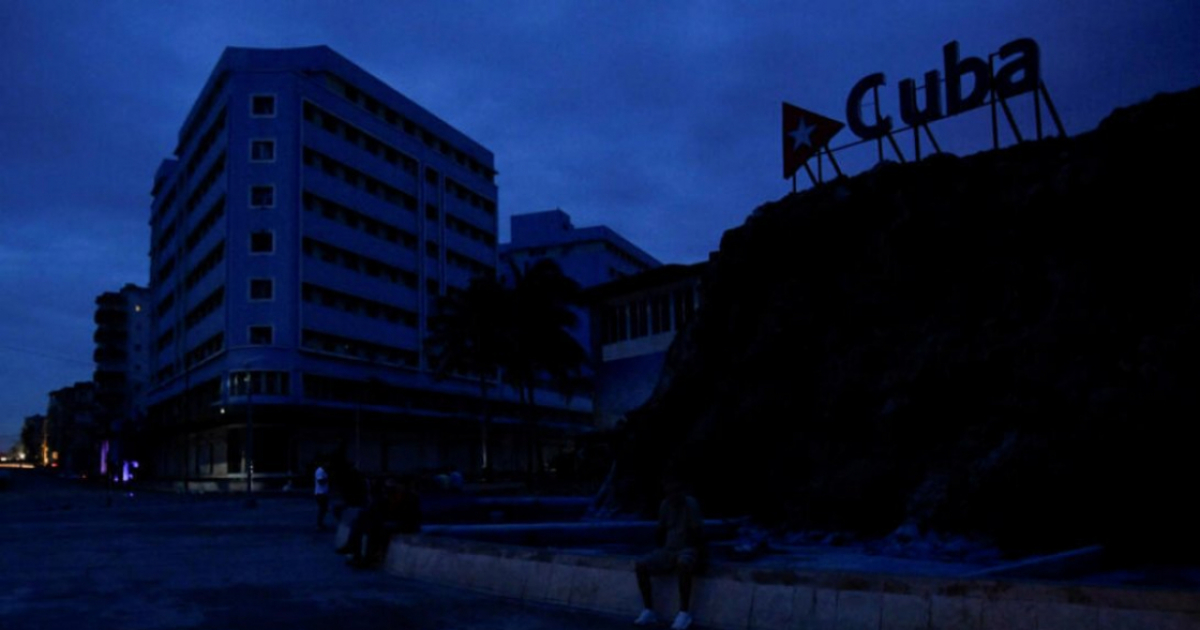
Power outages in Cuba escalated again this Monday, with an electrical deficit nearing 2,000 megawatts (MW) during peak hours, after during the weekend the disruptions were "only" around 1,500 MW.
The drop in power generation reflects the accelerated deterioration of the National Electric System (SEN) and the government's inability to contain an energy crisis that continues to deepen.
According to the official statement from Unión Eléctrica (UNE), on Sunday, the service was affected by a capacity deficit for 19 hours and 47 minutes, and the situation persisted through the early hours of Monday. The maximum impact was 1,722 MW at 6:30 p.m.
By 6:00 am this Monday, the availability of the SEN was just 1,170 MW, compared to a demand of 2,000 MW, resulting in 819 MW affected from early on.
For midday, the UNE estimated a greater impact of 1,150 MW.
The technical situation of the system is marked by multiple failures.
Malfunctions have been reported in four units of the thermoelectric plants Mariel, Santa Cruz, Felton, and Antonio Maceo. Additionally, two blocks of the Nuevitas and Carlos Manuel de Céspedes power plants remain under maintenance.
Additionally, the CTE Guiteras also went out of service this morning to repair a fault in the boiler structure.
On the other hand, limitations in thermal generation keep 588 MW out of service.
For the peak evening hours, UNE forecasts the completion of 60 MW in Unit 1 of Felton, the entry of four engines from the Patana de Regla with 30 MW, and the incorporation of six engines from the Fuel of Moa with 84 MW.
Nevertheless, the outlook remains critical: a generation capacity of 1,224 MW is expected against a peak demand of 3,100 MW, resulting in a deficit of 1,876 MW and an estimated impact of 1,906 MW during that time.
Although the Government insists on showcasing advancements in renewable energy, UNE itself acknowledges that the production from the 49 new photovoltaic solar parks was 4,259 MWh, with a peak power of 654 MW during midday hours.
That figure, however, is clearly insufficient to compensate for the collapse of thermal generation and the lack of maintenance of thermal power plants.
In Havana, the Electric Company reported that on Sunday, the service was affected for 4 hours and 13 minutes.
The maximum capacity reached was 269 MW at 6:20 PM, and it was not possible to restore the supply due to a deficit until 8:43 PM.
At the end of the part, six affected blocks (212 MW) remained, with a forecast for restoration in the morning.
The entity itself warned that if conditions in the SEN do not improve, blocks and circuits will be affected by energy contingencies without a scheduled time.
The jump from a deficit of about 1,500 MW over the weekend to nearly 2,000 MW this Monday demonstrates that the crisis not only persists but is worsening.
Decades of insufficient real investment, poor management, and unfulfilled promises have left the electrical system in a state of extreme vulnerability.
While the official discourse speaks of "plans" and "solar parks," the population is facing increasingly longer blackouts, with no clear information and a government that neither knows how nor can pull the country out of the energy collapse.
Filed under: