
Related videos:
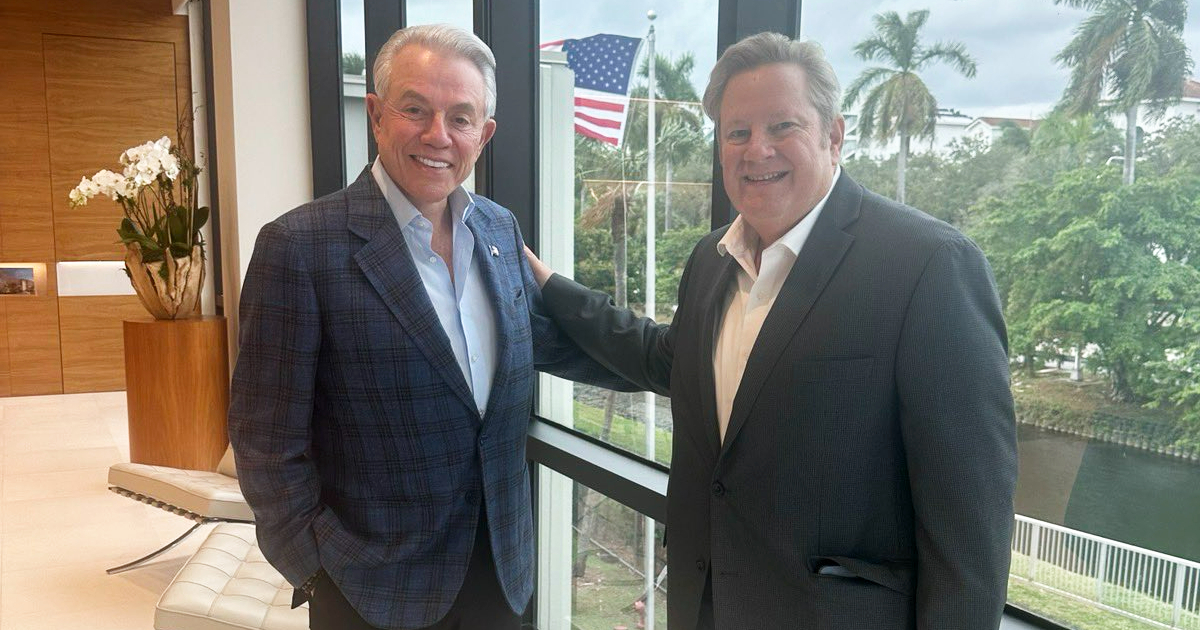
The newly confirmed United States Ambassador to Spain and Andorra, Benjamín León Jr., held a meeting in Miami with the head of the U.S. diplomatic mission in Cuba, Mike Hammer, as reported by the U.S. Embassy in Havana through its official account.
“Congratulations to Ambassador Benjamin León. It was a pleasure for our Mission Chief Mike Hammer to meet you in Miami. Ambassador León's successful career reflects what a Cuban can achieve when living in freedom,” the diplomatic mission posted on X.
The meeting takes place at a time of intense diplomatic activity for Hammer, both on and off the island, characterized by an agenda that blends military contacts, political statements, and outreach to the Cuban community in exile.
During his last trip to the United States, Hammer met in Miami with General Evan L. Pettus, head of the U.S. Southern Command (SOUTHCOM). According to the embassy, this was an institutional meeting, and no specific details were released, although it marks at least the second meeting between the two leaders following their initial exchange in January.
The meeting took place amid the deep economic and energy crisis affecting Cuba. Hammer has publicly stated that there is "already a collapse" on the island, referring to the power outages, the decline in tourism, and the worsening living conditions.
In the same period, the diplomat granted an interview to Telemundo from the United States, where he stated that he believes 2026 will be a year of change for Cuba, due to the ongoing worsening of the internal crisis.
Hammer emphasized that any transition should open real opportunities for Cubans and expand spaces for freedom and economic dynamism.
A recent agenda marked by firm statements and direct diplomacy
Hammer's activities in recent months have been characterized by a dual approach: an increasingly clear public stance on the Cuban crisis and a diplomacy of direct contact both within and outside the island.
During his last stay in the United States, the head of the mission stated in an interview with Telemundo that "the Cuban revolution has failed," describing a deep deterioration of the economy and everyday life in the country.
He also noted that the combination of the energy crisis, a decline in tourism, and growing insecurity has led to an unsustainable situation, and he asserted that 2026 could mark a political turning point.
In later statements, the diplomat emphasized that the current situation is different from the so-called Special Period of the 1990s, as Cuba no longer has the Venezuelan oil support that once partially alleviated the economic collapse. This absence, he explained, exacerbates the structural crisis facing the country.
In the same vein, he emphasized that "it's time to speed things up," referring to the need for the international community not to overlook the internal deterioration and to support a process that generates greater opportunities and freedoms for the Cubans.
At the same time, his administration has maintained an active presence on the ground. Since arriving in Havana, he has traveled through multiple provinces and held meetings with citizens, artists, religious leaders, and families of political prisoners.
He has also participated in symbolic visits, such as his presence at José Martí's tomb in Santiago de Cuba to commemorate patriotic dates, and community activities aimed at vulnerable sectors.
This style of open diplomacy has provoked repeated criticisms from the regime, which accuses it of interference and provocation. However, Hammer has reiterated that his priority is to listen directly to civil society and reaffirm the United States' commitment to human rights and the Cuban people.
In this context, his meeting in Miami with Ambassador Benjamín León Jr. is part of a broader strategy that combines political positioning, regional articulation, and the visibility of the Cuban exile in international decision-making spaces.
Regional projection
In that context, the meeting with Benjamín León Jr. becomes strategically significant.
The Cuban-American businessman, recently confirmed by the Senate as ambassador to Spain and Andorra following his nomination by President Donald Trump, represents a key figure in U.S. diplomacy towards Europe at a time of increasing pressure on the Cuban regime.
The meeting in Miami symbolizes not only a formal greeting but also the articulation of a foreign policy that combines hemispheric diplomacy, political pressure, and the visibility of the Cuban exile community in high-level positions, extending beyond the regional scope.
Filed under: