
Related videos:
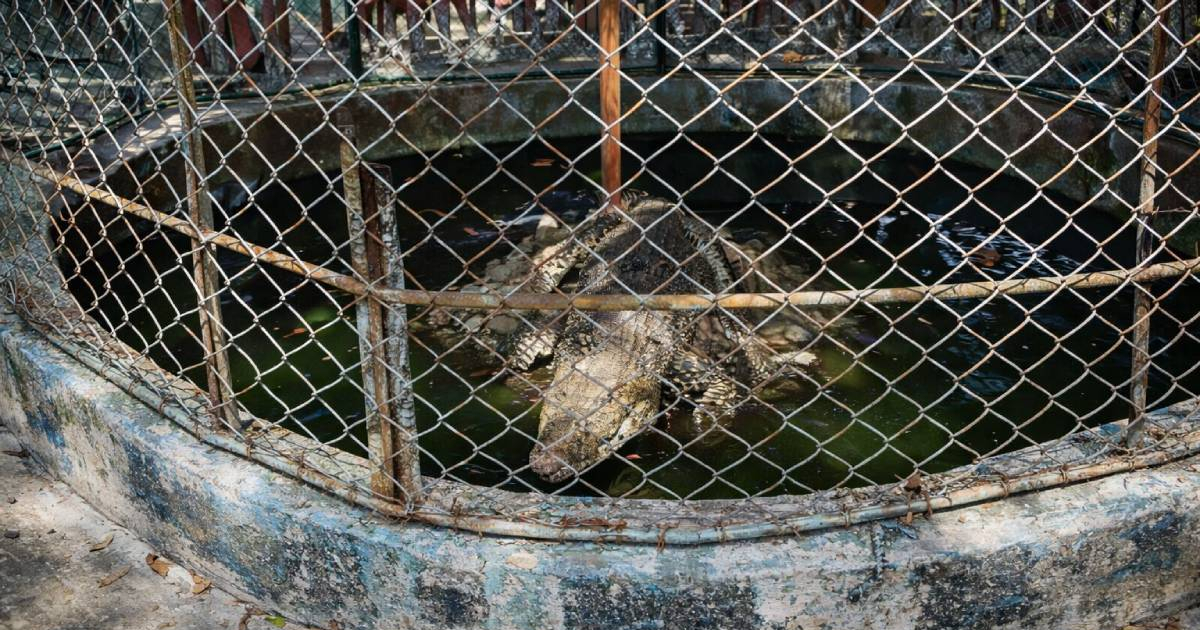
The death of the crocodile that escaped last month from the Caibarién zoo in Villa Clara continues to generate reactions following the dissemination of an article on Girón on social media.
The text, titled “The Silence of the Empty Moat”, emphasizes the need to protect the Cuban crocodile (Crocodylus rhombifer), highlights its value as an endemic species, and warns about poaching and the loss of environmental awareness.
A few weeks ago, images went viral showing the dismembered remains of the fugitive crocodile. They appeared in an area known as La Picadora, in Villa Clara, and sparked public debate due to uncertainties about what happened and the lack of a conclusive official explanation.
The state-run newspaper highlights the conservation programs in the Ciénaga de Zapata and presents the situation as a sign of declining respect for wildlife.
Without diminishing the importance of protecting vulnerable species, the episode also compels us to consider the social and material context in which it takes place.
Cuba is undergoing a profound economic crisis, characterized by food shortages and instability in basic services. In addition, many of the country's zoos are deteriorating due to a lack of resources, maintenance, and poor oversight of their management teams.
The defense of biodiversity is a collective and institutional responsibility, but for that protection to be effective, it must be accompanied by minimum conditions for both animals in captivity and the population facing daily shortages.
Understanding the social context does not imply justifying the hunting of protected species, but rather highlighting the structural failures that exacerbate these conflicts persisting in the country, despite the significant work carried out by scientific institutions, researchers, and Cuban activists.
The balance between conservation and social reality is an ongoing challenge, especially as hunger and extreme poverty gain ground daily in Cuba.
Filed under: