
Related videos:
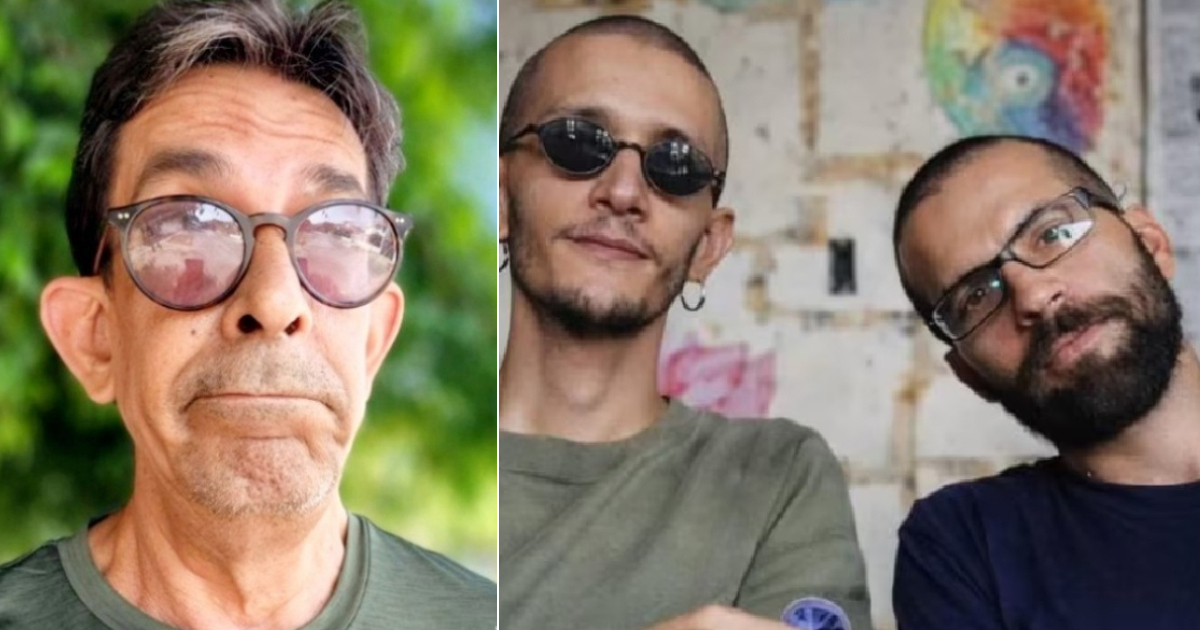
The comedian Ulises Toirac publicly questioned the decision of the Provincial Court of Holguín to deny the habeas corpus petition filed on behalf of the young individuals associated with the independent project El4tico, asserting that the ruling is the result of a discretionary interpretation of the law.
“Would set a bad precedent. It's not about what would have been fair, but what is logical. The court in Holguín denies the habeas corpus to the boys from #el4tico, relying on a law that allows for stretching or shrinking the limits at convenience. Subjective interpretation. The battle of ideas is a slaughterhouse,” he wrote this Thursday on his Facebook profile.
The artist's statement comes after news broke that the court rejected the appeal filed on behalf of Ernesto Ricardo Medina and Kamil Zayaz Pérez, who remain in provisional detention while being investigated for alleged offenses of "propaganda against the constitutional order" and "incitement to commit crimes," related to content disseminated from the digital platform.
This Thursday, the Provincial Prosecutor's Office of Holguín announced that it maintains the precautionary measure of provisional imprisonment under the Criminal Procedure Law and that it continues to carry out investigative procedures. According to the official statement, the publications attributed to the young individuals allegedly "incite the population, members of the Revolutionary Armed Forces, and the Ministry of the Interior to change the constitutional order of the Republic of Cuba," as well as defaming the actions of political and social institutions.
The case has led to numerous statements from public figures. In a previous reaction, Toirac stated that the detention of the young people demonstrates that in Cuba, freedom of expression is "feared and repressed".
Following his arrest, a letter from Kamil Zayaz Pérez was also circulated, in which he wrote: “If you are seeing or reading this, it is because they finally found a way to silence me, to try to impose a temporary gag on me.” In the same text, he stated that his detention was due to “the only crime that a dictatorship cannot tolerate: daring to look straight ahead and say aloud what everyone observes: their egregious faults, their chronic inefficiencies, their systemic injustices, and the oppression that crushes the dignity of an entire people.”
The reaction published by Toirac generated numerous responses on social media. Several users expressed their disagreement with the court's decision and questioned the functioning of the justice system on the island. "They are a disgrace. They violate Human Rights right to our faces," wrote one internet user. Another commented, "There is no justice in a dictatorship, that's known." Messages such as "Freedom for those guys" and "Down with the dictatorship, long live a free Cuba" were also seen.
The denial of habeas corpus not only keeps young people in provisional custody but also brings back to the forefront the real guarantees available to those facing legal processes for exercising public criticism in Cuba. For activists, artists, and independent legal experts, the use of criminal charges such as "propaganda against the constitutional order" or "incitement to commit a crime" has become a recurring tool against dissent, in a context where legal resources rarely succeed when the underlying issue is political.
Filed under: