
Related videos:
The Secretariat of Infrastructure and Transport (SIT) of Honduras is at the center of a corruption scandal after it was revealed that Cuban citizens appeared on official payrolls as employees of the institution, despite not performing any duties, not showing up for work, and even residing outside the country.
Authorities also detected cases of Venezuelans within the same irregular structure, but the presence of Cubans within the ghost payroll has garnered special attention due to the misuse of state funds and the pattern of labor simulation that extended for years without proper oversight.
The minister of SIT, Aníbal Ehrler, reported that the scheme was detected through an institutional census aimed at verifying the actual presence of personnel.
The inconsistencies emerged as soon as the inspection began: names on the roster that didn’t match with those in the offices, supposed workers who only showed up to sign in, and others who did not live in Honduras, yet maintained an active contract and received a monthly salary.
“We detected individuals who do not show up for work and even live outside the country,” Ehrler stated to local media; explaining that the review allowed for “cross-referencing data and gathering evidence to penalize according to the law and restructure the institution.”
Despite the magnitude of the scandal, the authorities have not disclosed how many Cubans are involved, nor have they revealed identities, amounts paid, or the exact period during which the network operated.
There is also no confirmation of arrests, raids, or the formal opening of criminal cases.
Honduran authorities only indicate that the final report will be sent to the Public Ministry to determine criminal responsibilities.
According to La Tribuna, some involved individuals—including Cuban citizens—were listed on payrolls without legal contracts, did not adhere to schedules, and still received public funds as part of the active staff.
The origin of the problem: years of poor supervision
The SIT, responsible for the administration and maintenance of the 2,000 kilometers of the national road network in Honduras, has historically operated with structural weaknesses in the management of its human resources.
The outsourcing of services, contracts with private companies, and subcontracting mechanisms made direct supervision of the payroll challenging, allowing ghost workers to remain undetected for years.
Infobae highlighted that this irregular structure "reflects a historical issue related to the management and oversight of public resources in the country," reaffirming that the lack of controls has allowed for the existence of ghost positions assigned to foreigners with no real connection to the institution.
Temporary closure of facilities and comprehensive audit
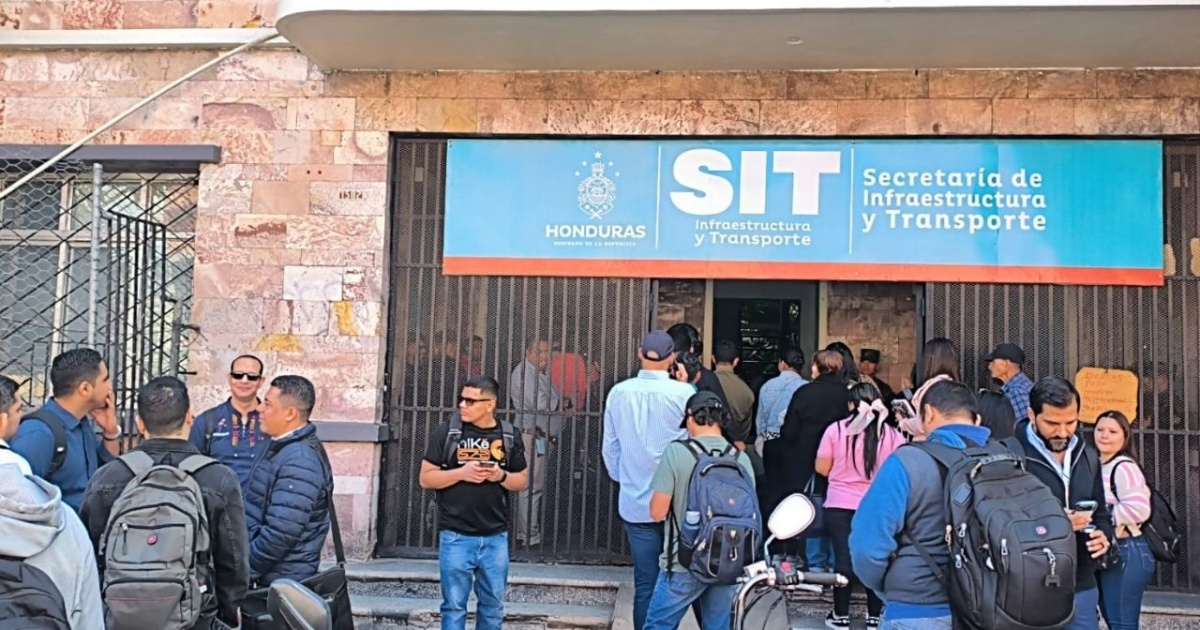
To contain the crisis and verify the legitimacy of the staff, the minister ordered the temporary closure of the SIT offices in the La Bolsa neighborhood, with the presence of audit teams and internal control personnel.
The measure allowed for observing which employees actually attended and obtaining physical evidence of unexcused absences.
This action is part of a broader purification effort aimed at reorganizing the internal structure, reducing the payroll, and cleansing the mechanisms of entry and tenure that allowed for the infiltration of ghost workers.
As an immediate response, the SIT implemented a new registration protocol that will require employees to sign in daily by 9:00 AM. Those arriving after that time will not be able to perform any duties for the day.
The measure aims to eradicate the practice—observed in several cases in Cuba and Venezuela—of attending only to sign or not showing up at all, despite receiving their salary on time.
Ehrler emphasized that these actions aim for “a significant change in staff supervision” and stressed that the institution requires a technically trained workforce
"What the SIT requires are efficient employees, technicians, and those committed to the city, not an excess of staff without real functions."
The minister announced that, once the institutional diagnosis is complete, the report will be sent to the Public Prosecutor's Office, which will need to initiate the corresponding legal processes and determine whether the irregularities constitute crimes such as fraud, abuse of authority, embezzlement, or forgery of documents.
Filed under: