
Related videos:
If you drive slowly in the left lane in Florida and block a faster vehicle, you could be breaking the law and exposing yourself to a fine. It's that simple.
The state regulation establishes that drivers may not remain in the leftmost lane if they "know or reasonably should know" that a faster vehicle is overtaking them from behind. In that case, they are required to move to the right.
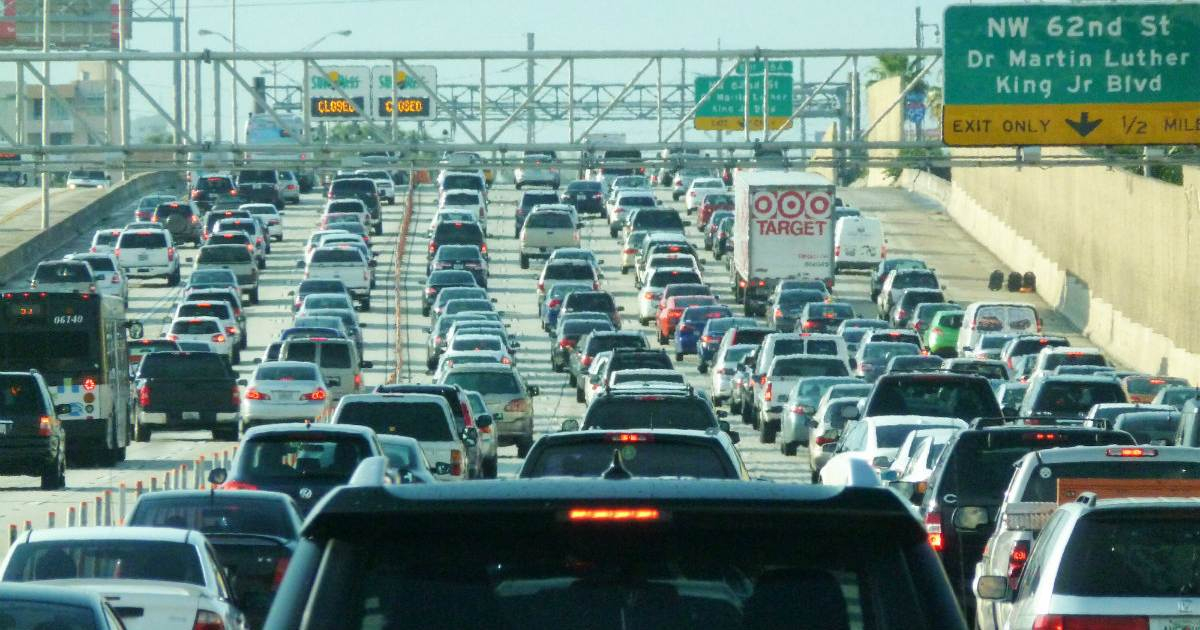
The clarification is particularly relevant in the ongoing debate about the so-called "fast lane," especially on highways like the Turnpike, I-95, or I-75, where it is common to see vehicles moving slowly in the left lane while others try to overtake.
According to a recent explanation by El Nuevo Herald, the law applies to roads, streets, and highways with two or more lanes in the same direction.
Although in 2024 legislators attempted to formally designate the left lane as a space exclusively for overtaking, those projects were not approved, so the current regulation remains in place.
When is it permissible to use the left lane?
The law provides for exceptions. An infraction is not incurred when the driver:
-Prepare to turn left at an intersection.
-It's passing another vehicle.
-It runs along a section where traffic diverts to the left, such as accesses to rest areas or specific exits.
-Outside of those cases, if a faster driver approaches from behind, staying in the left lane may become an offense.
What fine could they face?
Violating the left lane law is a non-criminal traffic offense, classified as a moving violation.
Fines typically start at $75 or more, depending on the county and any applicable surcharges.
Beyond money, the risk lies in safety: vehicles that tailgate, intermittent high beams, honking, and road rage situations. The practical recommendation is simple: if someone is coming up fast, yield and return to the right lane.
Even stricter rules for trucks
In the case of commercial trucks, the restrictions are greater.
They are not allowed to use the left lane or the inner lane in specific sections of six-lane interstate highways.
The measure applies to segments of the I-4, I-75, I-95, and the Florida Turnpike.
If a truck driver violates this regulation, the minimum fine is 121 dollars, and three points are added to their commercial driver's license.
The Florida Department of Transportation maintains an interactive map showing the areas where these restrictions are in effect.
It is important to clarify that tourist buses and recreational vehicles are not considered commercial trucks under this regulation, and therefore, they are allowed to use the left lane.
In short, although Florida has not officially designated the left lane as exclusive for passing, the law does require drivers to clear it when a faster vehicle requests it. Ignoring this rule can be costly.
Filed under: