
Related videos:
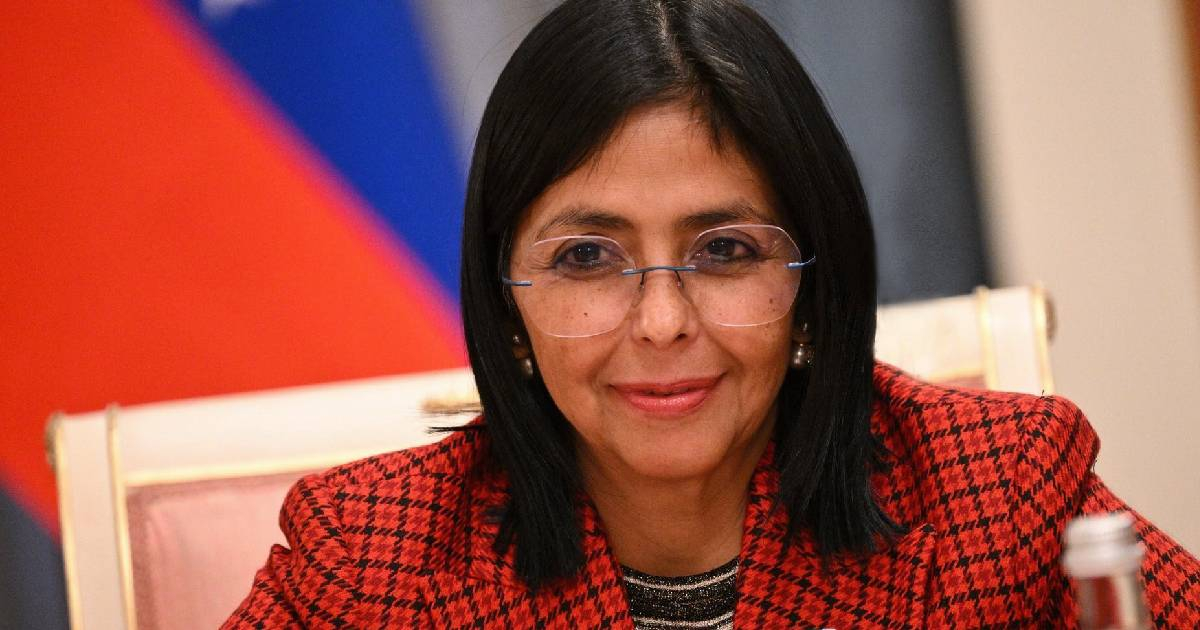
Venezuela's interim president, Delcy Rodríguez, is facing the greatest political challenge of her career: maintaining the cohesion of chavismo after Nicolás Maduro's departure from power, while negotiating and adjusting policies under the direct pressure of United States President Donald Trump.
A report from the BBC indicates that since the operation on January 3, in which Maduro and Cilia Flores were taken to New York to face federal charges, the country has entered a transition phase characterized by internal tensions and external pressures.
Although Rodríguez has publicly reiterated his support for Maduro and demanded his return, there are no concrete signs that this will happen, the text states.
International analysts agree that Rodríguez is treading a fine political line, where he must maintain the anti-imperialist rhetoric to retain support from the chavista base, while also introducing pragmatic changes to meet Washington's demands.
In her initial statements following the exit of Maduro, the interim president denounced what she described as an action driven by the "energy greed" of the United States.
However, shortly thereafter, agreements were announced that would allow for the delivery of millions of barrels of oil, in a development that demonstrated a more conciliatory tone towards the White House.
Rodríguez has blended harsh messages against American "imperialism" with discreet meetings with high-ranking officials in Washington.
Trump, for his part, has publicly acknowledged the complex position of the Chavista leader, suggesting that certain statements stem from the need to maintain her internal political base.
In the internal realm, the interim president has bet on a more technical than ideological cabinet and has promoted measures aimed at facilitating the presence of American energy companies in Venezuela.
There have also been selective releases of political prisoners, interpreted by some opposition sectors as concessions resulting from American pressure.
The pressure on Rodríguez is not merely symbolic. Experts warn that Washington—particularly Secretary of State Marco Rubio—has the ability to intensify sanctions, broaden energy blockades, or even escalate more far-reaching measures if it believes that the transition is not moving in the agreed-upon direction.
Meanwhile, the social support for Chavismo has significantly decreased after years of economic crisis, hyperinflation, and massive migration.
More than seven million Venezuelans have left the country since 2014, reflecting a structural deterioration that limits political maneuverability.
In this scenario, the BBC emphasizes that Delcy Rodríguez is trying to maintain a delicate balance: preserving the revolutionary narrative that keeps the Chavista structure cohesive, while not openly challenging the Trump administration, which currently controls the timing and conditions of the transition process.
The question is how long he can maintain that double game without one of the two forces ultimately asserting its weight.
Filed under: