
Related videos:
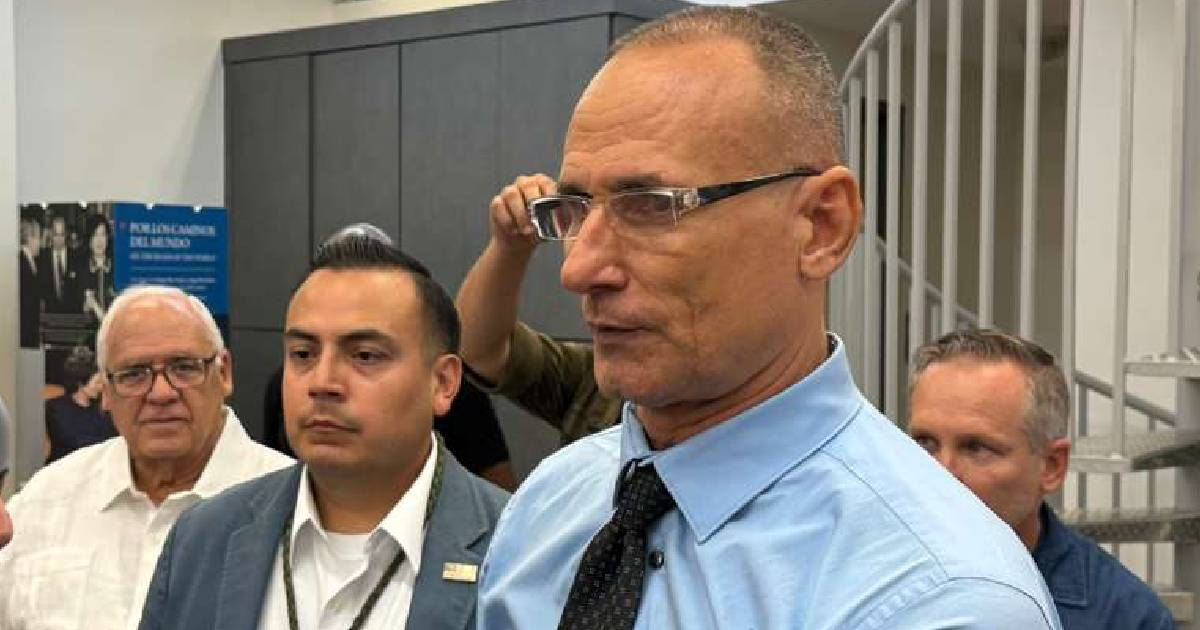
The Cuban opposition leader José Daniel Ferrer expressed his support from Miami this Wednesday for the discussions between the U.S. administration led by Secretary of State Marco Rubio and representatives of the Havana regime, but warned that he does not rule out military action on the island.
Ferrer, 55 years old and founder of the Patriotic Union of Cuba (UNPACU), currently exiled in Miami, explained in an interview with AFP that he views the dialogue promoted by Rubio positively, as he has been in contact with sectors related to the political future of the island.
However, he assured that if the communist government's refusal to relinquish power continues, "all options" could be considered—including an action similar to the one that ousted Nicolás Maduro in Venezuela—to achieve a transition in Cuba.
The opposition leader pointed out that the conversations between Washington and Havana should be seen as an opportunity for Cuban authorities to move towards reforms that allow for free and plural elections, and that limit the repression and oppression that, in her view, Cubans suffer on the island.
“Cubans continue to die of hunger in prisons and on the streets, while keeping in power those who oppress and repress the majority of the population,” Ferrer stated, adding, “That’s why, if there is an operation similar to Venezuela that should take place, I and many other Cubans will celebrate it with great pleasure.”
Ferrer’s reference to the “style of Venezuela” alludes to the operation carried out by the United States in Caracas on January 3, during which President Nicolás Maduro and his wife, Cilia Flores, were captured by U.S. forces, and leadership passed to interim President Delcy Rodríguez under certain conditions accepted by Washington.
Ferrer believed that this type of intervention, combined with political pressure and sanctions, could be replicated in Cuba if negotiations fail to create real democratic spaces.
Nonetheless, he also emphasized that the primary objective must be to ensure that there are clear guarantees for holding clean and free elections, and the immediate release of political prisoners.
The opposition figure asserted that the administration of President Donald Trump sees this strategy as a first step toward a democratic transition, and that the significant international pressure, including the disruption of oil supplies that previously came from Venezuela, has intensified the economic crisis on the island, contributing to the regime's weakness.
Although Ferrer stated that the political change could be imminent, he also acknowledged that the path toward genuine elections will not be easy after decades of dictatorship and systemic human rights violations.
He also expressed concern about the lack of coordination within the opposition, but said he was confident that once the regime falls, the various political forces will be able to work together to consolidate a free and democratic Cuba.
Ferrer’s stance arises at a time of increasing tension between the Havana regime and the United States, which has intensified its diplomatic and economic pressure amid the worst crisis the island has faced in decades.
The day before, the Cuban activist Rosa María Payá stated that the opposing forces are working on a plan for the economic and political rescue of the island.
"It is up to us Cubans to rebuild our country after decades of disaster," he concluded.
Filed under: