
Related videos:
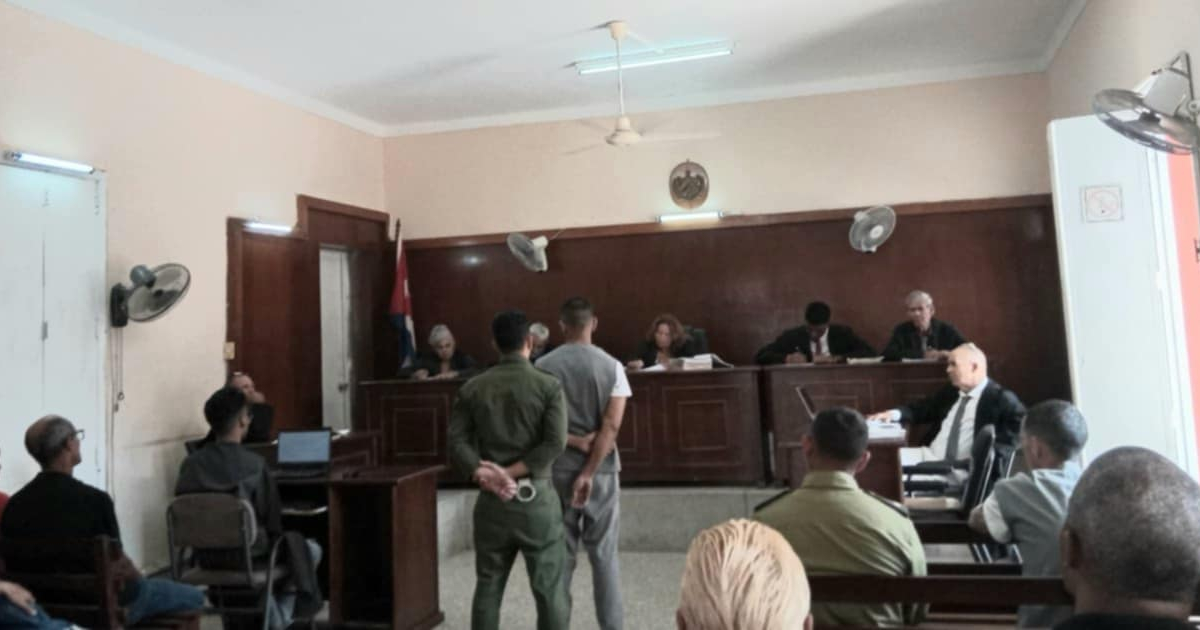
Five workers from the Wholesale Food Company in Las Tunas were sentenced to prison terms ranging from 11 to 13 years for the crime of embezzlement, following a trial held by the criminal division of the provincial court of the territory.
According to the official profile Minint Hoy on , the process -corresponding to case 237 of 2025- was described as "oral, public, and exemplary."
The accused worked in the warehouse of the base business unit 639 and, according to the charges, they appropriated rice, sugar, peas, and beans intended for the regulated family basket and social consumption, products which they then sold in the informal market.
Authorities claim that the action affected more than 50,000 families in the province and resulted in an economic loss to the state budget amounting to 623,088 pesos.
After the examination of evidence during the trial, the court found the responsibility of the five individuals implicated in a crime of embezzlement, as defined in Article 297, sections 1 and 2, of the Penal Code, to be proven.
In addition to the imprisonment sentences, the court imposed ancillary sanctions: deprivation of public rights, prohibition from practicing a profession, holding a position or job, and prohibition from leaving the country, along with the corresponding civil liability.
Both the sanctioned parties and the Prosecutor's Office can file an appeal for cassation against the ruling.
The case brings attention back to a reality that repeats itself in various provinces: the diversion of essential goods in the context of a deep economic crisis.
In Cuba, where the rationing system barely meets a fraction of monthly needs and prices skyrocket day by day, the pressure on state workers handling food is enormous.
Official salaries, eroded by inflation, are insufficient to cover basic needs, which has driven many to seek alternatives outside the law to support their families.
While the State emphasizes the "exemplary" nature of these types of trials, broad sectors of the population point out that the phenomenon of diversion and reselling cannot be analyzed independently of the structural deterioration of the economy, the chronic shortage of products, and the collapse of purchasing power.
The severity of the sentences contrasts with the system's inability to ensure stable supplies and wages that reflect the true cost of living.
In a country where obtaining rice, sugar, or beans outside of the ration book means paying prices that far exceed the monthly income of an average worker, the informal market has become a lifeline for survival.
However, when the machinery breaks down and the authorities intervene, the weight of the law falls harshly on intermediate links, in a scenario marked by persistent shortages and increasing social unrest.
Filed under: