
Related videos:
The municipal cemetery of Mayabe has ceased to be a place of reflection and respect.
According to a report by Radio Holguín la Nueva on Facebook, what was supposed to be "a sacred space for mourning" has now become a scene of "desecration, neglect, and desolation that violates the dignity of the deceased and compounds the pain of their families."
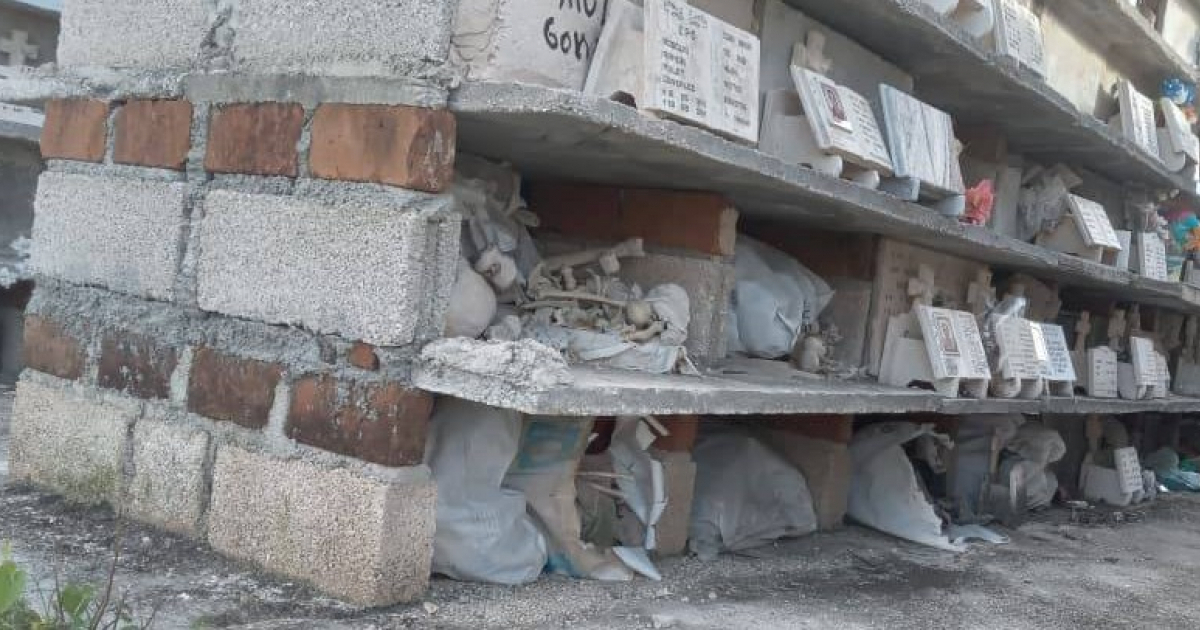
The images circulated show broken niches with exposed skeletal remains, shattered coffins, and neglected ossuaries.
The devastation is not accidental: it is the visible consequence of years of government neglect and the collapse of necrological services.
The situation in Mayabe reflects a crisis that goes beyond just infrastructure.
In a country engulfed in material hardships—marked by severe shortages of food, transportation, and electricity—the social deterioration extends even to the spaces meant to honor the dead.
When the state fails to guarantee basic living conditions, it also fails to ensure respect after death. The result is a profound loss of ethical references: indifference becomes normalized and desecration turns into a routine.
The responsibility does not fall on families who cannot tend to graves from a distance or with minimal resources; it lies with a government that is unable to maintain essential services and to protect places that should be inviolable.
Radio Holguín la Nueva was clear in describing the situation: the cemetery "has ceased to be a place of rest and remembrance."
The photos confirm the severity: open graves, shattered vaults, remains outside their niches. It is not just neglect due to lack of maintenance; there are signs of looting.
In many cemeteries across the country, there have been reports of bone thefts to sell them for witchcraft purposes and the illegal commercialization of grave sites. The desecration of tombs to extract remains has become a recurring practice.
The drama of Mayabe is not an isolated incident.
In the General Cemetery of Camagüey, open graves, destroyed vaults, stagnant water, weeds, and such critical deterioration that some mausoleums appear without covers and are filled with debris.
In Las Tunas, at the Vicente García Cemetery, relatives found remains scattered on the ground and stolen burial urns.
In Colón, Matanzas, the San Rafael cemetery displays open ossuaries, exposed bones, and destroyed chapels in an unhealthy environment, according to a report last July by Periódico Girón, which published images and testimonials from outraged workers and neighbors.
In other provinces, the pattern is repeated: forced niches, the disappearance of remains, theft of funerary objects, and even body parts. The consequences are devastating for both humanity and culture.
The continuity of memory is shattered, the identity of families is violated—many of whom have relatives who have emigrated and cannot watch over graves from afar—and disrespect becomes normalized.
Cemeteries, conceived as sacred spaces where generations pay tribute, have become stages of neglect, looting, and desecration.
What is happening in Mayabe is, therefore, a symptom of a State that neglects both the living and the dead.
The economic and service crisis alone does not account for the extent of the damage: it is exacerbated by the lack of effective policies, oversight, maintenance, and a public ethic that imposes limits.
As long as the government does not take responsibility for guaranteeing necrological services and protecting cemeteries, desecration will continue to rise and the pain of families will keep multiplying.
Filed under: