
Related videos:
The White House's decision to withdraw the mechanism of tariffs against those who supply oil to Cuba does not mean the end of energy pressure on the island.
On the contrary, “The U.S. can prolong the oil blockade against Cuba even without tariffs”, two experts consulted in Washington warned this Tuesday to the agency EFE.
Last week, President Donald Trump signed a presidential order that removes the option of punitive tariffs under the authority of the International Emergency Economic Powers Act (IEEPA), thereby complying with a Supreme Court ruling that determined that this regulation does not authorize the president to impose trade levies.
With that signature, one of the pillars of the executive order from January 29 becomes ineffective, which threatened to impose tariffs on countries or companies that sent oil to Cuba.
However, the other central component remains relevant: the declaration of "national emergency" over the "unusual and extraordinary threat" that, according to Washington, the Cuban government represents.
According to the president of the U.S.-Cuba Economic and Trade Council, John Kavulich, it would be a mistake to interpret the withdrawal of the tariff as a significant relief.
"I don't dare say that (the executive order of January 29) is a paper tiger. If it has teeth, it's still a tiger; it can still be frightening," he stated.
In his opinion, "the Government of Cuba would be making a huge mistake if it understands that the Supreme Court's decision is a protective shield."
In the same vein, the Cuban-American lawyer Pedro Freyre, a partner at Akerman law firm and a specialist in litigation related to Cuba, expressed his views.
“The White House reversed its decision on the implementation of that mechanism, but left the door open to other possible actions,” he noted.
"Knowing how things are done in this administration, I believe I can assure you that they will use other tools," he added.
Those “other tools” could include banking measures from the Treasury Department or secondary sanctions against entities that facilitate energy supply to the island.
For now, the administration has not publicly detailed which mechanisms it would activate.
"It is the tactic of fear."
Kavulich believes that part of the strategy follows a common pattern of Trump: issuing threats that create a deterrent effect without the need to carry them out.
"It's the tactic of fear", he explained.
The expert noted that it would be "interesting" to observe Washington's reaction if Cuba were to buy oil "from a country free of sanctions at market prices" and transport it on "a ship that did not belong to the ghost fleet and had all its documents in order."
He also found it revealing to consider a scenario in which Russia sent an oil tanker "escorted by a military ship," which would complicate any attempt at U.S. intervention.
However, he doubted that anything like this will happen because, in his opinion, “Cuba is not that important to anyone” at this moment.
According to Kavulich, there is “a minority” in Washington that is in favor of allowing Russia or China to supply “some oil and fuels” to Cuba to avoid a humanitarian crisis, but without dismantling the energy blockade as a mechanism of political pressure.
Change of policies, not necessarily of regime
Both Freyre and Kavulich agree that the priority of the U.S. administration would not necessarily be a change in leadership in Havana, but rather a shift in its economic and political decisions.
"The Administration has been very emphatic in demanding a change of policy in Cuba. Not necessarily a change of regime, but a change of policy," emphasized Freyre.
Kavulich summarized the prevailing approach in certain sectors of Washington as follows: “We will accept the same people remaining (in the Cuban government) if they make better decisions.”
And he defined it as "the Venezuela model."
That analysis aligns with recent information suggesting a strategic shift from the White House to distinguish between the Cuban state and private actors.
According to a report by Bloomberg, the Trump administration is preparing guidelines to allow U.S. and foreign energy companies to sell fuel directly to private businesses on the island.
A source from the U.S. government cited by that agency explained that the ban on selling fuel "applies only to the Cuban state, not to private actors," and that, under the new guidelines from the Department of Commerce and the Treasury, such operations "would not require a specific license" and would be permitted by current legislation.
In statements to Bloomberg News, Secretary of State Marco Rubio stated that the United States expects the communist regime to grant "greater economic and political freedoms" before the pressure is eased.
Active emergency and intact pressure
Although the oil tariff lost its legal basis following the Supreme Court ruling, the national emergency declaration from January 29 remains in effect.
Nor have other legal powers that allow for the imposition of trade or regulatory restrictions been modified.
On February 13, Trump extended for another year the authority that allows the regulation, inspection, and even detention of American and foreign vessels heading to Cuba, citing national security and migration risk.
In practical terms, the removal of the tariff reduces the immediate risk for countries or companies considering trading oil with the island.
However, it does not imply a lifting of the sanctions framework nor a shift toward normalization.
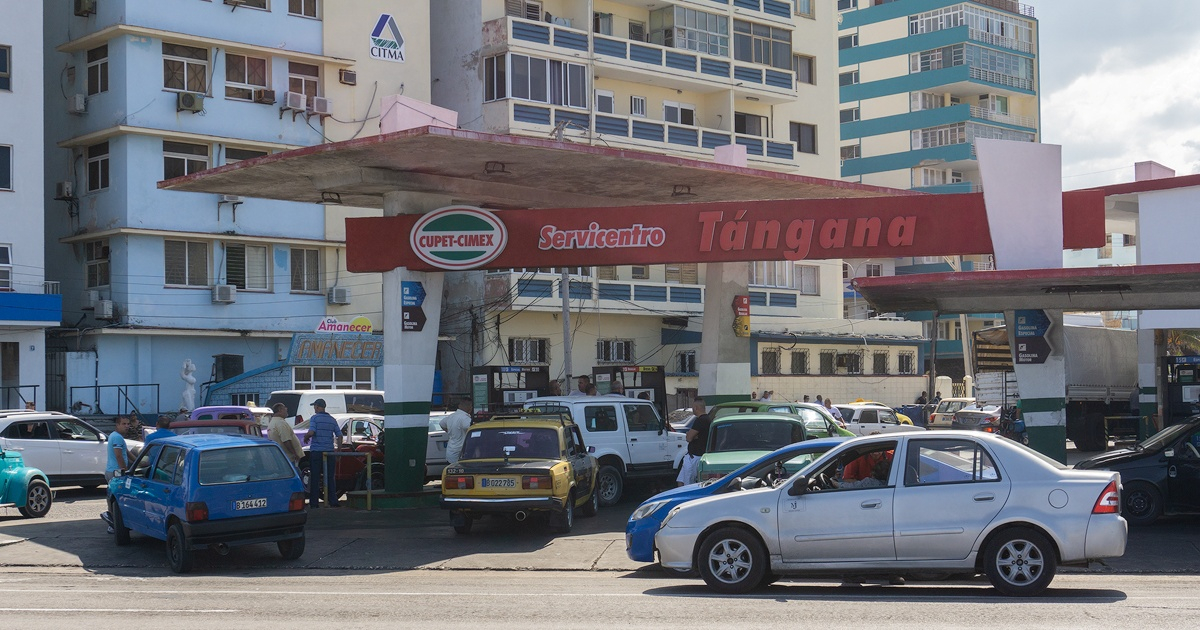
Meanwhile, the impact of the energy blockade is strongly felt in Cuba, a country that has been grappling with a severe economic crisis for six years and needs to import about two-thirds of its energy requirements.
Hospitals and public transportation are operating at minimum services, fuel is severely rationed, garbage is piling up due to lack of collection, and power outages exceed 20 hours a day in large areas of the country.
According to the consulted experts, the withdrawal of the tariff does not equate to structural relief. As Freyre warned, the administration “left the door open to other potential actions.”
And as Kavulich emphasized, as long as the national emergency remains active, the order "can still be frightening."
Filed under: