
Related videos:
In 1980, Ernesto Rodríguez risked everything to leave Cuba. He boarded a fishing boat and crossed open waters as part of the Mariel exodus, unsure of what awaited him on the other side of the Florida Strait. More than four decades later, that young man who left branded as a "marielito" is now a United States citizen.
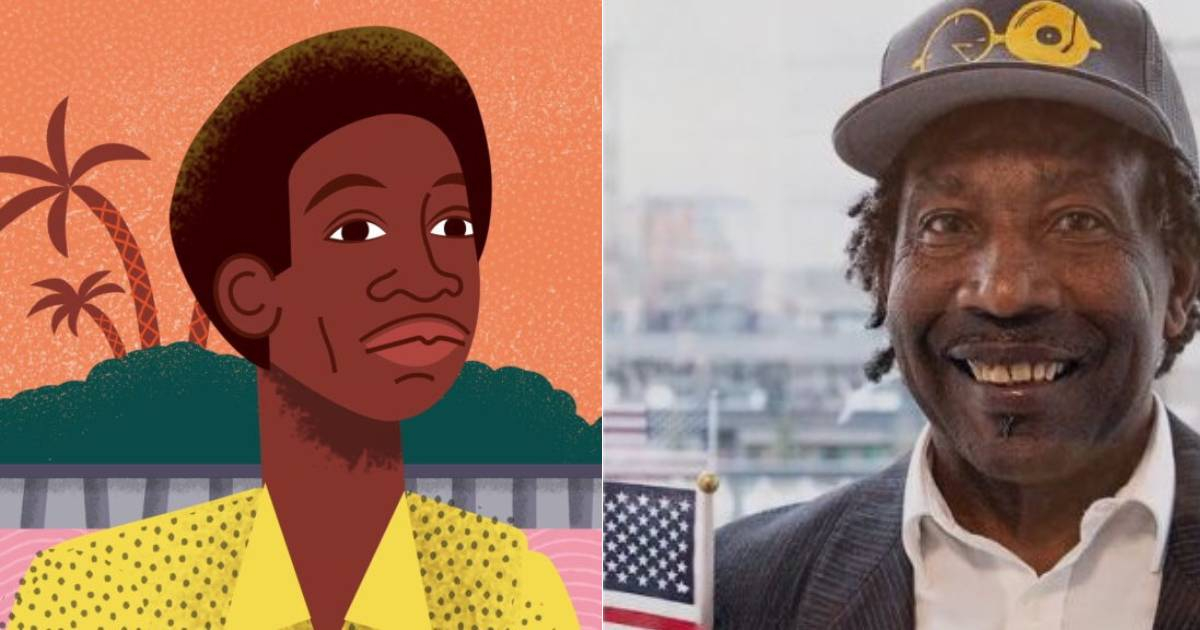
His story was told by PBS Wisconsin, first in the podcast WPR Reports: Uprooted and now in an animated piece from the show Wisconsin Life, which recounts his journey from the island to the city of La Crosse, where he ultimately put down roots without giving up his Cuban identity.
Rodríguez is one of the more than 125,000 Cubans who left the country between April and October of 1980 during what is known as the Mariel exodus. Many were forced to leave due to a climate of harassment, acts of repudiation, and stigmatization. They were sent off amid insults and labeled as "undesirables" in one of the most traumatic chapters of Cuba's recent history.
For Ernesto, the journey was a gamble with no way back. Crossing the sea under those conditions not only entailed physical danger but also a definitive break with the land where he was born. Like many others, he arrived in the United States without certainty, carrying the weight of uprooting and the stigma that had accompanied the so-called "marielitos" for years.
However, his story did not end in a refugee camp or in the label that tried to define him. Wisconsin became his new home. There, he built his life, integrated into the community, and kept his Cuban roots alive, demonstrating that identity is not lost with distance.
In 2023, after more than 40 years in the United States, Rodríguez became a naturalized citizen. That moment symbolically marked the closure of a journey that began on a fishing boat and spanned decades of work, adaptation, and memory.
The animation director Amanda Roslansky explained to PBS Wisconsin that what impacted her the most about the project was understanding the traumatic nature of the Mariel boatlift. Many of those individuals, she said, did not want to leave Cuba, but were forced to do so amidst a chaotic and painful context.
For the animation, the team opted for a minimalist style inspired by Cuban artists from the 70s and 80s, using bright colors to represent Cuba and a distinct palette for Wisconsin, which gradually intertwine on screen as a metaphor for identity.
In the animated piece, Ernesto initially appears isolated on stage, and then, as the story progresses, he is surrounded by people, visually integrated into his new environment. It is the graphic representation of a process that thousands of Cubans have lived through in silence: starting from scratch, carving out a place for themselves, and regaining a sense of belonging.
Filed under: