
Related videos:
Cuban communists continue to believe that price controls are the most suitable tool for combating inflation. For the past 67 years, the Cuban economy has taken an independent path, disconnected from market rationality, which sets prices based on the relationship between supply and demand. This path has led to one of the most intense episodes of inflation, measured each month by the National Office of Statistics and Information (ONEI), which positions Cuba as one of the countries with the most uncontrolled and elevated prices.
Any Cuban knows that the "every man for himself" attitude regarding the prices of goods and services emerged shortly after the implementation of the so-called "ordering task," which disrupted the control system that existed until then, encouraging a surge in inflation. Trying to make up for lost time makes little sense, and for this reason, no one in the communist leadership seems inclined to remedy the issue. For instance, they could start by abolishing the Ministry of Finance and Prices, which has proven more than sufficiently that it is unnecessary. However, as reducing inefficient and tedious state bureaucracy does not appear to be a priority for the regime, they still seem keen to continue meddling with prices. This is evident from a recent article published in Granma titled “Firmness in Price Control”.
Instead of respecting the functioning of the law of supply and demand and restoring competitive market behavior, the Cuban communists propose price controls, nothing less than as "a national exercise against price violations" and claim that these "combative and revolutionary" actions serve to "ratify the State's commitment to economic regulation and the defense of the purchasing power of Cubans." Very well, but the result is quite the opposite: the year-on-year inflation rate for last January stood at 12.5%, a figure that, if maintained for the rest of the year, will lead to prices in Cuba doubling. A disaster.
But the communists, undeterred by discouragement, decided to organize a price control exercise across the country in the third week of February. An exercise in economic repression that, considering the humanitarian crisis currently gripping the Cuban economy, seems nothing more than an irresponsible and laughable initiative.
It has been the Ministry of Finance and Prices, the one that could relinquish its pricing responsibilities and focus on other matters, that has coordinated with local administrations and the relevant authorities the aforementioned effort to "combat price violations throughout the country." The eternal issue of the battles and wars from which the Castro regime neither wants nor can detach itself. And that’s how it goes for them.
Cuban families know what it's like to go to the bodegas and find them empty. The responsibility for this lies with price controls, which discourage and create difficulties for producers in meeting their commitments. Then, when those families decide to visit the stores that sell all products in dollars and see that they are well-stocked, they encounter the difficulty of being able to buy even a bottle of oil. Salaries, and especially pensions, are insufficient for anything. And this is despite the fact that price controls are so important and relevant to the regime.
The cited results highlight that we are witnessing one of the most notable failures of the communist regime and its services to the population. Consider that last January, one of the most inflationary components of the Consumer Price Index was educational services. But didn't we agree that education in Cuba was free? So where does this inflation come from? Everyone knows, but no one proposes the necessary solution, and half a ministry is dedicated to controls and denunciations against what they call "illegalities," "speculation," or "deviation from legality," and thus, they conjure all sorts of crimes to justify dedicating themselves to these tasks that truly serve no purpose, because prices will continue to rise, even more so.
It is necessary to explain to the communists that Cubans do not need these practices of control and persecution of economic agents, but rather more freedom in demand and supply so that the prices agreed upon in the markets promote stable equilibrium. If the control apparatus of the MFP launches into detecting supposed infractions, which are often difficult to define, the household budget will continue to suffer the consequences of this level of incompetence and excessive ideology. Furthermore, if the communists want all of this to be of any use, they must not only pay attention to inflation in educational services but also to those “prices agreed upon by local administration” that demonstrate that even the state is undermining its own objectives.
These actions create a counterproductive tangle that only serves to intimidate other producers, thereby reducing the structural supply and leading to rising prices in the face of a demand that cannot possibly decrease. Perhaps what needs to be done is exactly the opposite: to bet on the freedom of producers to enter the market and offer more products, which would improve choice, quality, and consequently, prices. This virtuous cycle associated with market liberalization is not perceived, even remotely, in the Cuban economy.
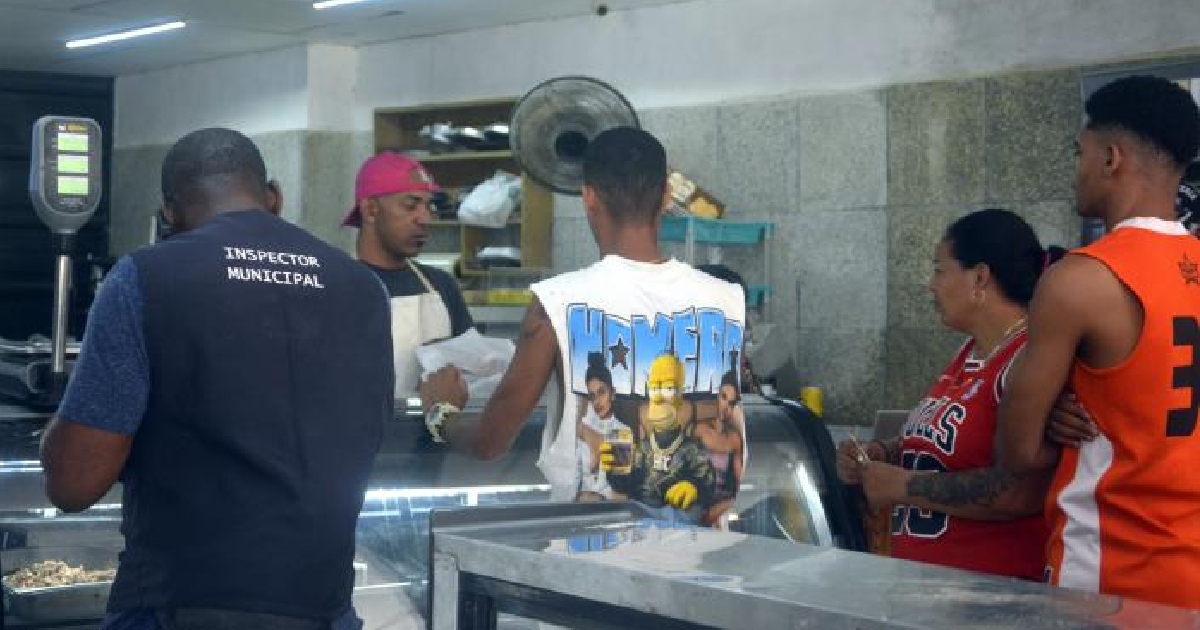
For example, the work of price inspectors to verify whether information boards are present in establishments and whether they are outdated is a good illustration of the types of items that inflate budget accounts and could be eliminated to redirect those funds toward more productive and efficient purposes.
The recent inspection not only focused on prices but also addressed other allegedly fraudulent activities, such as unregistered staff, violations of labor rights, and the circumvention of financial control mechanisms by not using official payment gateways, resulting in frozen bank accounts. There is no doubt that these are serious offenses that justify the ministry's oversight.
In the end, a total of 17,000 fines were imposed, amounting to 65 million pesos, at a time when there is little to eat on the island. And not satisfied with this unexpected revenue, the ministry executed 1,547 forced sales of products, a repressive measure against self-employed workers that has sparked considerable protests among the population when a cart full of food disappears, transported by the police in some alley in Centro Habana.
And as it continues, the ministry also ordered the closure of 300 establishments, carried out 93 seizures, and proceeded with the
What remains of this exercise in economic repression? Less supply for the existing demand, leading to rising pressures on prices that will leave many Cubans unable to afford a basic diet. However, the ministry in question will score a positive point for reaffirming its "commitment to systematically confronting these violations in a crisis scenario like the current one." Applause from the Central Committee and no one else.
Filed under:
Opinion article: Las declaraciones y opiniones expresadas en este artículo son de exclusiva responsabilidad de su autor y no representan necesariamente el punto de vista de CiberCuba.