
Related videos:
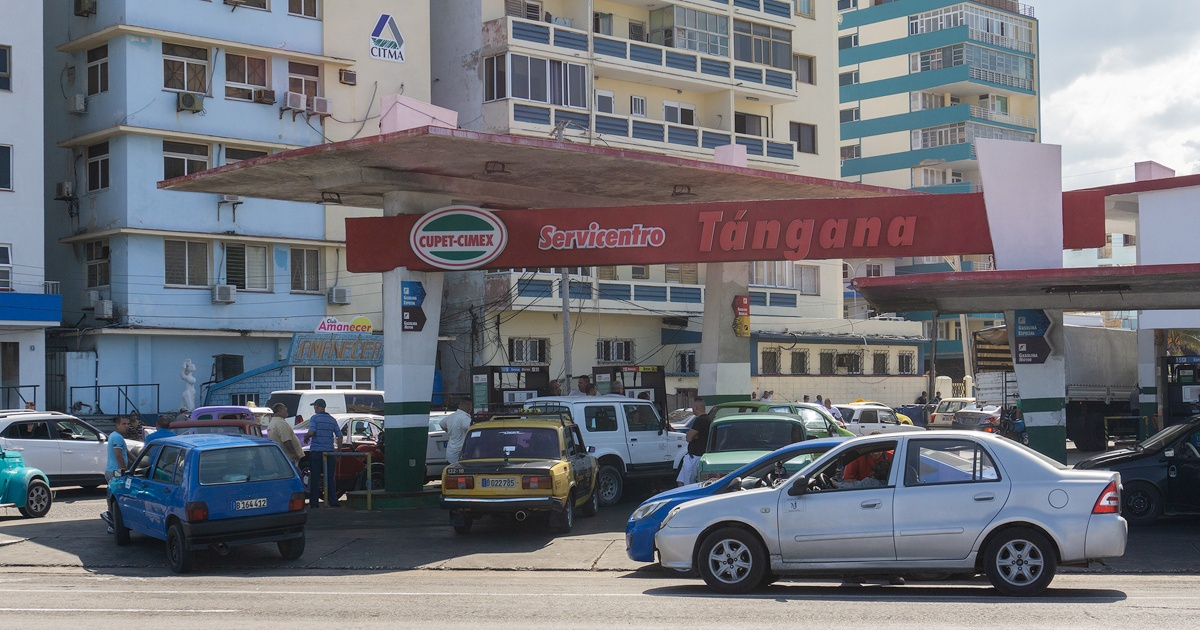
The authorization from the U.S. government to sell fuel to companies and individuals in Cuba without a specific license would imply, along with relief from the scarcity of this valuable resource, a widespread increase in the cost of living in the country's economy, warned Cuban economist Pedro Monreal.
In his opinion, the measure could lead to a decrease in the purchasing power of households due to higher prices. According to he explained on his networks, maritime supply in ISO tanks is common in the Caribbean under specific situations that require flexibility and quick deliveries, but at a substantially higher cost.
Monreal detailed that transporting a liter of fuel in the aforementioned standardized tanks in the area ranges between 0.09 and 0.19 USD per liter, compared to a range of 0.018 to 0.037 USD per liter in tanker ships, representing a cost approximately five times greater. This differential would also need to include the "rack" price of the fuel and other associated costs, such as export margins, documentation, and fees.
The experienced economist and researcher emphasized that, being a basic input, the increased cost would impact the prices of goods and services offered by micro, small, and medium-sized enterprises (Mipymes) and individuals.
He also estimated that a potential increase in the scale of the business will depend on factors such as the definition of what can be considered "private" in Cuba, the mitigation of what "seemed to be an absolute blockade," and the possible strengthening of the emerging business sector.
While international organizations have warned about the humanitarian impact of energy restrictions in the country, the true extent of the new U.S. regulations and their effect on the Cuban economy remains uncertain, in a process that, according to Monreal, is still premature to evaluate due to the lack of details and the multitude of variables at play.
The administration of Donald Trump, in a show of pressure on the island, especially following the operation to capture the Venezuelan dictator Nicolás Maduro, imposed restrictions on fuel supply whose effects are felt in the growing deterioration of various everyday services.
However, alongside this, he has clarified to energy companies that the prohibition is limited to sales to the Cuban government and does not extend to transactions with private actors, according to information from Bloomberg that Monreal reproduces.
According to this data, the new guidelines from the Departments of Commerce and the Treasury will allow the export of oil and its derivatives without requiring a specific license when the recipients are companies or individuals not affiliated with the State.
In line with this policy, Secretary of State Marco Rubio reaffirmed that the United States is willing to provide fuel for humanitarian purposes through the private sector and reiterated that "Cuba needs to change," although "it doesn’t have to change all at once," reported journalist Wilfredo Cancio.
Previously, members of the private sector on the island had confirmed that on cargo ships, although in reduced volumes.
The impact this will have on life in the country still depends on many factors, in an environment of internal and external political tensions that could lead to either openings or closures of various regulations.
Filed under: