
Related videos:
An influential Iranian cleric publicly called for "Trump's blood" amid a rapid escalation of the conflict between Iran, the United States, and Israel, which has already claimed over a thousand lives and threatens to spread throughout the Middle East.
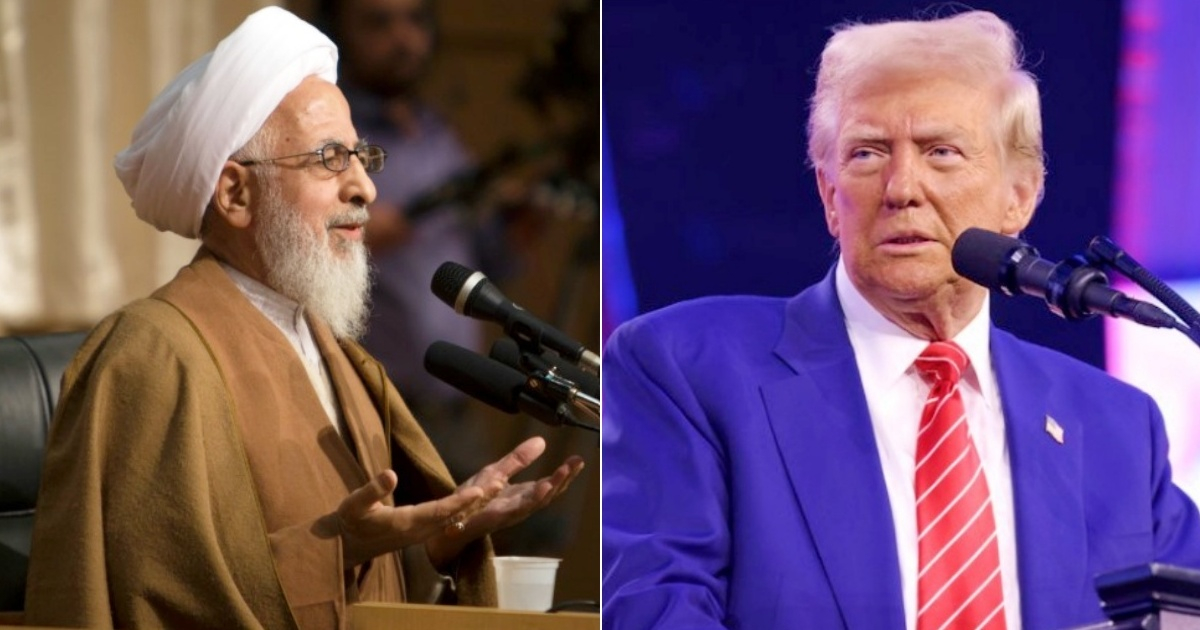
Ayatollah Abdollah Javadi Amoli, one of the most respected religious voices within the Iranian Shiite establishment, made the appeal during an address broadcasted on state television, in one of the most aggressive statements made by a senior cleric since the beginning of the war.
The religious leader stated that Iran is "on the brink of a great trial" and openly called for violence against Washington and its allies.
“Fight against the oppressor United States, their blood is on my shoulders”, he declared, as detailed in recent hours by the AP. agency.
In the same message, the ayatollah explicitly called for "the spilling of Zionist blood, the spilling of Trump’s blood", in direct reference to the American president.
His words came as Iran launched a new wave of attacks against Israeli and American targets, and as Israel announced the commencement of “large-scale” military operations against Tehran.
Missiles and sirens in Israel
In the early hours of Thursday, the Israeli army reported that it had detected several waves of Iranian missiles, triggering air raid sirens in Tel Aviv and Jerusalem.
Israeli forces responded with "a wave of large-scale attacks against infrastructure" in the Iranian capital, according to the military statement, although it did not specify the specific targets.
Shortly after, explosions shook several locations in Tehran, while Iranian state television reported that attacks had also occurred against U.S. bases in the region.
The Israeli army also indicated that it conducted targeted strikes in Lebanon against Hezbollah positions, the Iran-backed political-military group, expanding the front of the conflict.
Sinking of an Iranian frigate
Tension increased after the sinking of the Iranian frigate IRIS Dena by the United States Navy in the Indian Ocean.
According to the U.S. Secretary of Defense, Pete Hegseth, the ship was destroyed on Tuesday night by a torpedo launched from a U.S. submarine.
The authorities of Sri Lanka reported that 87 Iranian sailors died and that 32 crew members were rescued alive.
Iran's Foreign Minister, Abbas Araghchi, described the attack as "an atrocity at sea."
"The frigate Dena, a guest of the Indian Navy and carrying nearly 130 sailors, was struck in international waters without prior notice," it was reported on social media.
The chancellor also warned that Washington will face the consequences. “Remember my words: the United States will come to bitterly regret the precedent it has set,” he stated.
The attack that triggered the war
The conflict erupted on Saturday when the United States and Israel launched coordinated attacks against Iran, targeting its political leadership and military infrastructure.
In those operations, the supreme Iranian leader, Ayatollah Ali Khamenei, along with other high-ranking officials and targets linked to the country's missile program and nuclear development, was killed.
U.S. and Israeli officials have suggested that toppling the Iranian theocratic government could be one of the strategic objectives of the military campaign, although the specific goals and timeline of the operation have changed repeatedly.
The conflict has already spread beyond Iran and Israel, threatening to draw in other countries in the region.
A drone crashed near the airport of Nakhchivan, an enclave of Azerbaijan bordering Iran, and another fell near a school, leaving two civilians injured, according to the Azerbaijani Ministry of Foreign Affairs.
In Qatar, authorities temporarily evacuated residents near the U.S. embassy in Doha as a precaution. In Saudi Arabia, the army reported that it had destroyed a drone in a province bordering Jordan.
An attack against an oil tanker was also reported off the coast of Kuwait, according to the UK's Maritime Trade Operations Agency, which increases the risk for international maritime transportation.
Since the onset of the war, incidents have occurred in the Gulf of Oman and the Strait of Hormuz, a strategic route through which nearly one-fifth of the world's oil passes.
The death toll continues to rise. Iranian authorities reported at least 1,045 fatalities within their territory, while in Israel, 11 people have died, along with six American soldiers, including a major whose identity was revealed this week.
In Lebanon, at least eight people died in attacks related to the conflict, including Israeli bombings in the Beddawi refugee camp in Tripoli.
The war has also caused disruptions in global energy trade. The price of Brent crude, the international benchmark, has risen by about 15% since the beginning of the conflict, driven by risks to navigation in the Strait of Hormuz.
The government of Donald Trump has indicated that the military operation could last several weeks.
During a press conference at the Pentagon, the Secretary of Defense avoided specifying a concrete duration for the campaign.
“It can be said four weeks, but it could be six. It could be eight. It could be three”, stated Hegseth.
"In the end, we set the pace and the tempo. The enemy is off balance, and we are going to keep them off balance," he added.
Meanwhile, the Iranian leadership is trying to reorganize itself following the death of Khamenei and is seeking a new supreme leader, a process that has only occurred once since the Islamic Revolution of 1979. Among the possible successors is Mojtaba Khamenei, son of the late ayatollah.
The head of the Iranian judiciary warned that "those who cooperate with the enemy in any way will be considered enemies," a sign that the regime may further intensify internal repression as the war continues to escalate.
Filed under: