
Related videos:
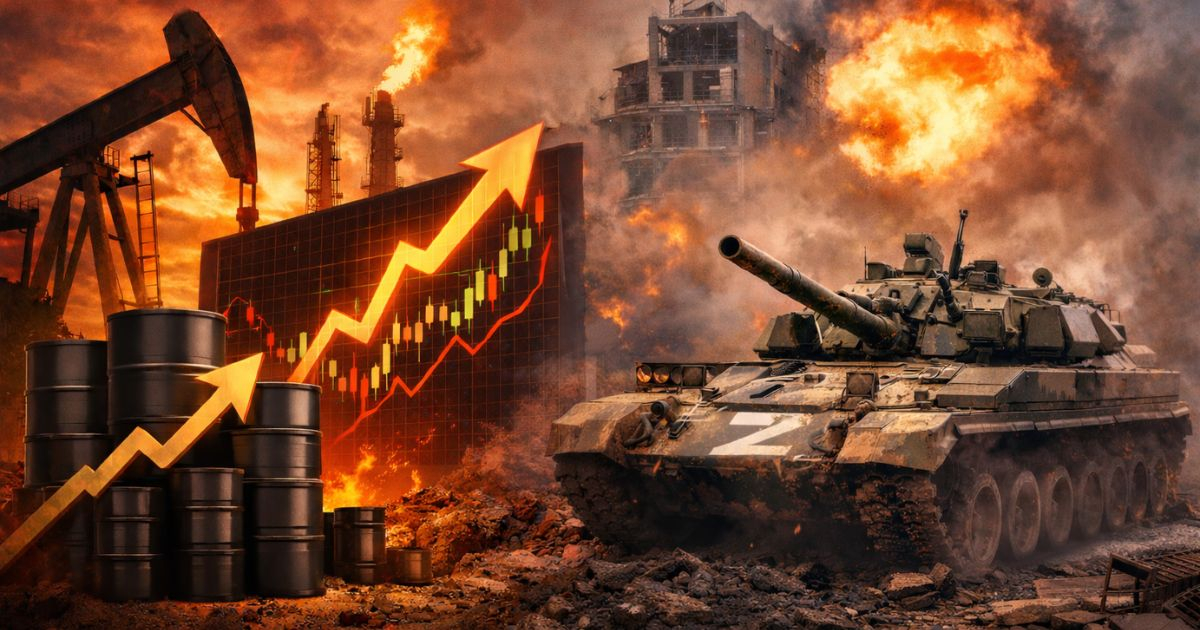
The armed conflict between the United States, Israel, and Iran, which began in February 2026 with attacks on Iranian nuclear facilities, has triggered a global energy crisis with a paradoxical consequence: the skyrocketing prices of oil and gas could strengthen Russia's financial capacity to sustain its invasion of Ukraine, now in its fourth year. According to AP News reports, this situation creates unprecedented geopolitical tension.
Iranian drone attacks on key infrastructure in the Persian Gulf have shaken international markets. QatarEnergy halted its LNG production on March 2, 2026, following attacks on the terminals at Ras Laffan and Mesaieed. Qatar is the world's second-largest exporter of LNG, with 82.4 million metric tons exported in 2025, accounting for approximately 20% of global supply.
The Saudi refinery at Ras Tanura, one of the largest in the world, was also attacked. The Iranian Revolutionary Guard has additionally threatened to close the Strait of Hormuz, through which 20% of the world's oil and LNG pass. Rystad Energy estimates that a prolonged blockade of that strait would result in a loss of between 8 and 10 million barrels per day in the global market.
The impact on the markets has been immediate and severe. The TTF natural gas contract in the Netherlands soared by more than 40.8%, surpassing 60 euros per MWh, compared to 25 euros per MWh before the conflict. Brent prices rose with a geopolitical risk premium of between 14 and 15 dollars per barrel, according to Goldman Sachs.
The projections are even more alarming if the crisis continues. ING estimates that Brent could reach 100 dollars per barrel and, in the worst-case scenario, 140 dollars. Goldman Sachs warns that the price of gas in Europe could double if the closure of the Strait of Hormuz extends for a month.
In this context, Russia emerges as one of the major potential beneficiaries of the crisis. The Russian Deputy Prime Minister Alexandr Novak was straightforward about it: "We are always ready. If they buy, we will sell," he stated when asked whether Moscow is willing to increase its oil supplies to China and India.
Hydrocarbons represent 22% of the Russian budget in 2025 and finance between 30 and 35% of the Kremlin's military expenditure. Although Russian crude oil export revenues fell by 18% year-on-year up to February 2026, totaling 85.5 billion euros, the exported volumes were 6% higher than pre-invasion levels, with 215 million tons. Russia produced between 9.13 and 9.14 million barrels per day in 2025, just 2.5% below 2021 levels.
The Institute for the Study of War (ISW) has been clear in its analysis: "High oil prices could fund Russia's war," the organization noted, warning that higher oil prices could sustain the Russian war effort in Ukraine.
In 2025, Russia exported 80% of its crude oil to China and India. China absorbed 48% of Russian crude in January 2026, while India took in 38%. Although India had reduced its imports of Russian crude by between 12% and 29% in December 2025 and January 2026 due to pressure from U.S. sanctions against Rosneft and Lukoil, the Iranian crisis has altered the dynamics. Russian sources noted that they are receiving signals of renewed Indian interest.
The scenario creates a first-order geopolitical tension. While the West engages militarily with Iran, the energy prices generated by that same conflict could bolster Russia, the other major strategic adversary of Washington and its allies. China, which imports approximately 83% of Iranian oil and LNG, also faces a difficult situation due to the disruption of that supply.
Europe is the most vulnerable link in the chain. Gas storage in the European Union is at critical levels, making the continent particularly sensitive to any prolonged disruption of supply from the Gulf. Qatar supplies between 15% and 20% of European LNG, and its production is currently halted.
President Trump announced that, if necessary, the United States will escort tankers in the Strait of Hormuz, a measure that reflects the seriousness with which Washington assesses the risk of a sustained blockade. The decision on how and when to resolve the crisis in the Gulf will have direct consequences not only on global energy markets but also on the battlefields of Ukraine, where revenues from Russian oil remain the main financial driver of the Kremlin's war machine.
Filed under: