
Related videos:
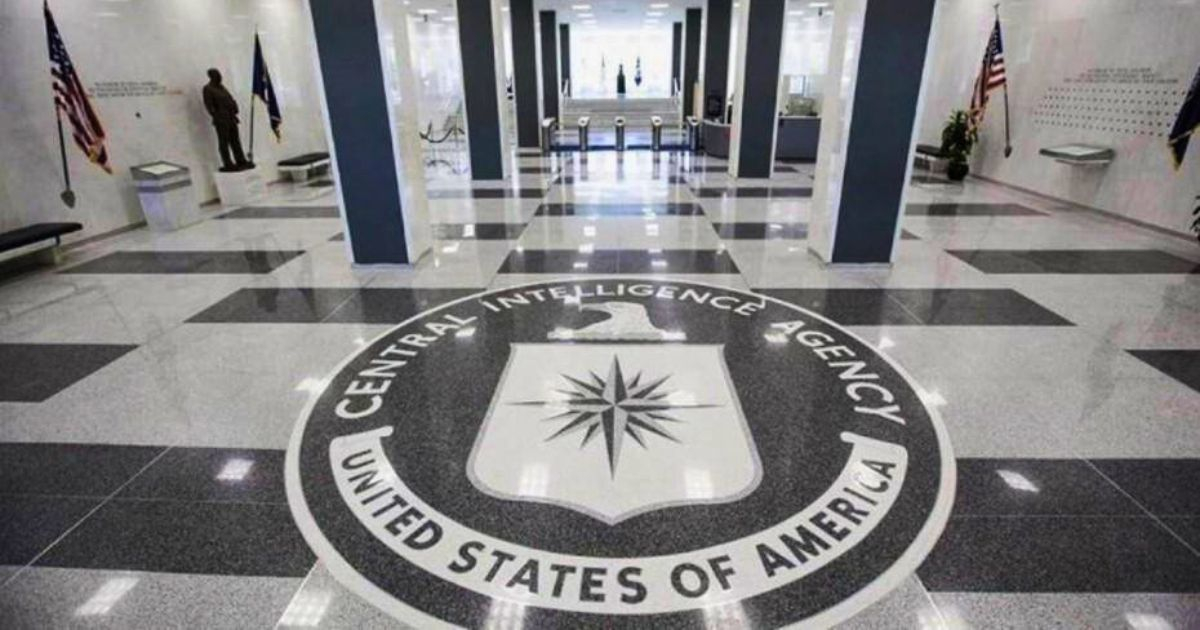
The CIA is developing a plan to arm Iranian Kurdish forces with the aim of provoking a popular uprising against the ayatollah regime, according to reports from CNN and Reuters published this week in the context of the Operation "Epic Fury", the joint military offensive by the United States and Israel against Iran that began on February 28.
The plan would involve using Iraqi Kurdistan as a logistical platform for the transit of weapons and support for armed opposition groups, mainly the Iranian Democratic Party of Kurdistan (KDPI), led by Mustafa Hijri. According to Axios, President Donald Trump himself spoke on the phone with Hijri, as well as with the Iraqi Kurdish leaders Masoud Barzani and Bafel Talabani, to discuss the war against Iran.
The initiative comes at a time of maximum pressure on Tehran. The "Epic Fury" Operation has struck over 2,000 Iranian targets in less than a week, destroying nuclear facilities, missile systems, IRGC command centers, and 11 warships in the Gulf of Oman. The death of Supreme Leader Ali Khamenei was confirmed on March 1 by Iranian state media, creating a power vacuum that Washington seeks to exploit.
A senior Iranian Kurdish official confirmed to CNN that his forces are expecting support from the United States and Israel for a ground operation in western Iran. "We believe we now have a great opportunity," the source stated, adding that the fighters could enter Iranian territory in the coming days.
Iranian Kurdish groups have thousands of trained fighters operating along the border between Iraq and Iran, primarily from Iraqi Kurdistan. The KDPI was founded in 1945 and has a long history of armed struggle against the Iranian regime, particularly intense during 1979-1989, when Ayatollah Khomeini rejected Kurdish rights and declared a "holy war" against them, resulting in more than 10,000 Kurdish deaths.
The Iranian regime has already anticipated the threat. This Tuesday, the Islamic Revolutionary Guard Corps (IRGC) attacked Kurdish positions with dozens of drones, in what analysts interpret as a preventative response to the possibility that these forces could be activated as a ground front in the northwest of the country.
According to the Wall Street Journal, Trump is open to supporting groups willing to take up arms against the regime, but he has not made a final decision on whether he will provide weapons, training, or intelligence support.
A U.S. official indicated that the Kurds could help to "create chaos" and deplete the military resources of the IRGC, while the possibility of establishing a buffer zone in northern Iran is being considered.
Any operation from Iraqi territory would require the approval of the Iraqi Kurdistan Regional Government, based in Erbil, and the cooperation of Baghdad, neither of which has officially confirmed their participation. The U.S. already has military bases in Erbil that support operations against the Islamic State, which would facilitate the logistics of a potential mission.
The CIA has historical precedents in using the Kurds as a geopolitical tool. Between 1972 and 1975, it financed and armed the forces of Mustafa Barzani —father of the current leader of the Iraqi KDP, Masoud Barzani— against Iraq, at the behest of the Shah of Iran. However, in 1975, it abandoned the Kurds when the Shah signed the Algiers Agreement with Saddam Hussein, an episode that left a deep historical mistrust within the Kurdish community towards Washington.
Israel has also acted in the area: sources cited in reports indicate that the Israeli Armed Forces have bombed Iranian military and police positions near the border with Iraq, as part of the coordination with "Operation Roaring Lion," the Israeli component of the joint offensive.
The operation began following the failure of nuclear negotiations in Oman, where Iran rejected zero enrichment despite having uranium reserves at 60% sufficient for 11 nuclear weapons. Trump had escalated tensions since January 2026 with the deployment of the aircraft carrier USS Abraham Lincoln and ultimatums regarding the cessation of enrichment, ballistic missiles, and support for groups such as Hamas, Hezbollah, and the Houthis.
Iran responded to the offensive with more than 500 ballistic missiles and 2,000 drones. The U.S. has suffered the loss of at least six soldiers, with three dead and five injured in Kuwait.
Trump estimates that the operation will last between four and five weeks and has publicly urged the Iranian people to take action: "When we finish, take control of your government... The time for your freedom is within reach," declared the U.S. president.
The Secretary of State Marco Rubio justified the start of the operation by stating that "there was an absolutely imminent threat," while the head of the Pentagon, Pete Hegseth, asserted on March 2 that "the regime has changed." When Iran attempted to open a negotiation channel after the attacks began, Trump dismissed it with just two words: "Too late."
The final decision on arming the Kurds is still pending, but time is running out: the Kurdish official quoted by CNN warned that the window of opportunity opened by Jamenei's death and the chaos generated by the bombings could close within days.
Filed under: