
Related videos:
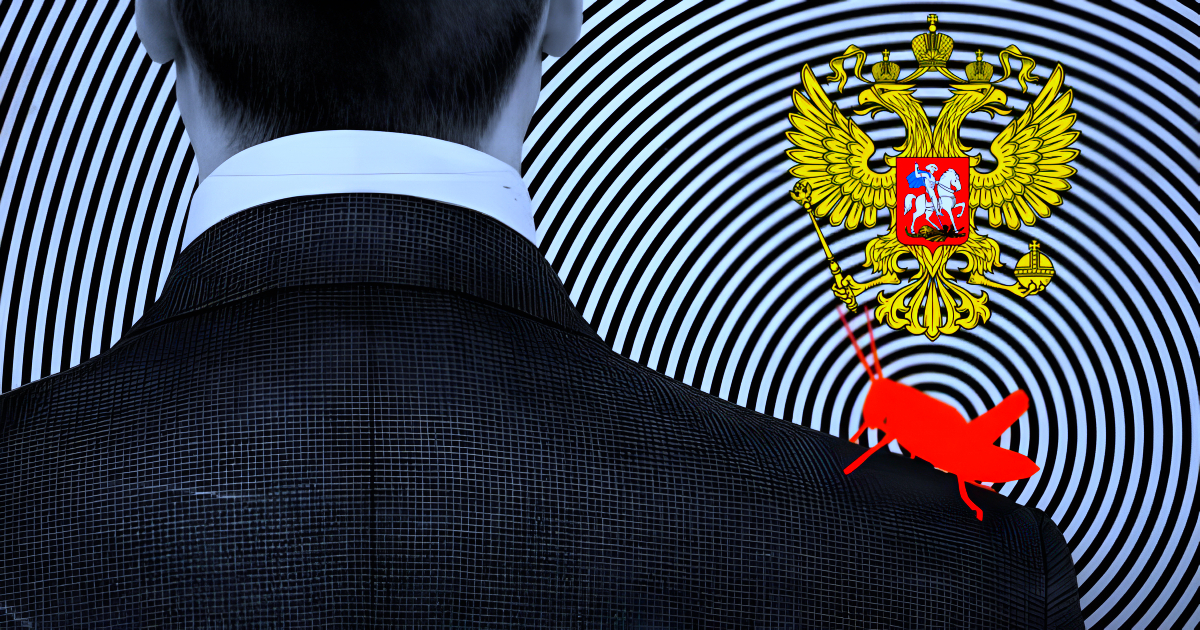
A new news report in the United States claims that intelligence agencies have internally concluded that Russia would be behind the attacks associated with the so-called "Havana syndrome", as pressure mounts to declassify findings that have been downplayed for years.
The case, which began in Cuba in 2016, strikes a sensitive chord for the Island once again: the close relationship between the regime and Moscow, now weakened by the war in Ukraine and with less room to support its allies.
The case enters a new phase
The mystery of the "Havana Syndrome" adds another explosive chapter. An article published in the United States claims that within the intelligence community, there is a strong conflict over the dissemination of evidence that would point to Russia as responsible for the attacks suffered by diplomats, spies, military personnel, and other American officials since 2016.
The novelty does not arise in a vacuum. CiberCuba has closely followed the evolution of the case since the beginning and has already reported several key milestones: from new journalistic evidence pointing to Russian military intelligence, to allegations of cover-ups within the CIA and the emergence of a portable device that could help clarify the origin of the anomalous health incidents.
What is now changing is the level of political gravity. It is no longer just about suspicions, testimonies from victims, or scientific hypotheses about pulsed microwaves.
The new report states that U.S. agencies have internally reached the conclusion that Moscow was behind the attacks, but that determination was not made public.
From Havana to the rest of the world
The phenomenon got its name from the first cases detected among American diplomats in Havana in 2016. Those incidents led to a sharp deterioration in relations between Washington and the Cuban regime, resulting in a reduction of diplomatic staff and years of bilateral tension.
However, even when the case erupted in Cuba, suspicion within certain intelligence circles did not necessarily point to the Cuban apparatus as the material author of the events.
As reported by CiberCuba in April 2024, an extensive investigation by The Insider, 60 Minutes, and Der Spiegel placed the spotlight on the Unit 29155 of the GRU, the sabotage squad of the Russian military intelligence linked to covert operations, assassinations, and destabilization in various countries.
The report stated that members of that unit were found near locations where alleged attacks took place against American personnel and their families.
It also documented that high-ranking officials associated with that structure had been rewarded for work related to "non-lethal acoustic weapons," a term used in Russian military literature to refer to directed energy technologies such as radio frequency or microwaves.
Havana has always denied the attacks
Since the first cases were reported, the Cuban regime has maintained a consistent stance: denying the existence of the phenomenon or its origin in deliberate attacks, rejecting any responsibility, and portraying the allegations as a political campaign by Washington.
The first official reaction came in 2017, when Foreign Minister Bruno Rodríguez Parrilla stated that Cuba "has never committed and will never commit actions of that nature" and maintained that there was no evidence of attacks against diplomats.
In the following years, Cuban officials insisted that there was no evidence to prove the existence of attacks, questioning the use of the term "attack" and suggesting that the symptoms could be attributed to stress, pre-existing conditions, or environmental factors.
In recent years, the official discourse has even included ridicule of the phenomenon. Following new international journalistic investigations, spokespersons from the Ministry of Foreign Affairs (MINREX) once again denied the syndrome and labeled the accusations as a "political operation".
Some officials, such as the diplomat Johana Tablada de la Torre, have even renamed the case as "Washington Syndrome", suggesting that it is a form of U.S. propaganda. The leader Miguel Díaz-Canel has also described it as a "false pretext" used by Washington to justify sanctions against the island.
The missing piece: a device under investigation
In January of this year, CiberCuba reported on another key element: The United States is said to have obtained a portable device with components of Russian origin at the end of 2024 that could be related to the syndrome.
According to that report, the device could fit in a backpack and would emit pulsed radiofrequency energy. The Pentagon has been testing it for over a year to determine if it can replicate the effects described by the victims.
This information aligns with the recent revelation from 60 Minutes, which stated that U.S. agents purchased a miniaturized microwave weapon from a Russian criminal network in an operation backed by the Pentagon.
Animal testing, including rats and sheep, is said to have produced neurological injuries similar to those observed in some affected individuals.
If confirmed, the finding would undermine one of the main arguments upheld for years by sectors of the intelligence community: that such technology did not exist or could not be used in a portable manner.
Victims and reports of cover-up
CiberCuba also reported in January 2025 the testimony of a former CIA official identified as “Alice,” who exposed a cover-up within the agency and pointed to Russia as a possible culprit.
According to her account, she suffered an attack in Africa with a portable energy weapon that left her with debilitating effects. The former agent claimed that U.S. authorities had downplayed the incidents and concealed relevant information.
A subsequent report also reflected divisions within the U.S. intelligence community. While some agencies considered it plausible that foreign adversaries had developed technology capable of causing these symptoms, others maintained that the hypothesis remained unlikely.
What does this mean for Cuba?
For Cubans, the matter holds special significance. If the Russian lead is confirmed, the case once again highlights the close relationship between the Havana regime and one of its most important strategic allies.
For decades, Moscow has been a key partner for the Cuban regime in terms of politics, military, and economics. However, current Russia is facing strong international pressure due to the war in Ukraine and has fewer resources to support its allies.
In this context, any evidence linking Russian intelligence operations to incidents originally occurring in Havana strengthens the geopolitical significance of the island in the rivalry between Washington and Moscow.
A less diffuse enigma, but still unresolved
After years of conflicting reports, ambiguous assessments, and victim testimonies, the "Havana Syndrome" now seems less mysterious than before.
The sequence that emerges is becoming increasingly consistent: initial cases in Cuba, global expansion, indications pointing to the Russian GRU, hypotheses about directed energy weapons, and new accusations of covering up within the U.S. government itself.
However, the decisive step is still missing: a public official determination that identifies those responsible.
Until that happens, the case will remain one of the most controversial episodes in U.S. national security in recent years and a reminder that geopolitical confrontation between great powers can also unfold in invisible ways.
Filed under: