
Related videos:
The decision by the Unión de Escritores y Artistas de Cuba (UNEAC) to make hundreds of books from its library available to the public has sparked a wave of criticism and concern among Cuban writers, intellectuals, and readers, who see this move as yet another symptom of the cultural deterioration affecting the island.
The controversy began following reports shared on social media by writer José Fernando Prats Sariol, who claimed that the library founded by José Rodríguez Feo, established from the personal collection of the Cuban intellectual, was giving away its books to anyone who arrived at the location.
"The library of UNEAC, founded by José Rodríguez Feo with his personal collection, has just given away its books to whoever arrives... The ruin of the nation spreads," he wrote.
The writer Denia García Ronda, a member of UNEAC for over half a century, added her voice to the denunciation, stating that she received the news "with horror."
"I am unaware of the reasons behind that decision, but whatever they may be, it seems unfortunate to me," he stated. He also questioned why the volumes were not being transferred to another cultural institution, but rather being handed directly to the public without clarity about their final destination.
The author recalled that many of those copies could be first editions, signed books, or pieces of great cultural value, gathered by Rodríguez Feo, whom she described as a true "guardian of culture."
"It is inconceivable that the associational institution of Cuban writers and artists would join the trend of dismissing books from their places," he lamented.
The posts sparked dozens of reactions among users and cultural figures, ranging from disbelief to outrage.
"Getting rid of libraries is getting rid of the history and culture of the country," wrote a user. Other comments described the decision as "anti-literary" and even compared the situation to historical episodes of cultural destruction.
Amid the controversy, some members of the organization called for public explanations. "They should have explained the reasons for such a drastic measure on a matter of significant cultural sensitivity," commented historian Félix Julio Alfonso López.
However, both UNEAC itself and some of its members have emphasized that the library is not being eliminated, but rather reorganized.
According to a note shared on social media by the Writers' Association, the José Rodríguez Feo Library will continue to exist but will specialize in preserving books from Ediciones Unión and volumes deemed of cultural or literary value, in addition to serving as a space for the historical memory of the organization.
The remaining books, those that are duplicates or easily accessible in other libraries or in digital format, would be donated to schools in the community or made available to the public as part of a cultural initiative.
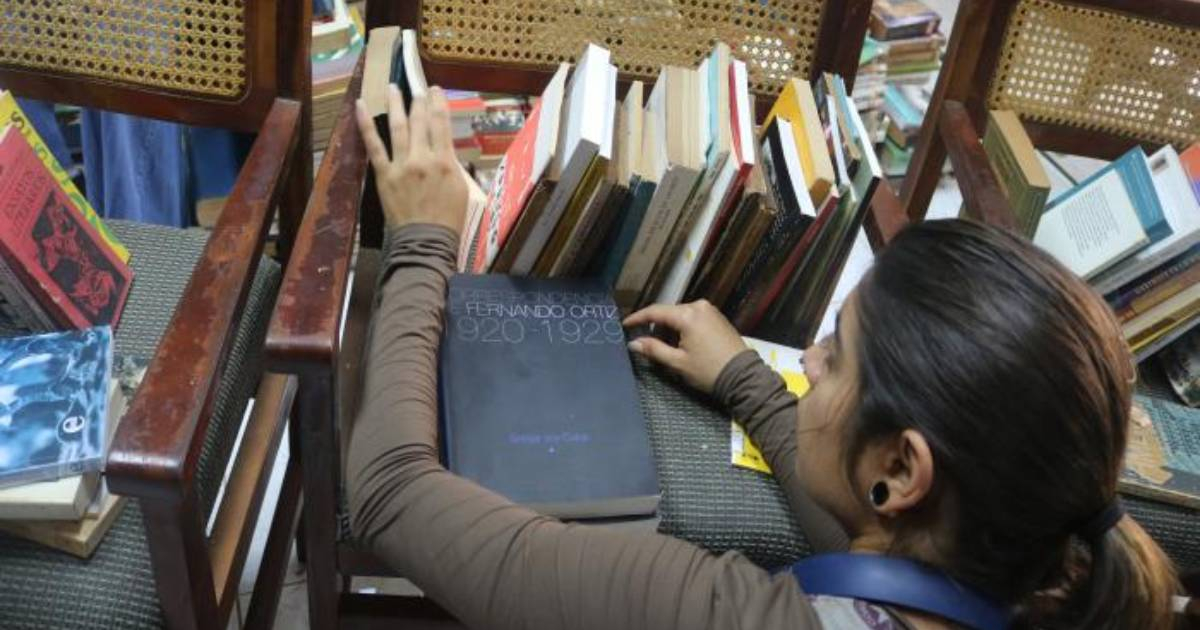
A report published in the official newspaper Granma on March 5th described the event as an “Open Library” experience, where dozens of people gathered at the UNEAC headquarters in Havana to seek free books.
According to the president of the Writers' Association, Dazra Novak, the initiative is part of a campaign called “Live More: Adopt a Book,” which arose following the decision to specialize the library and due to the lack of space to house all the volumes.
"The role of libraries has changed with the digitization of materials. The audience that used to come has been decreasing, and these spaces have had to reinvent themselves," Novak explained to the official newspaper.
During the event, according to the report, attendees were sifting through piles of books placed on tables, shelves, and even on the floor, taking home for free the titles they found.
For some participants, the experience was positive. “I believe it has the value of promoting reading, considering the price of books today,” said one of the attendees quoted by Granma.
But on social media, the debate remains open. For many Cuban writers and readers, beyond the official explanations, the scene of an institutional library distributing books reflects the cultural and economic precariousness that the country is experiencing.
"Anyone who does not respect a library is not respecting history," wrote a user.
The discussion has raised a question that continues to generate concern among the members of the UNEAC: what will ultimately happen to one of the literary collections associated with José Rodríguez Feo and the cultural heritage of the organization.
Filed under: