
Related videos:
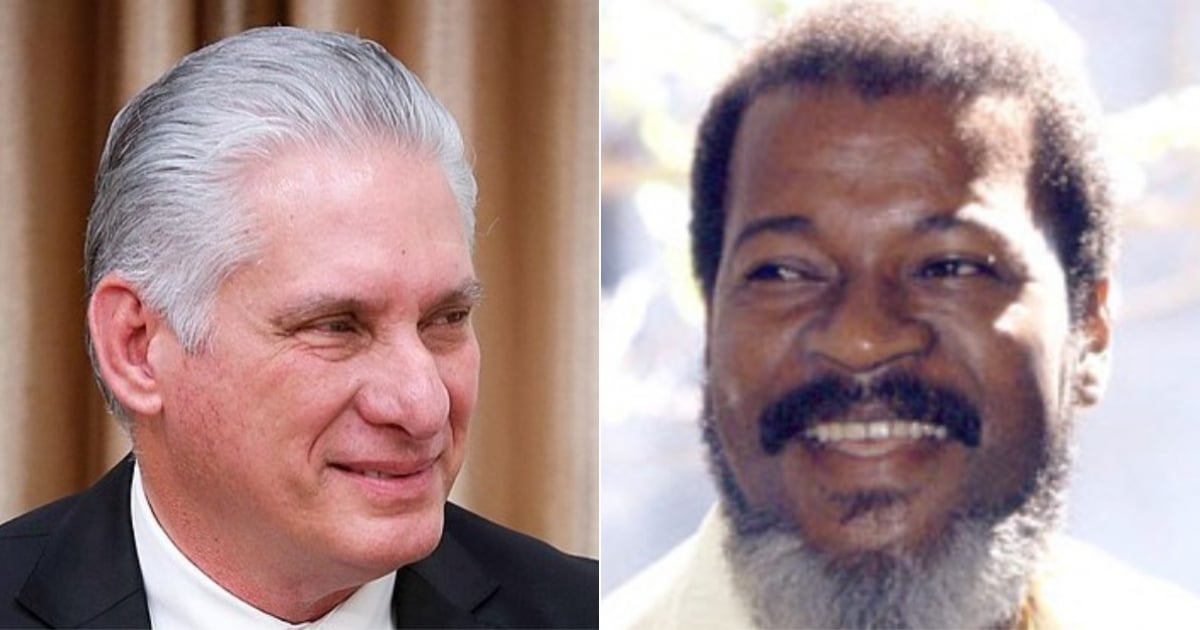
The Cuban ruler Miguel Díaz-Canel expressed his condolences for the death of actor Samuel Claxton, regarded as an icon of cinema, theater, and television on the Island.
His message was met with harsh criticism from users on social media, who accused him of hypocrisy given the neglect the artist experienced in his later years.
"Another blow of sadness for this Saturday. With the death of Samuel Claxton, theater, film, television, and the entire culture of Cuba have lost one of their great protagonists of the last 60 years. My condolences to family, colleagues, friends, and the Cuban public," wrote Díaz-Canel.
The responses came quickly. Dozens of internet users commented on the post, recalling that Claxton lived in extreme vulnerability during his last years, without support from the State or from official cultural institutions.
"You let him die; after he served his purpose, he was no longer useful to you. He didn't even have a levín," a user reported. Another recalled, "A few days ago, they were asking for probes and materials to attend to him on social media. He was forgotten..."
Some messages were even more direct.
"Now, after they abandoned him and left him to die in the deepest misery: what sons of bitches you all are," wrote an internet user.
"Don't you feel sorry for how he spent his final days in obscurity? You should be ashamed that an artist of his caliber was left to suffer such a dreadful end," questioned another.
"Condolences. In case you didn't know, the friends and family of Samuel Caxton have been pleading on social media for months for medications, diapers, and wheelchairs for the actor, due to the institutional neglect from the State and cultural institutions. You are a hypocritical fool," declared a third party.
Claxton passed away in Havana at the age of 82, after a long battle with bladder cancer and medical complications that left him severely physically limited.
Unable to climb stairs, he had to leave his apartment in Alamar and spent his final months relying on the care of his wife and citizen assistance, in the absence of institutional support.
It was the casting director Libia Batista Mora who spent months leading aid campaigns to meet the basic needs of the actor, from disposable diapers and collection bags to a wheelchair that was ultimately donated by supporters.
Despite his extensive career—having participated in more than 60 productions—and his popularity for roles such as Mantilla in "Su propia guerra," Claxton died in official oblivion, as reported by family and colleagues.
His case brings back to the forefront the precarious situation of many Cuban artists in their old age, without support from the Ministry of Culture or UNEAC.
"Passed away in poverty, helped by friends inside and outside the Island", wrote a user. "You abandoned him, don’t pretend to be good people now."
The death of Samuel Claxton leaves not only an artistic void, but also a deep question about the Cuban state's responsibility towards its creators. For many, the posthumous tribute comes too late. Very late.
Frequently Asked Questions about the Death of Samuel Claxton and Díaz-Canel's Reaction
Why did Díaz-Canel's condolences for the death of Samuel Claxton generate criticism?
Díaz-Canel's condolences sparked criticism as many believe that his government abandoned Claxton in his final years, leaving him without the necessary support. Users on social media accused Díaz-Canel of hypocrisy, pointing out that the actor lived in precarious conditions without institutional assistance, despite his prominent artistic legacy in Cuba.
What was Samuel Claxton's situation before his death?
Samuel Claxton lived in conditions of extreme vulnerability due to serious health problems, such as bladder carcinoma. He relied on the care of his wife and the solidarity of citizens to obtain basic medical supplies that the State did not provide. His situation reflects the precariousness in which many Cuban artists live in their old age, without the support of the country's cultural institutions.
What legacy did Samuel Claxton leave in Cuban culture?
Samuel Claxton left a significant legacy in Cuban culture, being an icon of national cinema, television, and theater. He participated in over 60 productions, being especially remembered for his role as Mantilla in the series "Su propia guerra." His extensive artistic career made him one of the most recognized figures of the 20th century in Cuba.
What responsibility does the Cuban state have in caring for its artists?
The Cuban government faces criticism for its lack of support for artists in their old age, leaving them without financial backing or adequate medical care. The death of Samuel Claxton has reignited the debate on the need for public policies that ensure a dignified life for those who have contributed to the country's cultural heritage, which currently relies heavily on civic solidarity.
Filed under: