
Related videos:
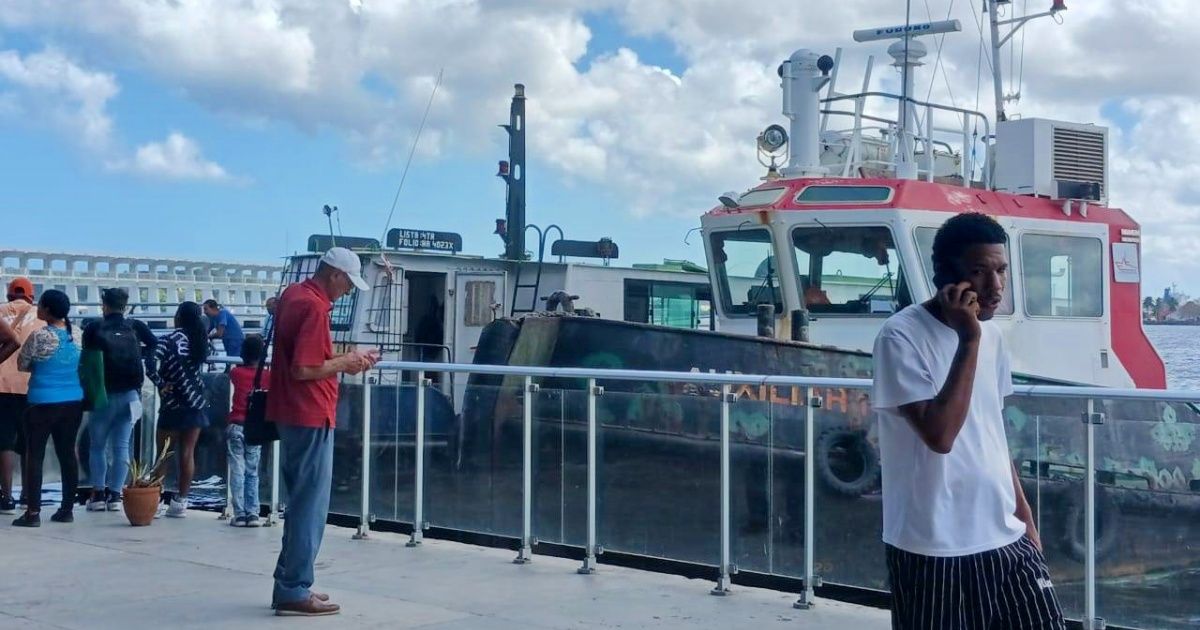
The Regla ferry, the popular maritime transportation used by Havana residents to cross the Bay of Havana, ran aground this Wednesday at noon, according to reports shared on social media.
According to a post shared in the Facebook group Transportación Habana, the incident occurred this Tuesday, March 11, 2026, around 12:00 p.m., when the vessel became stranded in the middle of the bay.
“The small boat from Regla was stranded in the Bay of Havana. It was towed to the Luz Dock, noted the post shared in that digital space, where users and transporters frequently share information about incidents affecting mobility in the capital.”
The same message warned that this is not the first time a similar incident has occurred with this means of transportation, which is widely used by residents of Regla, Casablanca, and Old Havana.
The aforementioned source details that the same incident occurred months ago, "endangering the lives of those aboard the Regla boat."
The message concluded with a direct critique of the temporary solutions that are often implemented: “The Regla ferry deserves to sail safely, because every life it carries is a treasure. We demand lasting solutions, not emergency patches.”
As of the writing of this note, there is no official information regarding what happened.
The cause of the alleged damage is also unknown, nor is the technical condition of the vessel after being towed.
The Minister of Transport of Cuba, Eduardo Rodríguez Dávila, has not yet publicly confirmed or denied what happened.
A service characterized by breakdowns and repairs
The incident occurs a few weeks after the Ministry of Transport itself reported technical issues with the vessels serving the bay.
At the end of February, Minister Rodríguez Dávila announced that the Regla ferry service would be temporarily suspended due to a break in the shaft line of the vessel "Giraldilla," which at that time was the only operational ferry.
He explained that the repair involved turning work and adjustments to components such as the bushings and the propeller, with the expectation of reintegrating the vessel into service around March 10.
On the same day, the planned launching of the vessel "La Coubre" also took place, whose repairs had been prolonged for months due to the complexity of the work and interruptions caused by the country's energy crisis.
Improvements made to that vessel included the installation of a new engine, the replacement of hull plates, electrical repairs, and adjustments to structural and safety systems.
However, the recovery of the maritime service in the bay has been slow.
Other vessels assigned to this route, such as "4to Congreso" or the tugboat ABA-3, are in various stages of repair, while the boat "300 Aniversario" is awaiting funding for its maintenance.
A system with problems for years
The fleet that supports maritime transport in the harbor of Havana has been facing technical difficulties for years.
In February 2024, the minister himself acknowledged that only one of the six vessels designated for this service was operational, while the rest were out of service due to mechanical issues.
Throughout that year, several interruptions were also recorded. In May 2024, for example, the service had to be suspended when the propeller of the only operational boat came loose and fell into the water.
In addition to technical failures, the system has also experienced outages due to adverse weather conditions.
Each of these stops has caused inconvenience among the thousands of passengers who rely on this means of transport to travel daily between Regla, Casablanca, and Old Havana, a journey that can be much longer and more complicated by land.
The incident with the small boat also occurs amidst a profound crisis in public transportation in the capital, characterized by fuel shortages and a lack of buses.
A recent report published by Cubadebate indicates that, due to the lack of buses, an increasing number of Havana residents are forced to use tricycles, motorcycles, and electric bicycles to get around the city.
Filed under: