
Related videos:
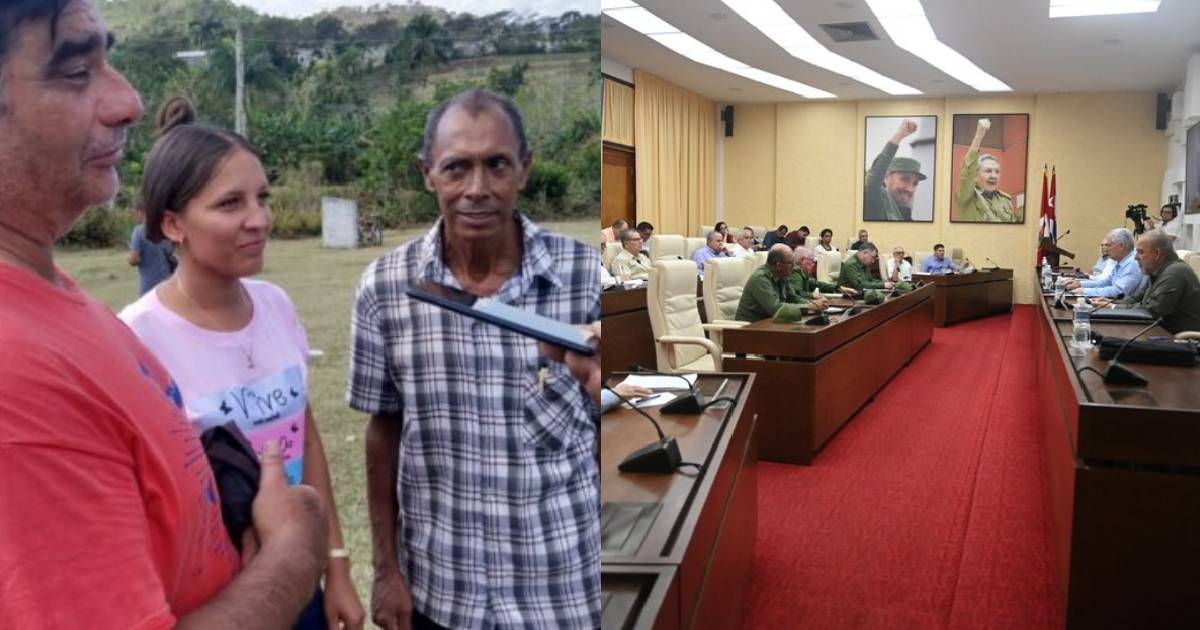
The state broadcaster CMKX Radio Bayamo published a text this Friday presenting alleged examples of popular support in the province of Granma for dialogue between the governments of Cuba and the United States, marking a change in tone following the regime's acknowledgment of recent contacts with Washington.
The state media collected opinions from several citizens who reportedly support the rapprochement with Washington on the condition that it is done “with mutual respect,” without questioning the Cuban political model, and in accordance with international law.
Among them, a worker from the Agroforestry Company of Guisa stated that both towns have historically shown solidarity and could develop relationships of cooperation and mutual assistance.
Another worker in the cultural sector stated that any connection with the United States must be governed by international norms and respect the political order of the country, while a third interviewee pointed out that relations between both governments should develop "on an equal footing," without arrogance and respecting the Cuban political system.
The news article is published just hours after the leader Miguel Díaz-Canel confirmed in a national broadcast that Cuban officials held recent discussions with representatives of the U.S. government, which he described as a "sensitive" process being handled discreetly.
According to Díaz-Canel himself, these contacts would aim to identify pending bilateral issues, explore possible avenues for resolution, and assess whether there is willingness on both sides to move forward with actions that benefit both countries.
The shift in narrative comes after days of contradictory messages within the official media apparatus.
The official spokesperson Jorge Legañoa had previously dismissed the reports about negotiations with Washington, describing them as a maneuver aimed at "confusing, dividing, and demobilizing" the population and supporters of the regime.
However, this morning, it was Legañoa himself who posed a direct question to Díaz-Canel on television about those conversations, an intervention that ended with the public confirmation that officials from both governments had held recent contacts.
For months, the Cuban leadership and their spokespersons repeatedly denied the existence of negotiations with the United States, even when public reports about those contacts were circulating and when President Donald Trump had previously mentioned the issue in statements.
The state television claimed that the reports about negotiations were part of a manipulation driven from Washington and suggested that Secretary of State Marco Rubio had led the U.S. president to believe in an alleged dialogue with Havana.
In this context, the publication of testimonies supporting rapprochement with the United States marks a discursive shift in the state-controlled media, which now seeks to present the dialogue as a continuation of the historical policy of the Revolution, always under the condition that the one-party regime is "respected."
In this regard, the activist Rosa María Payá stated that any resolution to the Cuban crisis requires a total change of the political system and the removal of those currently in power.
In the same vein, Miami-Dade County Commissioner Natalie Milian Orbis warned that any negotiation that preserves a single-party communist dictatorship would be unacceptable and should not overlook the requirements established in the United States Freedom Act.
For its part, the Assembly of the Cuban Resistance indicated that the acknowledgment of talks highlights the pressure the regime is under, but warned that any rapprochement with Washington must lead to real political changes on the island and not to a relief of international pressure on the Cuban government.
Filed under: