
Related videos:
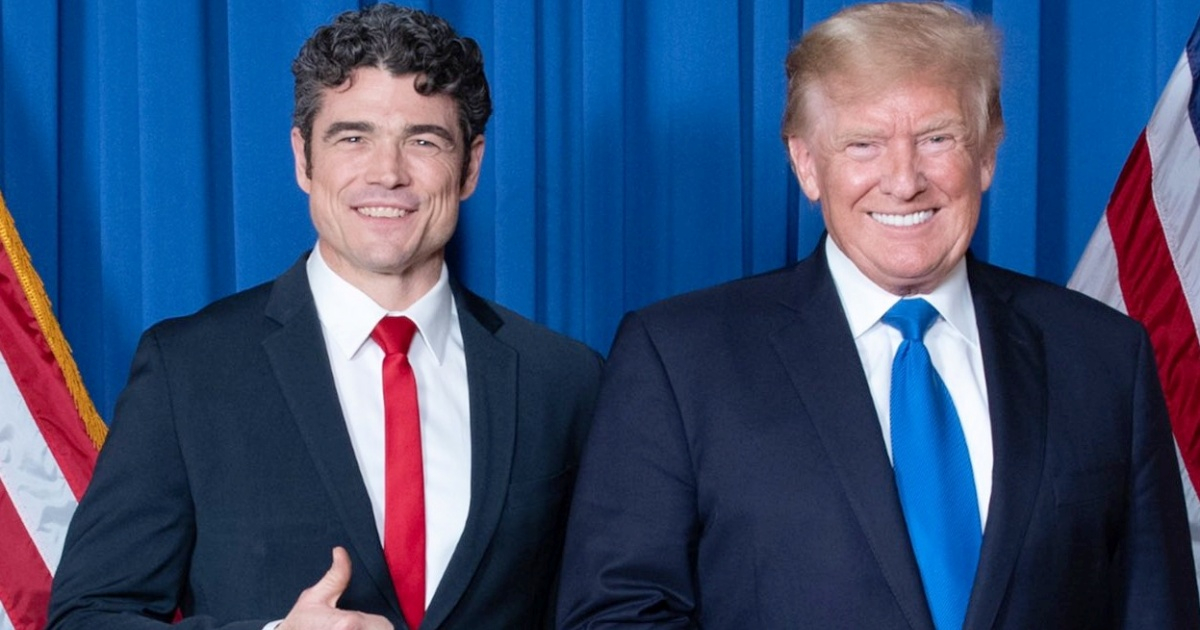
The director of the National Counterterrorism Center of the United States, Joe Kent, submitted his immediate resignation to President Donald Trump on Tuesday in a gesture of open disagreement with the war that Washington, alongside Israel, is waging against Iran.
The resignation represents, thus far, the most significant departure within the current administration since the onset of the conflict.
Kent, who had been nominated by Trump and confirmed by the Senate in 2025, communicated his decision through a letter in which he harshly outlined the reasons for his break with the president's foreign policy.
"I cannot, in good conscience, support this war."
The essence of his resignation focuses on a direct moral objection to the conflict. In his letter, Kent states categorically:
"I cannot, in good conscience, support the ongoing war in Iran. Iran did not pose an imminent threat to our nation, and it is clear that we initiated this war due to the pressure from Israel and its powerful U.S. lobby."
The reference to the "imminent threat" is not insignificant.
In the U.S. legal framework, this criterion is crucial for justifying military actions without congressional approval, and it also carries weight in international law.
His questioning suggests that, in the opinion of the former official, the intervention lacks sufficient legal and strategic basis.
Criticism of Israel's influence and a "disinformation campaign"
One of the most controversial points of the letter is the direct accusation against the influence of Israel and media sectors in the decision to go to war. Kent asserts:
"High-ranking Israeli officials and influential members of the U.S. media launched a disinformation campaign that completely undermined their 'America First' platform and fueled pro-war sentiments."
"This echo chamber was used to deceive him and make him believe that Iran represented an imminent threat to the United States and that, if he attacked now, there was a clear path to a quick victory. This was a lie," he said to emphasize that this narrative would have misled the president himself
The former director even draws a parallel with the Iraq war, warning: “It’s the same tactic that the Israelis used to drag us into the disastrous Iraq war… We cannot make this mistake again.”
An initial support for Trump… and a split due to the shift in foreign policy
Despite the critical tone, Kent also acknowledges in his letter an affinity for the political line that Trump advocated during his campaigns and throughout his first term.
"I support the values and foreign policies that you campaigned on in 2016, 2020, and 2024," he said, and in that regard, he expressed regret over what he perceives as a change in direction:
"Until June 2025, you understood that the wars in the Middle East were a trap that took away valuable lives of our fellow citizens and drained the wealth and prosperity of our nation."
He also praised the president's past decisions, such as the operation against Qassem Soleimani and the offensive against the Islamic State, highlighting them as examples of "decisive" use of military power without engaging in prolonged conflicts.
The personal weight: "I cannot send the next generation to die."
The letter took on a particularly personal tone when Kent refers to his military background and the death of his wife in combat. A veteran with 11 deployments, he writes:
"As a veteran who was deployed in combat 11 times and as a husband with a Gold Star who lost my beloved wife Shannon in an earlier war, a war manufactured by Israel, I cannot support sending the next generation to fight and die in a war that does not benefit the American people or justify the cost of American lives."
And he concluded with a direct call to the president:
"I pray that you reflect on what we are doing in Iran and for whom we are doing it... You can change the course and chart a new path for our nation, or you can allow us to continue falling into decline and chaos."
A resignation amid an escalating war
Kent's resignation comes weeks after the United States and Israel launched attacks against Iran on February 28. Since then, the conflict has resulted in hundreds of casualties and heightened tensions throughout the region.
The National Counterterrorism Center, an organization headed by Kent, was established after the September 11, 2001 attacks and is tasked with coordinating the collection and analysis of information regarding global terrorist threats, providing guidance to both the president and the national intelligence leadership.
So far, neither the White House nor the Office of the Director of National Intelligence has issued an official response to the resignation.
Kent's departure also reflects internal tensions within the very political spectrum that supported Trump.
Sectors associated with the "America First" movement have criticized the intervention in Iran, deeming it contradictory to the promise of avoiding new wars abroad.
In that context, the resignation not only represents an individual protest but also a symptom of deeper fractures within the current U.S. strategy in the Middle East.
Filed under: