
Related videos:
A group of sheriffs in Florida, many of whom are identified with conservative stances and have historically aligned with strict immigration policies, has begun to publicly question the mass deportation of immigrants without criminal records, in what represents a significant shift within the state's own law enforcement apparatus.
The statements were made this Monday during a meeting of the State Immigration Compliance Council, a body composed of four sheriffs and four municipal police chiefs, created last year as part of the strategy promoted by Governor Ron DeSantis to enhance cooperation with federal authorities on immigration matters.
The most emphatic statement came from Polk County Sheriff Grady Judd, who chairs the council and has been a key figure in pushing for tough policies in Florida.
During the meeting, Judd proposed that deportations should focus on immigrants with a criminal record, rather than on individuals who have been living and working in the country for years without breaking the law.
“These are the people we need in this country, the ones we welcome, because we are a country of immigrants”, he stated, as reflected in the last few hours by numerous media outlets from the state.
The sheriff described that group as individuals who, despite not committing any crimes, are being affected by immigration operations.
“Here are people who work hard, have children in college, go to school, attend church on Sundays… they are not breaking the law and are living the American dream,” he insisted.
At the same time, he defended the need to maintain the expulsion of those who do pose a danger: "But we have allowed what I call a criminal agitator to flood this country and victimize the people."
Concern over indiscriminate deportations
One of the points that generated the most consensus among the sheriffs was the impact of the raids on individuals who were not the initial targets of the authorities.
The Charlotte County Sheriff, Bill Prummel, warned about the calls for collateral detentions.
"But unfortunately, when ICE gets involved, collateral detainees emerge, and that is what is happening," he said.
According to officials, many of the individuals affected by these operations are workers integrated into their communities, who are part of the local economy and have no criminal records.
Judd also noted having received concerns from politically and economically active conservative sectors, worried about the deportation of immigrants who, in his words, "are being dragged and removed from the country" despite not having committed any crimes.
During the meeting, the sheriffs agreed that Congress's lack of action was one of the main causes of the problem.
"They need to get their act together and fix it," Prummel demanded.
Judd was even more direct in describing the reality they face on the ground.
“While Congress stands idly by and does nothing about it, we are on the front lines day after day, looking into the eyes of these people who, yes, came here irregularly… but some came just to improve their lives and those of their families,” he emphasized.
The marshals also acknowledged that, despite their concerns, they have a limited margin of action.
Proposals: civil sanctions instead of deportation
Instead of proposing a permissive policy, the marshals suggested more restrictive alternatives to deportation for immigrants without criminal records.
Among the proposals discussed are civil fines, the obligation to learn English, and strict integration requirements.
"We're going to give them five years, and they have to learn to speak English. They have to pay a fine for having entered the country illegally," Judd explained.
"And they can't live off taxpayers' money; they have to work; they have to take their children to school," he added.
According to the participants, these measures would allow for distinguishing between those who pose a risk and those who are already part of the social and economic fabric of the country.
Possible political pressure at the federal level
As part of the discussion, the council is considering drafting a letter addressed to President Donald Trump, the congressional leadership, and federal agencies to request clearer guidelines and explore a pathway to legalization for certain immigrants.
Judd revealed that there have already been state-level conversations with the president on this topic: he indicated that Trump "was not against that conversation" regarding this type of immigrants.
The proposal represents a significant change considering that less than a year ago, Judd himself was advocating for expanded powers to expedite deportations, even for individuals without any criminal records or expulsion orders.
The impact of Grady Judd's statements was such that he held a press conference this Wednesday to clarify his comments on mass deportations in the state.
"In fact, we support the mass deportation of illegal immigrants, those who are criminals, those who have deportation orders, those who are here causing havoc and problems," Judd clarified.
Contrast with DeSantis' policy
The positioning of the sheriffs highlights a divergence from the immigration policy promoted by Governor Ron DeSantis, who has advocated for one of the most aggressive strategies in the country.
It is important to remember that Florida:
- It mandates cooperation between local and federal authorities on immigration matters.
It has more than 230 police agencies integrated into the 287(g) program, which allows local officers to collaborate directly with ICE.
It has developed detention infrastructures such as the facility known as "Alligator Alcatraz."
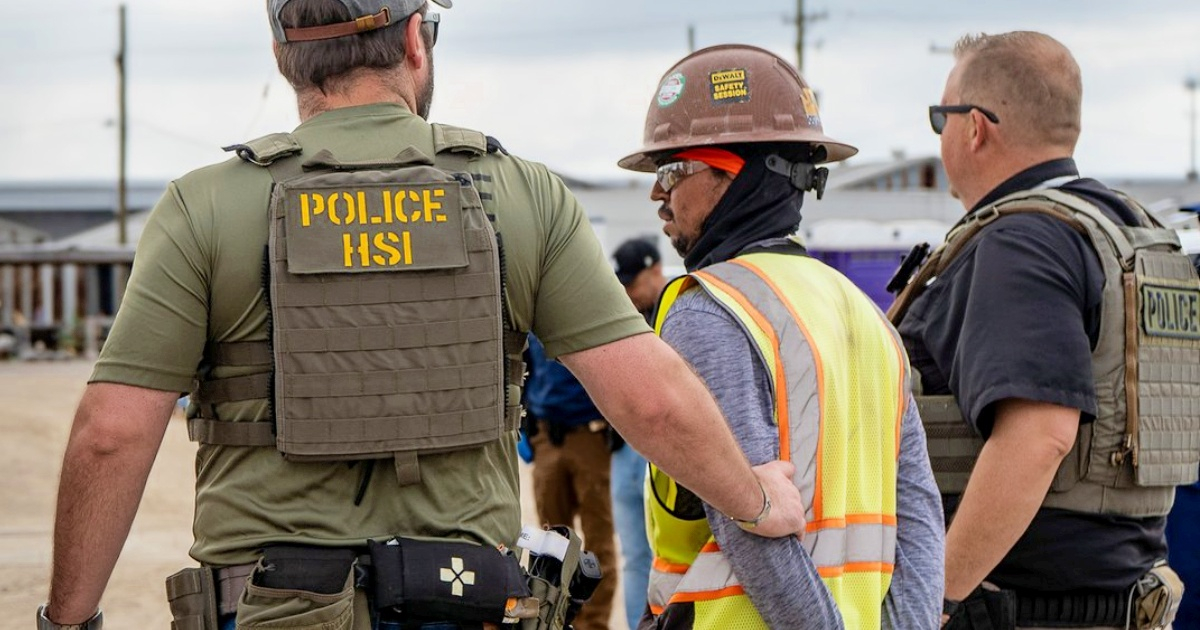
Additionally, in recent operations, such as a raid at a construction site in Tallahassee, near the state Capitol, about 150 people were arrested and mostly deported. This debate highlights internal tensions
Beyond the content, the episode reflects a growing tension within the law enforcement forces in Florida.
That Republican officials—many of them key players in the state's immigration policy—are the ones questioning the deportation of immigrants without criminal records reveals a debate that is no longer confined to activists or politicians but extends to those enforcing the law on the ground.
As federal authorities intensify their operations, local agents themselves acknowledge the human dilemma they face every day: individuals who, although they arrived without authorization, have spent years building a life without breaking the law.
And amidst this contradiction, a question arises that begins to divide even the most staunch sectors: whether all deportations should be treated equally, or if the current system is also affecting those who - as the sheriffs themselves admit - "are the people we need in this country."
Filed under: