
Related videos:
A project initiated by the government in Holguín proposes to convert plastic waste into fuel, set against a backdrop where the Cuban regime continues to seek alternatives amid one of the worst energy crises in its history.
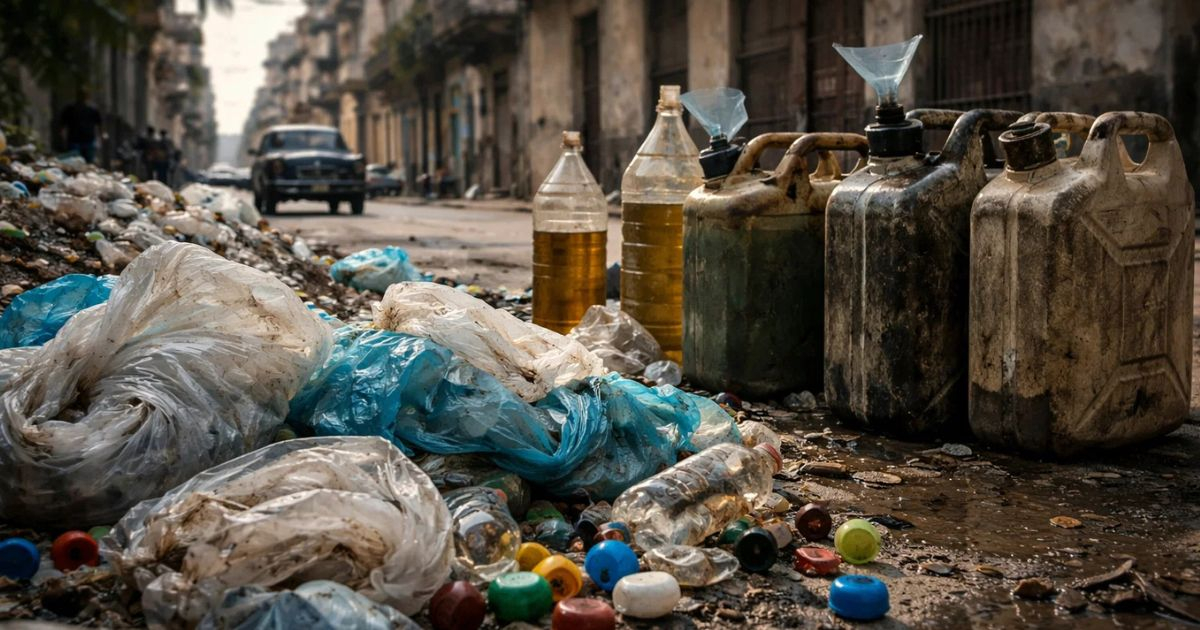
According to reports from Prensa Latina and Radio Angulo, the initiative, called Pyralis, is being developed at the Scientific and Technological Park of that province and uses a pyrolysis process to convert nylon bags and plastic caps into oils intended for the production of gasoline and diesel, at a time when many cars are grounded due to fuel shortages.
The project, created by specialist Alejandro Ortiz, proposes that for every 100 kilograms of plastic waste, up to 100 liters of pyrolytic oils can be obtained.
However, official reports do not specify the level of additional processing required to convert those derivatives into usable fuels, nor the technical resources this would entail.
The plant is in the assembly phase at the Héroes del 26 de Julio Mechanical Company, while plans are being made to install waste collection points in communities to feed the system.
According to its promoters, the generated fuel could initially be allocated to essential services such as ambulances, amid the ongoing shortage of diesel and gasoline affecting the country.
However, the disclosed information omits key aspects regarding the environmental impact of the process, such as the management of waste derived from pyrolysis or the pollutant emissions associated with this type of technology.
The implementation, maintenance, or scalability costs of the project are also not detailed, which are crucial elements for assessing its viability in a highly deteriorated energy system with structural limitations.
The initiative also includes community incentives, such as benefits for neighborhoods with higher waste collection rates, in an effort to engage the population in the process.
Although its promoters aspire to extend the model throughout the country, questions remain about its actual capacity to provide sustainable solutions in the face of the energy crisis that Cuba is experiencing.
Filed under: